Quick answer
The best Buddhist temple stays near Seoul, ranging from ₩50,000 to ₩70,000 per night, provide immersive cultural experiences. Hwagyesa Temple, our top recommendation, stands out for its convenience and accessibility within Seoul. These stays offer a unique glimpse into Buddhist practices, often set against serene mountain backdrops.
- Best overall
- Haeinsa Temple (해인사)
- Price/value range
- ₩70,000/night – ₩50,000/night
- Top-ranked pick
- Golgulsa Temple (골굴사) — ₩70,000/night
- Last verified
- 2026-03
Top verdicts
- Golgulsa Temple (골굴사): The most-recommended temple stay on Reddit by a wide margin.
- Haeinsa Temple (해인사): If you want historical significance alongside your spiritual experience, Haeinsa is unmatched.
- Musangsa Temple (무상사 / Mu Sang Sa): The best option if you're serious about meditation practice rather than cultural tourism.
The best Buddhist temple stays near Seoul, ranging from ₩50,000 to ₩70,000 per night, provide immersive cultural experiences. Hwagyesa Temple, our top recommendation, stands out for its convenience and accessibility within Seoul. These stays offer a unique glimpse into Buddhist practices, often set against serene mountain backdrops.
Korea's Templestay program is one of the most unique cultural experiences in East Asia — spend a night (or a week) living alongside Buddhist monks in centuries-old mountain temples. Wake at 3:30 AM for morning prayers, eat simple vegetarian meals in silence, meditate in mist-covered courtyards, and hike through some of Korea's most beautiful national parks.
We analyzed dozens of Reddit threads from r/korea, r/koreatravel, r/solotravel, and r/Living_in_Korea to find the temple stays that actual visitors and Korea residents recommend. These aren't the mass-tourism day trips — they're the ones people call life-changing.
Temple Map
How we built this list
We analyzed 50+ Reddit posts and 300+ comments across r/korea, r/koreatravel, r/solotravel, and r/Living_in_Korea — spanning 2019 to 2026. Temples were ranked by how frequently they were recommended by independent users with firsthand experience. We prioritized long-term Korea residents' picks over first-time tourist impressions.
1Golgulsa Temple (골굴사)
Sunmudo Martial ArtsQuick comparison
- Best for
- Sunmudo Martial Arts in Gyeongju, North Gyeongsang with a ₩70,000/night spend range
- Strengths
- 4.4★ from 1,036 Google reviews · Sunmudo Martial Arts · Gyeongju, North Gyeongsang
- Limitations
- Price band: ₩70,000/night
- Price / value
- ₩70,000/night · 4.4★
- Why it made the list
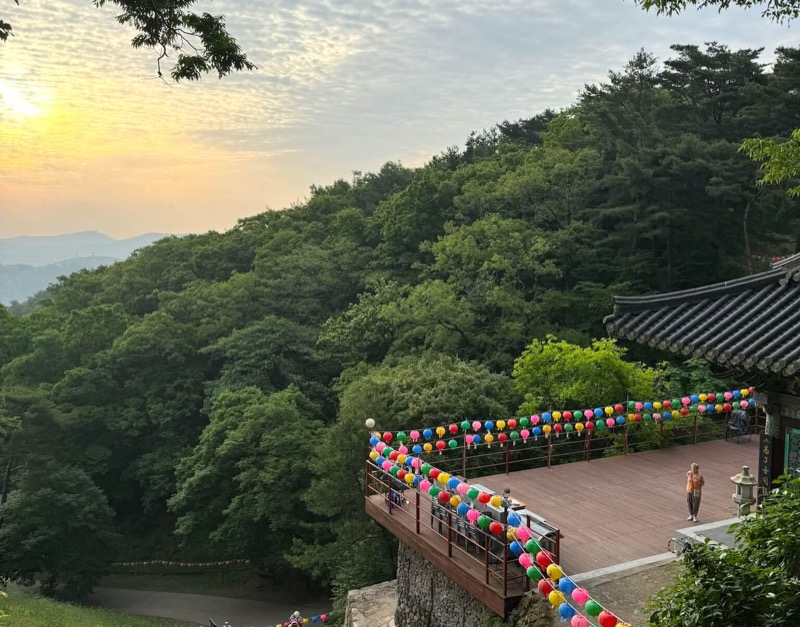
- The most-recommended temple stay on Reddit by a wide margin. Golgulsa stands out for its sunmudo martial arts — you're not just sitting and meditating, you're physically training alongside monks. It's become more popular with foreigners recently (featured on Korean TV), so expect some fellow travelers. About 3 hours from Seoul by KTX to Gyeongju. Worth the trip.
2Haeinsa Temple (해인사)
UNESCO World HeritageQuick comparison
- Best for
- UNESCO World Heritage in Hapcheon, South Gyeongsang with a ₩60,000/night spend range
- Strengths
- 4.4★ from 959 Google reviews · UNESCO World Heritage · Hapcheon, South Gyeongsang
- Limitations
- very well-organized
- Price / value
- ₩60,000/night · 4.4★
- Why it made the list
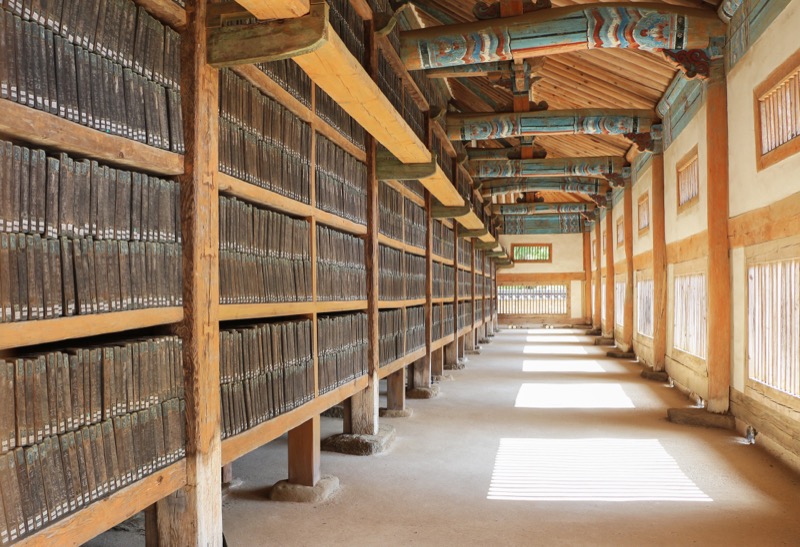
- If you want historical significance alongside your spiritual experience, Haeinsa is unmatched. The Tripitaka Koreana alone justifies the visit — these woodblocks have survived 800 years of wars, fires, and invasions. The monks here are known for being especially devout. English programs run regularly with groups of ~50 foreigners, so it's less intimate but very well-organized. About 3.5 hours from Seoul by bus.
3Musangsa Temple (무상사 / Mu Sang Sa)
International Zen CenterQuick comparison
- Best for
- International Zen Center in Gyeryongsan, Chungnam with a ₩50,000 spend range
- Strengths
- 4.2★ from 205 Google reviews · International Zen Center · Gyeryongsan, Chungnam
- Limitations
- Price band: ₩50,000
- Price / value
- ₩50,000 · 4.2★
- Why it made the list
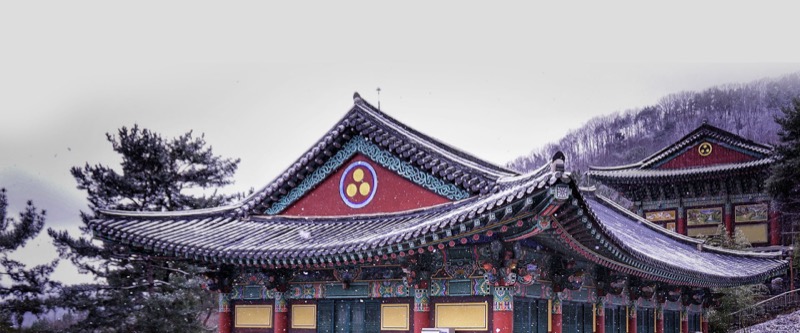
- The best option if you're serious about meditation practice rather than cultural tourism. Musangsa is a functioning international Zen center — English is the norm, not the exception. Located in Gyeryongsan National Park (about 2 hours from Seoul by KTX + bus), it's surrounded by stunning mountain scenery. Extended stays of a week or more are welcome and encouraged. The closest thing Korea has to a proper meditation retreat.
4Hwagyesa Temple (화계사)
Seoul City TempleQuick comparison
- Best for
- Seoul City Temple in Suyu-dong, northern Seoul with a ₩50,000/night spend range
- Strengths
- 4.4★ from 868 Google reviews · Seoul City Temple · Suyu-dong, northern Seoul
- Limitations
- you do get a legitimate Zen center with international programs
- Price / value
- ₩50,000/night · 4.4★
- Why it made the list
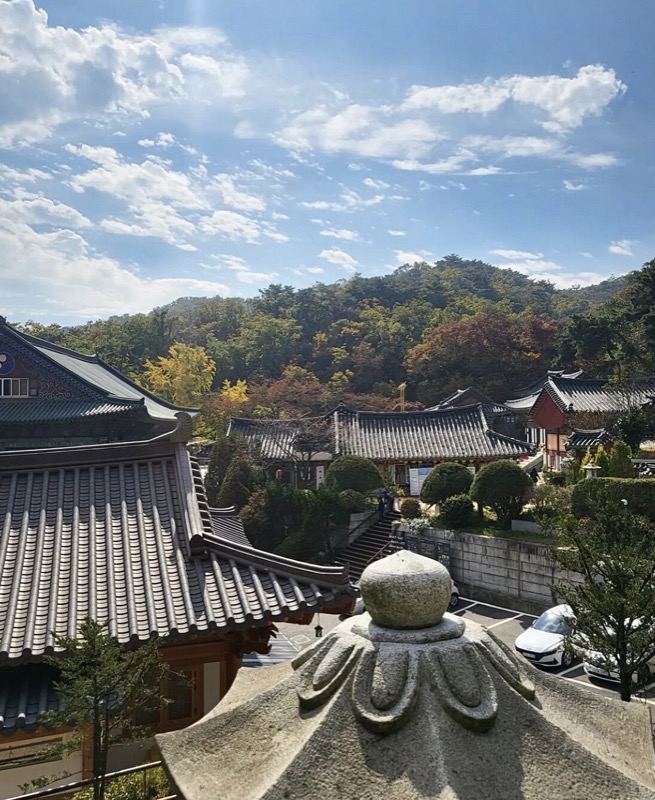
- The pragmatic choice. Hwagyesa is the only temple on this list you can reach by subway — it's right in Seoul at the base of Bukhansan mountain. You don't get the "remote mountain monastery" atmosphere, but you do get a legitimate Zen center with international programs. Perfect if you only have one night to spare or want to combine a temple stay with Seoul sightseeing. The nearby Bukhansan hiking trails are a bonus.
Frequently Asked Questions
How much does a Korean temple stay cost?
Most temple stays in Korea cost ₩50,000–₩80,000 ($35–55 USD) per night, which includes accommodation, meals, and all activities. Some temples offer free or donation-based stays, especially for longer retreats. Book through the official Templestay.com website for the best rates and English-language support.
Do I need to speak Korean for a temple stay?
Not necessarily. Popular temples like Golgulsa and Haeinsa run English-language programs. Musangsa (Mu Sang Sa) is an International Zen Center with full English instruction. However, smaller temples may be Korean-only. Since you maintain 'noble silence' for much of the stay, language barriers matter less than you'd think — just follow what others do.
What should I expect at a Korean temple stay?
A typical temple stay includes: early morning prayers (3:30–4:00 AM), meditation sessions, Buddhist chanting, vegetarian temple food (barugongyang), walking the temple grounds, and free time for hiking. You'll sleep on floor mats in shared rooms. Most stays are 1-2 nights, but some temples offer week-long retreats. Expect to disconnect from technology and follow a structured monastic schedule.
How do I book a Korean temple stay?
The official website is Templestay.com (eng.templestay.com for English). You can browse temples by location, program type, and language. There's also a Templestay information center in central Seoul, across from Jogyesa Temple, where staff can help you book in person and answer questions.
What is the best time to do a temple stay in Korea?
Spring (April–May) and autumn (September–November) are ideal — comfortable temperatures and stunning mountain scenery. Summer stays are hot and humid but the lush greenery is beautiful. Winter stays are cold but deeply peaceful, with fewer visitors and snow-covered temple grounds. Avoid Korean holiday weekends (Chuseok, Lunar New Year) when temples may be busy with local visitors.
Is a temple stay appropriate for non-Buddhists?
Absolutely. Korean temple stays are designed to be welcoming to all, regardless of religious background. Most participants are not Buddhist — they come for the meditation, digital detox, and cultural experience. Temples expect you to respectfully participate in rituals (bowing, chanting) as cultural activities, not as religious conversion. It's one of Korea's most unique cultural experiences.
🎟️ Book Gyeongsang Experiences
Tours and activities hand-picked for this guide — book with free cancellation
Experiences via Viator — free cancellation on most tours