How we built this comparison
This page combines traveler discussion patterns, published price ranges, transit details, and seasonal data to make the Yogyakarta vs Solo decision easier to resolve.
- Reviewed Reddit discussions from r/indonesia, r/solotravel, r/travel, r/digitalnomad, and r/backpacking.
- Cross-checked cost claims against Numbeo 2026 data and recent Reddit trip reports.
- Verified weather patterns against Open-Meteo monthly archive data for Central Java.
Best read as a decision guide, not a universal truth: the right pick depends on your travel style, budget, and what kind of Java experience you actually want.
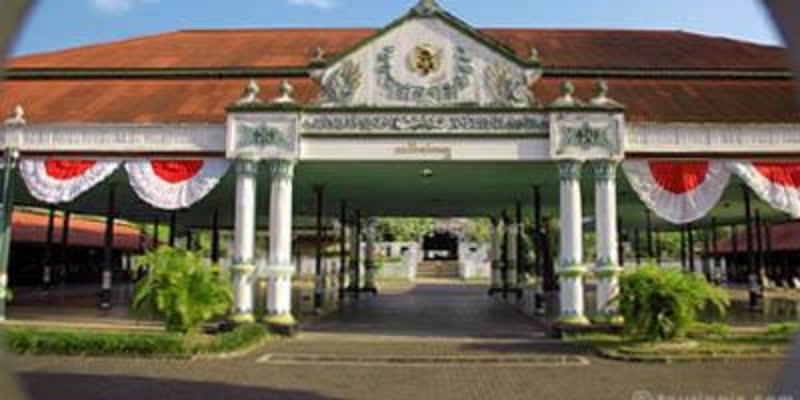
Yogyakarta — the Sultan's Palace (Kraton), heart of Javanese culture
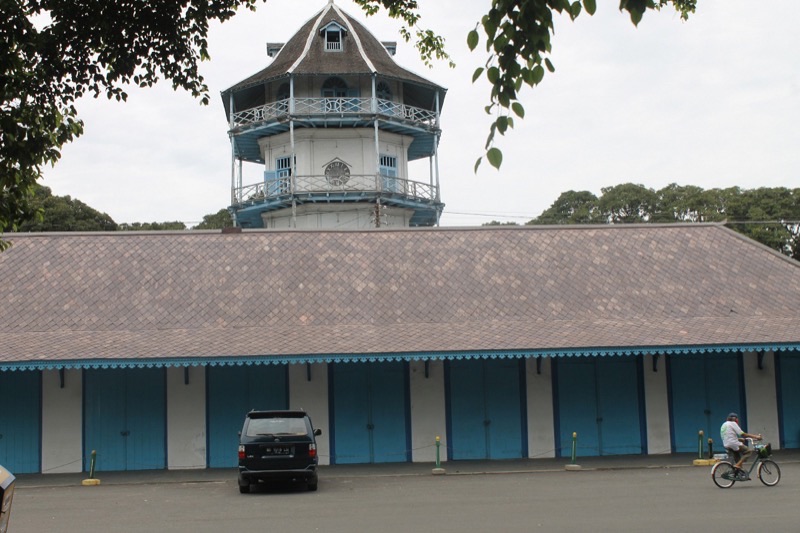
Solo — the Kasunanan Palace, more authentic and far fewer tourists
⚡ The TL;DR Verdict
Yogyakarta wins for first-timers: best gateway to Borobudur, more infrastructure, better backpacker scene. Solo wins for authenticity: cheaper, fewer tourists, better food, and a more genuinely Javanese experience. Do both — the train takes 1 hour and costs less than $1.
- Choose Yogyakarta: UNESCO temple circuit (Borobudur + Prambanan), organized tour infrastructure, bigger accommodation range, Malioboro shopping street, $25–55/day.
- Choose Solo: Authentic Javanese culture, legendary street food scene, genuine batik craftsmanship, far fewer Western tourists, $20–45/day.
- Do both: 3–4 nights Yogyakarta + 1–2 nights Solo is the optimal Central Java itinerary.
Choose Yogyakarta
Gateway city with the best access to Borobudur, Prambanan, and Mount Merapi. More hostels, tour operators, and tourist services.
Choose Solo
Authentic Java without the backpacker crowds. Best batik, best street food, and a real Kraton experience for budget travelers.
Do Both
65km apart, 1 hour by train, less than $1 fare. Solo makes the perfect 1–2 day extension from Yogyakarta — or vice versa.
Quick Comparison
| Category | 🏛️ Yogyakarta | 🍜 Solo (Surakarta) | Winner |
|---|---|---|---|
| Daily Budget (mid-range) | $25–55 per person | $20–45 per person | Solo |
| Borobudur Access | 40km, 1hr (best base) | 100km, 2hrs (far) | Yogyakarta |
| Prambanan Access | 17km, 30min (easy) | 45km, 1hr (doable) | Yogyakarta |
| Street Food | Excellent (gudeg, bakpia) | Legendary (nasi liwet, serabi) | Solo |
| Batik Shopping | Good (Malioboro) | Better (Klewer Market, Danar Hadi) | Solo |
| Tourist Infrastructure | High (English menus, hostels) | Low (more local, less English) | Yogyakarta |
| Crowds | Busy with Western tourists | Mostly local/domestic tourists | Solo |
| Kraton (Royal Palace) | Kasultanan Yogyakarta (active) | Kasunanan Surakarta (historic) | Tie |
| Nightlife | Moderate (Prawirotaman area) | Limited (mostly local warungs) | Yogyakarta |
| Merapi Volcano Access | 25km away (best base) | 85km away | Yogyakarta |
| Authenticity | Tourism-influenced | More genuinely local | Solo |
| Airport | New Yogyakarta International (YIA) | Adi Soemarmo (SOC) — smaller | Yogyakarta |
✨ Vibe & Atmosphere
Yogyakarta (universally called "Jogja") is Indonesia's cultural and artistic heartland — a university city of 3.5 million that manages to feel both cosmopolitan and deeply traditional. The streets around Malioboro are a sensory overload of street food carts, batik shops, becak drivers, and temple-bound tourists. Jogja has an active sultan — the Sultan of Yogyakarta holds both ceremonial and actual political power as the governor — which gives the city a living royal character unlike anywhere else in Indonesia. It's also a student city, with Gadjah Mada University drawing tens of thousands of students who keep the café and arts scene lively. The backpacker trail is well-worn here: hostels on Gang Sosrowijayan, warungs serving cheap nasi goreng, and tour operators for every temple in the region.
Solo (officially Surakarta) is Yogyakarta's quieter, more aristocratic twin. At 500,000 people, it's a fraction of Jogja's size. The Western tourist scene is dramatically smaller — most visitors are domestic Indonesian tourists or the rare backpacker who knows to look beyond Jogja. Solo is often described as "more Javanese than Yogyakarta" — the court culture, language (Krama Inggil, the most refined form of Javanese), and daily life retain a refinement that Yogyakarta's tourism has diluted. Solo is the birthplace of President Jokowi, whose warung roots and working-class background are very much reflected in the city's proud food culture. Walking around Solo's Pasar Gede or Klewer Market, you feel genuinely immersed in local Indonesian life rather than a tourist economy built around you.
🍜 Food & Dining
This is where Solo surprises most travelers. Solo's food scene is widely considered among the best in Indonesia — not just in Central Java — and it's dramatically less expensive than Yogyakarta's tourist-adjacent pricing.
Solo's signature dishes: Nasi liwet (rice cooked in coconut milk, served with chicken, egg, and sambal — sold from baskets carried by women vendors), serabi notosuman (rice flour pancakes, Solo's famous street sweet), timlo solo (a clear chicken soup with egg and vermicelli), selat solo (a Dutch-influenced "steak" with vegetables and sweet soy sauce — unique to Solo), and soto kwali (local beef broth soup). Pasar Gede (Solo's great market) and Pasar Klewer's surrounding warungs are the best places to eat like a local. Prices: IDR 10,000–25,000 ($0.60–$1.50) per dish.
Yogyakarta's signature dishes: Gudeg (jackfruit stew cooked in coconut milk and palm sugar — the city's defining dish, sold everywhere on Wijilan alley), bakpia (sweet filled pastry, Jogja's iconic snack), sate klathak (goat satay on iron skewers, Imogiri area), and angkringan (mobile food carts selling nasi kucing — tiny rice portions with various toppings, very cheap). Malioboro's street food is good but tourist-priced. Head to Wijilan gudeg alley or the Prawirotaman area for better value.
🏛️ Temples & Culture
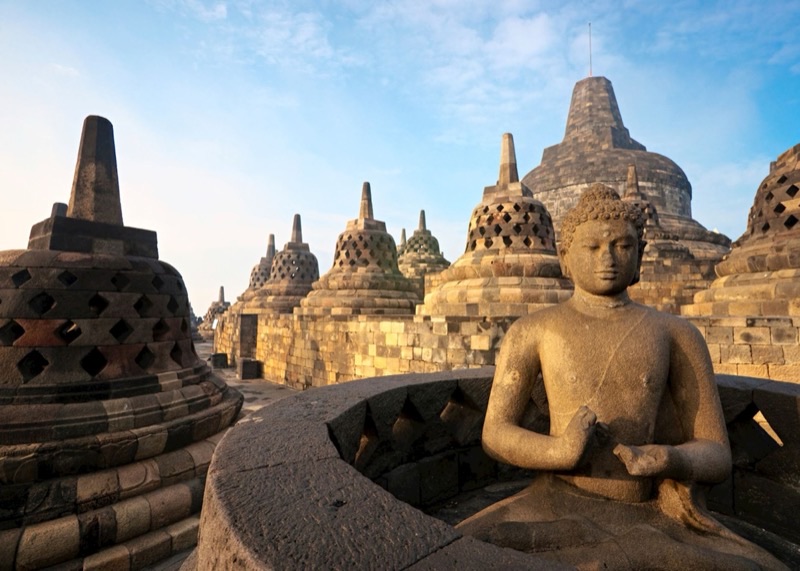
This is Yogyakarta's decisive advantage: proximity to two of the world's greatest ancient monuments.
Borobudur — 40km northwest of Yogyakarta — is the world's largest Buddhist temple, a 9th-century UNESCO World Heritage monument of extraordinary scale and detail. 504 Buddha statues, 2,672 relief panels, 72 perforated stupas arranged across nine terraces on a volcanic hill. The sunrise tour (departing Yogyakarta at 4–5am) is one of Indonesia's signature travel experiences — mist rising from the jungle as the sky brightens behind the stupas. Entrance: IDR 350,000 for foreigners (~$22). Sunrise tickets: IDR 420,000. From Solo, Borobudur is nearly 2 hours away — logistically possible as a day trip but exhausting.
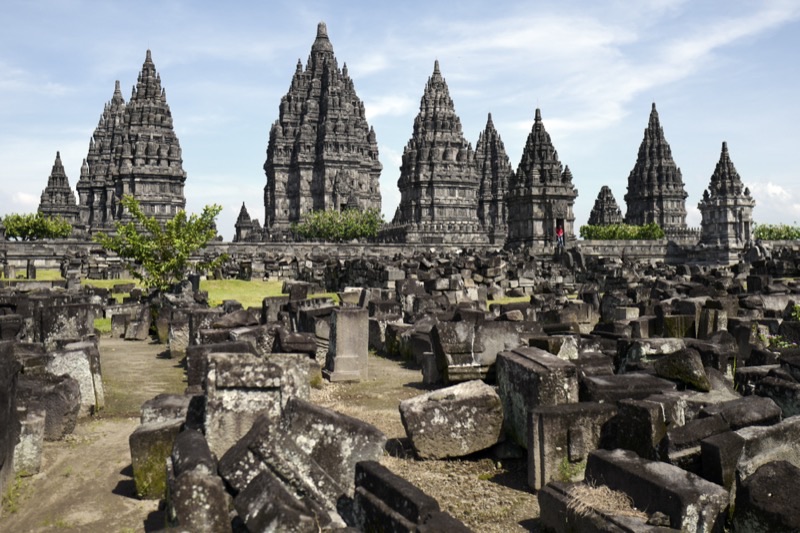
Prambanan — 17km east of Yogyakarta — is the largest Hindu temple complex in Indonesia and a UNESCO World Heritage Site: 240 individual temples, with the central Trimurti compound (Shiva, Vishnu, Brahma) soaring 47 meters. The Ramayana ballet performed in the open-air theater against the temple backdrop on full-moon nights is extraordinary. Entrance: IDR 350,000 (~$22). From Solo, Prambanan is about 45km and 1 hour — doable but less convenient than from Yogyakarta.
Kraton Yogyakarta (Sultan's Palace) is still an active royal compound where the Sultan governs. The museum section is open to visitors and gives insight into living Javanese court culture. Kasunanan Palace in Solo is also impressive — its history dates to 1745 and its Dutch-era architecture makes it unique — but it's a museum rather than an active royal seat.
Solo's cultural highlights include the Mangkunegaran Palace (a secondary royal court with exceptional gamelan collection), the Museum Batik (the best batik museum in Indonesia), and regular wayang kulit shadow puppet performances at the RRI studio on Wednesday nights.
💰 Cost Comparison
Both cities are among the cheapest destinations in Southeast Asia, but Solo has a meaningful edge — partly because it sees fewer Western tourists and hasn't inflated its prices accordingly.
| Expense | 🏛️ Yogyakarta | 🍜 Solo |
|---|---|---|
| Budget guesthouse | IDR 100,000–200,000/night ($6–12) | IDR 80,000–150,000/night ($5–9) |
| Mid-range hotel | IDR 250,000–500,000/night ($15–30) | IDR 200,000–400,000/night ($12–25) |
| Street food meal | IDR 15,000–35,000 ($1–2) | IDR 10,000–25,000 ($0.60–1.50) |
| Restaurant meal (tourist) | IDR 50,000–120,000 ($3–7.50) | IDR 40,000–80,000 ($2.50–5) |
| Borobudur entrance | IDR 350,000 ($22) | IDR 350,000 + 1hr transport |
| Scooter rental | IDR 70,000–100,000/day ($4–6) | IDR 60,000–80,000/day ($3.75–5) |
| Becak ride (short) | IDR 20,000–40,000 | IDR 15,000–30,000 |
| Grab (in-city) | IDR 15,000–30,000 | IDR 10,000–25,000 |
| Daily total (mid-range) | $25–55 | $20–45 |
🚂 Getting Around
Getting between Yogyakarta and Solo is genuinely easy — one of the best transport links in Indonesia.
Prameks train (Yogyakarta ↔ Solo): The commuter Prameks train runs roughly every 1–2 hours between Yogyakarta's Lempuyangan Station and Solo's Balapan Station. Journey time: ~1 hour. Cost: IDR 8,000 (~$0.50). This is the single best-value transport link in Java. Book at the station or via the KAI Access app. Note: Lempuyangan is a different, smaller station than Yogyakarta's main Tugu station — easier to access and more conveniently located for the budget accommodation area.
Private car/taxi Yogyakarta-Solo: IDR 150,000–250,000 ($9–15) through Grab or a fixed-price driver. Takes 1–1.5 hours depending on traffic. Door-to-door convenience justifies the cost for groups or those with luggage.
Within Yogyakarta: The city is sprawling but navigable. Grab and GoJek work well. Scooter rental (IDR 70,000–100,000/day) is the most flexible option for temple visits. TransJogja city buses cover main corridors cheaply but slowly. A car with driver for a full-day temple circuit (Borobudur + Prambanan) costs IDR 350,000–500,000 ($22–30) and is worth it.
Within Solo: More compact and walkable around the palace area. Grab works, becaks are plentiful and cheap for short rides. The key sites (Kasunanan Palace, Pasar Klewer, Pasar Gede, Mangkunegaran) are within 2km of each other in the city center.
☀️ Best Time to Visit
Both cities share Central Java's tropical climate — hot and humid year-round, with a distinct wet and dry season.
Dry season (April–October): The optimal window for both cities. May–September is the sweet spot: lower humidity, minimal rain, and clear skies that make sunrise temple visits spectacular. July–August is peak season — Borobudur gets genuinely crowded with domestic tourists during Indonesian school holidays. Book accommodation in advance. Average temperatures: 28–32°C.
Wet season (November–March): Afternoon and evening downpours are common but usually brief. Mornings are often clear. The rice fields around Yogyakarta and Solo are at their most lush and photogenic during wet season. Prices drop 20–30%, and the sites (especially Prambanan and Kraton) are less crowded. Borobudur's misty morning atmospherics in the wet season are actually more dramatic than clear-sky visits. Solo's covered markets are weather-independent and great year-round.
Best months: May, June, and September offer the best combination of good weather, fewer crowds than peak July–August, and reasonable prices. The Yogyakarta Arts Festival (June–July) is a bonus for cultural travelers.
Special events: Sekaten market (held on the grounds of the Kraton in both Yogyakarta and Solo during the Islamic new year celebrations) is one of Java's most atmospheric festivals. The exact dates change annually with the Islamic calendar.
🏨 Where to Stay
Yogyakarta accommodation zones: Gang Sosrowijayan (budget backpacker corridor near Malioboro — cheap guesthouses IDR 80,000–150,000, noisy), Prawirotaman (slightly upscale artsy neighborhood, boutique guesthouses and cafés, IDR 200,000–500,000), Kaliurang (mountain resort town 20km north, great for Merapi views, quieter), and Jalan Dagen/Jalan Sosrowijayan area for proximity to the main attractions. Airbnb and boutique guesthouses abound at all price points.
Solo accommodation zones: City center near Pasar Gede and Kasunanan Palace for walking access to the key sights. Nomad Hostel and Riad Solo are popular with backpackers. Mid-range options like Ibis Solo and Megaland Hotel are very affordable ($20–35/night for a proper hotel). Solo lacks Yogyakarta's volume of backpacker hostels but makes up for it in guesthouse value.
🗺️ Day Trips
From Yogyakarta, the day trip options are exceptional:
Borobudur (40km, 1hr): The essential day trip — UNESCO Buddhist temple at sunrise. Go early, go on a clear day.
Prambanan (17km, 30min): UNESCO Hindu temple complex, best visited late afternoon for golden light and the Ramayana ballet on full-moon nights.
Mount Merapi (25km, 45min): Indonesia's most active volcano. Jeep tours to the lava fields depart from Kaliurang. IDR 350,000–500,000 for a half-day tour.
Imogiri Royal Tombs (20km, 40min): The royal cemetery of the Yogyakarta and Solo dynasties — a surprisingly moving site.
Kaliurang (20km, 40min): Hill resort with jungle walks and views of Merapi.
Solo (65km, 1hr by train): The perfect full-day cultural and food excursion.
From Solo, day trips are more limited:
Yogyakarta (65km, 1hr): The obvious choice — and both Borobudur and Prambanan can technically be reached in a day from Solo, but it's long. Better to overnight in Yogyakarta.
Sukuh Temple (35km, 1hr): An unusual 15th-century Hindu temple on the slopes of Mount Lawu — erotic carvings and a mysterious Majapahit atmosphere. Rarely visited.
Sangiran (15km, 30min): UNESCO World Heritage prehistoric site where Homo erectus fossils were discovered. Good museum, great for archaeology enthusiasts.
Mount Lawu (90km): Challenging multi-day trek for serious hikers.
🛍️ Shopping & Batik
Both cities are centers of Javanese batik, but they have different reputations and specialties.
Yogyakarta batik: The Malioboro street area is lined with batik shops — convenient but tourist-priced and partly mass-produced. For quality, head to Batik Plentong or Batik Winotosastro workshops where you can watch batik artisans work. Yogyakarta batik tends toward bolder patterns and brighter colors. The Beringharjo Market adjacent to Malioboro is the best place for affordable batik and fabric.
Solo batik: Widely considered finer and more refined than Yogyakarta's. Solo's batik tulis (hand-drawn, the most labor-intensive type) carries a prestige that Malioboro mass production cannot match. Key destinations: Klewer Market (Indonesia's largest batik market — overwhelming and excellent), Danar Hadi Batik Museum (private museum with a striking collection and attached shop), and Batik Keris workshops. Prices for quality batik are comparable to Yogyakarta, but authenticity is easier to verify. Solo's batik tradition has UNESCO recognition as part of Indonesian batik's inscription on the intangible heritage list.
🔀 Why Not Both?
The Prameks train changes the calculation entirely: at under $1 and 1 hour, there's almost no reason NOT to do both cities if you're spending 4+ days in Central Java. The question is just how to structure your time.
Classic 5-night Central Java itinerary:
Nights 1–3: Yogyakarta — arrive, Borobudur sunrise day 1, Prambanan + Kraton + Malioboro day 2, Merapi jeep tour or Kaliurang day 3.
Nights 4–5: Solo — Kasunanan Palace + Pasar Gede food tour day 4, Klewer batik market + Mangkunegaran Palace day 5, train back to Yogyakarta for onward travel.
Shorter: 4 nights with day trip:
Nights 1–4: Yogyakarta base. Day 3 as a full-day trip to Solo: train from Lempuyangan (1hr), Pasar Gede market and nasi liwet lunch, Kasunanan Palace, Klewer Market, train back. This is the most common approach for travelers with limited time.
For the authentic-first traveler:
Reverse the itinerary — start in Solo for 2 nights, then base in Yogyakarta for 3 nights. Starting in Solo sets expectations correctly: you arrive somewhere genuinely local, eat extraordinary food, and then appreciate Yogyakarta's temple access while also understanding that the "tourist Jogja" experience is a curated version of Java.
🎯 The Decision Framework
Choose Yogyakarta If…
- You want the easiest access point for organized tours to Borobudur and Prambanan.
- You prefer a wide selection of budget-friendly hostels, many offering beds under $15.
- You appreciate a robust tourist infrastructure with many English-speaking guides.
- You're looking for a lively backpacker scene with social opportunities.
- You want more diverse dining options, including international cuisine.
- You need readily available transportation like ride-sharing apps and frequent taxis.
- You prefer a city with more established art galleries and street art districts.
- You value a greater variety of shops catering specifically to tourists.
Choose Solo If…
- You seek a more genuine, everyday Javanese cultural immersion away from crowds.
- You want to experience significantly lower prices for local food, often below $2 a meal.
- You prefer exploring traditional markets where few foreign tourists venture.
- You prioritize a quieter, more relaxed urban atmosphere.
- You want to find high-quality batik at local prices directly from producers.
- You're keen on discovering authentic Javanese culinary specialties not found elsewhere.
- You appreciate a travel experience where less English is spoken, encouraging local interaction.
- You desire to visit palaces and museums with fewer visitors for a more intimate experience.
❓ Frequently Asked Questions
Should I visit Yogyakarta or Solo in Indonesia?
For first-time visitors to Java, Yogyakarta is the better base — it's the gateway to Borobudur and Prambanan, has more accommodation options, and a well-developed tourist infrastructure. Solo is the better pick if you want authentic Javanese culture without tourist crowds, exceptional traditional food, and a more local experience. The good news: they're only 65km apart (1 hour by train for under $1), so doing both is easy.
How far is Yogyakarta from Solo?
Yogyakarta and Solo are about 65km apart. The Prameks commuter train connects the two cities in around 1 hour and costs IDR 8,000–10,000 (less than $1). Private taxi or ride-share (Grab) takes about 1–1.5 hours and costs IDR 80,000–120,000 ($5–7.50). This makes a day trip from either city to the other very practical.
Is Yogyakarta or Solo cheaper?
Solo is cheaper across the board — accommodation, food, and activities all cost less than Yogyakarta. Budget hotels in Solo run IDR 100,000–200,000/night ($6–12) versus IDR 150,000–300,000 ($9–19) in Yogyakarta. Street food in Solo is legendary for both quality and price — a full meal from a warung or Pasar Gede market costs IDR 15,000–30,000 ($1–2). Solo's lower tourism level means less price inflation.
Which is better for Borobudur — Yogyakarta or Solo?
Yogyakarta is better for Borobudur. The temple is about 40km (1 hour) northwest of Yogyakarta city, versus 1.5–2 hours from Solo. Most Borobudur sunrise tours depart from Yogyakarta at 4–5am. Prambanan temple is also closer to Yogyakarta (17km east of the city center). If visiting these UNESCO World Heritage temples is your primary reason to come to Central Java, base yourself in Yogyakarta.
What is Solo (Surakarta) famous for?
Solo is famous for: traditional Javanese batik (considered finer and more authentic than Yogyakarta's), the Kasunanan Palace (Kraton Surakarta), exceptional street food (nasi liwet, serabi notosuman, timlo solo, selat solo), the Pasar Gede traditional market, traditional Javanese gamelan music, and wayang kulit (shadow puppet) performances. It's also known as the birthplace of Indonesian President Jokowi.
How many days do you need in Yogyakarta?
Minimum 3 full days for a first visit: Day 1 — Borobudur sunrise, Day 2 — Prambanan + Kraton + Malioboro, Day 3 — Merapi jeep tour or day trip to Solo. Most travelers find 4–5 days comfortable, especially if including a Merapi volcano trek or the deeper Javanese cultural experiences. Solo can be added as a 1–2 day extension for a total of 5–6 nights in Central Java.
Can you do a day trip from Yogyakarta to Solo?
Yes — the Prameks commuter train runs between Yogyakarta (Lempuyangan station) and Solo (Balapan station) roughly every 1–2 hours, takes about 1 hour, and costs less than $1. A full day trip allows enough time to visit the Kasunanan Palace, Pasar Gede market, eat traditional Solo food, and browse Klewer batik market before returning to Yogyakarta in the evening.
Is Solo worth visiting without Yogyakarta?
Absolutely — Solo stands on its own, especially if authentic Javanese culture, traditional batik shopping, and food tourism are priorities. However, most travelers combine both cities. Solo lacks Yogyakarta's proximity to Borobudur and Prambanan, but offers its own Kraton, excellent batik markets (Klewer Market), the Mangkunegaran Palace, and a food scene many argue is better than Yogyakarta's.
Ready to plan your Central Java adventure?
Get a free custom itinerary covering Yogyakarta, Solo, or both — built from real traveler insights, not generic templates.
🎟️ Book Tours & Experiences
Hand-picked tours and activities for both destinations — book with free cancellation
Experiences via Viator — free cancellation on most tours