How we built this comparison
This page combines real traveler discussions, published price data, and seasonal weather patterns to make the Vietnam vs Thailand decision easier.
- Reviewed 50+ Reddit threads across r/travel, r/solotravel, r/backpacking, r/ThailandTourism, and r/VietNam comparing both countries.
- Cross-referenced cost claims with Numbeo and Budget Your Trip data for 2025–2026 prices.
- Each section ends with a clear winner and specific reasoning — no wishy-washy both-are-great hedging.
Best read as a decision guide, not a universal truth: the right pick depends on your budget, travel style, and what kind of trip you actually want.
⚡ The TL;DR Verdict
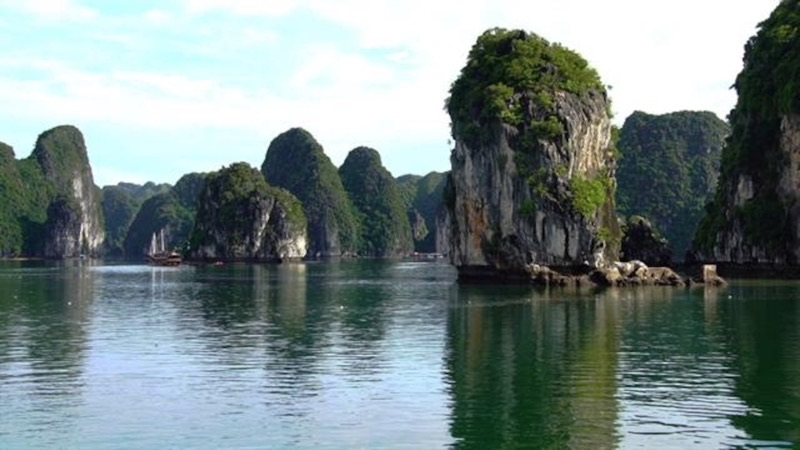
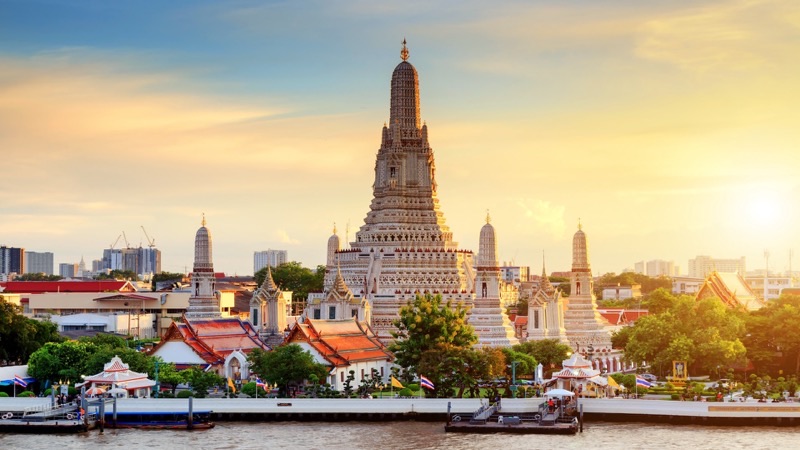
Thailand for easier travel, better beaches, and tourist-friendly infrastructure. Vietnam for cheaper prices, more adventure, and a rawer, less touristy experience. Mid-range daily budget: Vietnam $30–50/day vs Thailand $40–70/day.
- Choose Vietnam: Budget travelers, adventure seekers, foodies who love fresh herbs, history buffs, motorcycling enthusiasts.
- Choose Thailand: First-timers to Asia, beach lovers, party seekers, those wanting easy logistics, families.
- Budget snapshot: Vietnam: $30–50/day mid-range; Thailand: $40–70/day mid-range.
Choose Vietnam
Budget travelers, adventure seekers, motorcycling enthusiasts, history buffs.
Choose Thailand
First-timers, beach lovers, party seekers, families wanting easy logistics.
Quick Comparison
| Category | 🇻🇳 Vietnam | 🇹🇭 Thailand | Winner |
|---|---|---|---|
| Daily Budget (mid-range) | $30–50/day | $40–70/day | Vietnam |
| Food Scene | Pho, banh mi, bun cha — fresh, herb-forward | Curries, pad thai, som tum — bold, spicy | Tie |
| Beaches | Phu Quoc, Da Nang, Nha Trang — darker water | Phi Phi, Railay, Koh Lipe — crystal turquoise | Thailand |
| Culture & History | War history, French colonial, ancient Hue | Buddhist temples, royal palaces, hill tribes | Tie |
| Ease of Travel | Chaotic traffic, fewer English speakers | Well-worn tourist trail, English common | Thailand |
| Nightlife | Growing scene, cheap beer (40¢) | Full Moon parties, Khao San Rd, rooftop bars | Thailand |
| Nature & Adventure | Ha Long Bay, Sapa treks, Phong Nha caves | Khao Sok, Elephant sanctuaries, diving | Vietnam |
| Visa | E-visa required for most ($25, 90 days) | Visa-free 60 days for most nationalities | Thailand |
| Safety | Safe but traffic is terrifying, more scams | Safe, well-touristed, reliable emergency services | Thailand |
| Best For | Adventure, budget travel, motorcycling, raw experience | First-timers, beaches, relaxation, families | — |
🍜 Food & Dining
This is the question that starts wars on Reddit travel forums. Both Vietnam and Thailand have internationally recognized street food cultures, but they're fundamentally different beasts. Thai food is bold, rich, and layered — think green curry, massaman, pad thai on Banglamphu's streets, and som tum (papaya salad) that'll clear your sinuses. Chiang Mai's khao soi alone is worth a flight to northern Thailand.
Vietnamese food is lighter, fresher, and herb-forward. A bowl of Hanoi pho is a masterclass in restraint — clear broth, rice noodles, and fresh herbs. Hoi An's banh mi is arguably the world's best sandwich. Bun cha in Hanoi's Old Quarter and cao lau in Hoi An are dishes you literally cannot get anywhere else on Earth at the same quality.
Price comparison
Vietnamese street food is slightly cheaper: pho costs 35,000–60,000 VND ($1.40–$2.40), banh mi 15,000–30,000 VND ($0.60–$1.20), and a com binh dan (rice plate) runs 25,000–40,000 VND ($1.00–$1.60). Thai street food runs 40–80 THB ($1.10–$2.20) for a pad thai or rice dish, and 50–100 THB ($1.40–$2.80) for curries. Both countries offer incredible value, but Vietnam edges ahead for pure budget eating. Bangkok's mango sticky rice at 80–120 THB ($2.20–$3.30) is worth every baht though.
For sit-down restaurants, Vietnam is meaningfully cheaper. A solid dinner for two runs $8–15 in Vietnam vs $12–25 in Thailand. The gap widens for craft beer and cocktails — a Bangkok rooftop bar cocktail costs 300–500 THB ($8.50–$14) vs 100,000–200,000 VND ($4–$8) in Saigon.
Winner takeaway
- Winner: Tie
- Why: Both are top-tier food destinations that'll ruin you for eating anywhere else. Thai food is bolder and spicier with more variety. Vietnamese food is fresher, lighter, and cheaper. There's genuinely no wrong answer here.
- Who this matters for: Matters most if food is a primary driver of your trip. Budget eaters lean Vietnam; spice lovers lean Thailand.
🏖️ Beaches & Islands
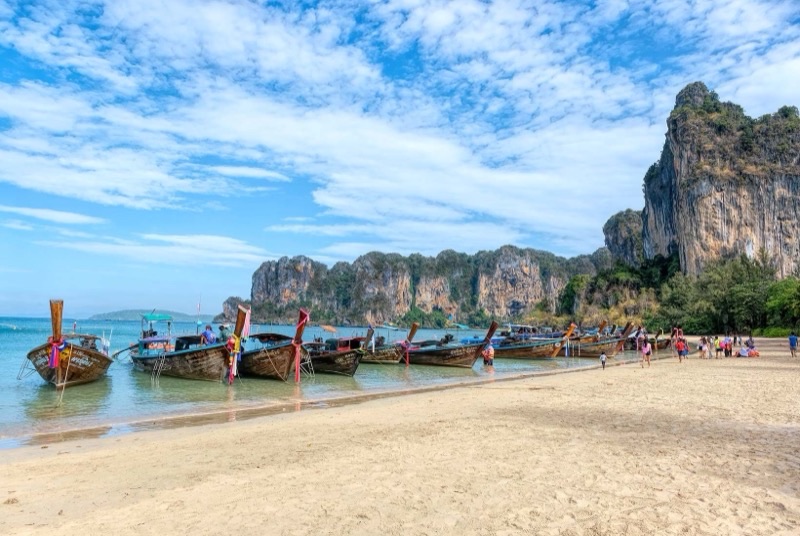
Thailand wins this category and it's not particularly close. The Andaman coast (Railay Beach, Koh Phi Phi, Koh Lipe, Koh Lanta) and Gulf islands (Koh Samui, Koh Phangan, Koh Tao) offer some of the best tropical beaches on the planet — crystal-clear turquoise water, white sand, and internationally recognized snorkeling and diving. The infrastructure is excellent: from budget bungalows to luxury resorts, Thailand's islands cater to every price point. See our Bali vs Phuket comparison for more on Thailand's beach game.
Vietnam has coastline — over 3,200 km of it — but the beach experience doesn't match Thailand's. Phu Quoc is Vietnam's best island and genuinely lovely. Da Nang and Nha Trang have long stretches of sand but the water is notably darker and rougher. Mui Ne is popular for kite surfing. The honest truth from Reddit is that if beaches are your primary goal, Thailand is the obvious choice.
Winner takeaway
- Winner: Thailand
- Why: Thailand's beaches are genuinely internationally recognized. Vietnam's coastline has charm but can't compete on water clarity, island diversity, or beach infrastructure. If your trip revolves around beach time, choose Thailand.
- Who this matters for: Matters most if snorkeling, diving, island-hopping, or beach relaxation is a big part of your trip plan.
💰 Cost Comparison
Vietnam is the cheaper destination, and the gap is significant for budget travelers. One Reddit user who'd been visiting Thailand since the 1980s noted that Vietnam's current pricing feels like "2000–2002 Thailand." Here's a detailed daily breakdown:
| Expense | 🇻🇳 Vietnam | 🇹🇭 Thailand |
|---|---|---|
| Hostel dorm | $5–10/night | $8–18/night |
| Mid-range hotel | $20–50/night | $30–80/night |
| Street food meal | $1.20–2.50 | $1.50–3.00 |
| Restaurant dinner | $4–10 | $6–15 |
| Local beer | $0.40–0.80 | $1.70–2.80 |
| Local transport (city) | $0.50–2.00 (Grab) | $1.00–4.00 (Grab/BTS) |
| Domestic flight | $25–60 | $30–80 |
| Daily total (mid-range) | $30–50 | $40–70 |
The beer factor: Vietnam has some of the cheapest beer in the world. Bia hoi (fresh draft beer) in Hanoi costs as little as 5,000–10,000 VND ($0.20–$0.40) per glass. A bottle of Saigon or 333 beer runs 10,000–15,000 VND ($0.40–$0.60). In Thailand, a Chang or Singha costs 60–100 THB ($1.70–$2.80) — 3–4x more. For backpackers on a tight budget, this alone can save $10–15/day.
Winner takeaway
- Winner: Vietnam
- Why: Vietnam is 25–40% cheaper than Thailand across most categories. The biggest savings are on accommodation and alcohol. Budget travelers can comfortably travel Vietnam on $25–35/day; that same level of comfort in Thailand requires $40–55/day.
- Who this matters for: Matters most if you're on a tight budget, traveling long-term, or want to stretch your money further.
🚃 Getting Around
Thailand has far better tourist infrastructure. Bangkok's BTS Skytrain and MRT make the capital easy to navigate without speaking Thai. Domestic flights are cheap and frequent. The train network connects Bangkok to Chiang Mai (overnight sleeper) and the south. Buses are comfortable and run on schedule. Grab (Southeast Asia's Uber) works flawlessly in all major cities.
Vietnam is more challenging. HCMC just got its first metro line in 2024 — before that, both major cities had zero rail transit. Hanoi and Saigon are dominated by motorbikes — millions of them — and crossing the street is a genuine survival skill for newcomers. Sleeper buses run north-to-south but vary wildly in quality. The Reunification Express train from Hanoi to HCMC takes 30+ hours. Internal flights are cheap ($25–60 with VietJet or Bamboo Airways) and often the smartest option. Grab works in Vietnamese cities but drivers may not speak English.
The motorbike question: Vietnam is a motorcyclist's paradise. Renting a scooter and riding the Hai Van Pass or the Ha Giang loop are bucket-list experiences. But you need confidence, and traffic in cities is genuinely dangerous. Thailand also has motorbike rentals (especially in Chiang Mai and the islands), but it's less integral to the travel experience.
Winner takeaway
- Winner: Thailand
- Why: Thailand is significantly easier to navigate — better transit, more English signage, more tourist-friendly infrastructure. Vietnam rewards adventurous travelers but requires more planning and a higher chaos tolerance. If ease of travel matters, Thailand wins hands down.
- Who this matters for: Matters most if you're a first-time Asia traveler, traveling with family, or don't want to stress about logistics.
⛩️ Culture & History
Both countries offer deep cultural experiences, but they're very different flavors. Thailand's culture is anchored in Theravada Buddhism — the golden temples (Grand Palace, Wat Pho, Phuket's old town), saffron-robed monks collecting morning alms, and the wai greeting create an instantly recognizable atmosphere. Northern Thailand's hill tribe villages and Chiang Mai cooking classes offer deeper cultural immersion. The Thai people are famously warm — it's called the "Land of Smiles" for a reason.
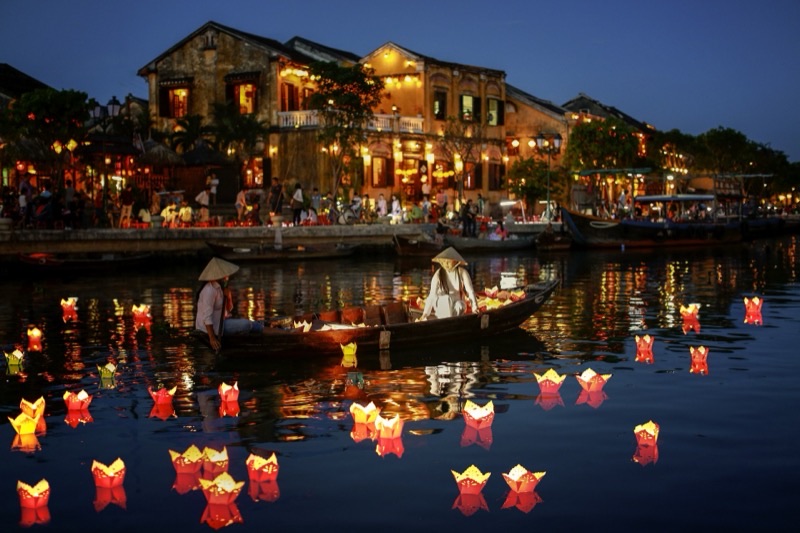
Vietnam's history hits harder. The Vietnam War (or "American War" as it's called there) left scars visible in the Cu Chi Tunnels, War Remnants Museum in HCMC, and the DMZ near Hue. French colonial architecture lines Hanoi's streets and Saigon's boulevards. The Imperial Citadel in Hue, Hoi An's ancient trading port (a UNESCO World Heritage Site), and the My Son Hindu temples span centuries of history. Vietnam also has a more complex cultural identity — Chinese influence in the north, Cham culture in the center, and a unique socialist-meets-capitalist energy throughout.
Winner takeaway
- Winner: Tie
- Why: Thailand offers serene Buddhist culture and legendary hospitality. Vietnam offers grittier, more complex history and less tourist-diluted authenticity. History buffs lean Vietnam; those seeking spiritual calm lean Thailand.
- Who this matters for: Matters most if cultural depth and historical significance are key drivers of your trip choice.
🌦️ Best Time to Visit
Both countries are tropical, but their weather patterns differ enough to affect your planning. The short answer: November–February is ideal for both.
N = Northern Vietnam (Hanoi), S = Southern Vietnam (HCMC). Thailand data for Bangkok. Temperatures are daily highs/lows in Celsius.
Key considerations
Vietnam's weather is complicated because the country stretches 1,650 km north to south. When Hanoi is cold and drizzly (Dec–Feb), HCMC and southern Vietnam are warm and dry. Central Vietnam (Hue, Hoi An, Da Nang) has its own rainy season from October–December. You can't assume "one season fits all" for Vietnam.
Thailand is more straightforward: cool season (Nov–Feb) is ideal everywhere, hot season (Mar–May) is brutal, and rainy season (Jun–Oct) brings afternoon monsoon downpours but rarely ruins a full day. The Gulf islands (Koh Samui, Koh Phangan) have a slightly different cycle — their worst weather is November–December.
Winner takeaway
- Winner: Thailand
- Why: Thailand's weather is simpler to plan around — the cool season (Nov–Feb) works for the whole country. Vietnam's north-south weather variance makes planning trickier. Both are great November–February.
- Who this matters for: Matters most if you're locking in dates and want weather certainty, especially for beach trips.
🎉 Nightlife & Entertainment
Thailand is one of the world's great nightlife destinations and it's not even close. Bangkok's Khao San Road is the backpacker party epicenter of Southeast Asia. Koh Phangan's Full Moon Party draws 10,000–30,000 people monthly. Bangkok's rooftop bars offer skyline views with cocktails. Chiang Mai has a mellower but thriving bar scene along Nimmanhaemin Road. Thailand's nightlife infrastructure is mature, diverse, and caters to everything from quiet jazz bars to all-night raves.
Vietnam's nightlife is growing but still miles behind Thailand. Saigon's Bui Vien Walking Street is the closest equivalent to Khao San Road — loud, cheap, and chaotic. Hanoi's Old Quarter has atmospheric bia hoi corners where you sit on tiny plastic stools drinking 5,000 VND ($0.20) draft beer. Da Nang and Hoi An are quiet at night. Vietnam's advantage is price: you can drink all night for less than the cost of two Bangkok cocktails.
Winner takeaway
- Winner: Thailand
- Why: Thailand is a nightlife powerhouse — from full-moon raves to sophisticated rooftop bars. Vietnam has charm (bia hoi corners, Bui Vien) but can't match Thailand's range or reputation. If nightlife matters, Thailand is the clear choice.
- Who this matters for: Matters most if socializing, bar-hopping, or party scenes are part of your ideal trip.
🛡️ Safety & Scams
Both countries are very safe for tourists by global standards — violent crime against travelers is rare in either. But they have different pain points.
Vietnam's main issues: Traffic is the #1 safety concern. Hanoi and HCMC have millions of motorbikes and pedestrians are low on the totem pole. Crossing a busy street in Hanoi's Old Quarter is genuinely terrifying on day one (pro tip: walk slowly and steadily — the bikes will flow around you). Petty scams are more frequently reported in Vietnam — taxi scams, shoe-shining hustles, overcharging at markets, and aggressive street vendors. Several Reddit users noted that scam attempts in Vietnam feel more persistent and tiring.
Thailand's main issues: Tourist-on-tourist scams (gem scams, tuk-tuk commission schemes) exist in Bangkok but are well-documented and avoidable. Motorbike accidents on islands are common — Thailand has one of the highest road fatality rates in the world. Drink spiking is occasionally reported in party areas. Full Moon Party can get sketchy late at night.
Winner takeaway
- Winner: Thailand
- Why: Thailand feels safer day-to-day. The tourist infrastructure is more mature, English is more widely spoken (which helps in emergencies), and scam attempts are less persistent. Vietnam isn't dangerous, but the chaotic traffic and more frequent hustle attempts create more daily stress.
- Who this matters for: Matters most if you're a solo female traveler, traveling with family, or it's your first time in Southeast Asia.
🌿 Nature & Adventure
Vietnam is an adventure traveler's dream. Ha Long Bay's limestone karsts are otherworldly. The Phong Nha caves (including Hang Son Doong, the world's largest cave) are a UNESCO marvel. Sapa's rice terraces in the northwest offer multi-day trekking through H'mong villages. The Ha Giang motorbike loop is widely considered one of the best road trips in Asia. Cat Ba Island, Ninh Binh ("Ha Long Bay on land"), and the central highlands around Dalat add even more variety.
Thailand's nature is excellent but more accessible and touristy. Khao Sok National Park has ancient rainforest, floating bungalows, and wildlife. Ethical elephant sanctuaries near Chiang Mai are bucket-list experiences. Diving at Koh Tao is elite-level and affordable (PADI certification from $200). Erawan Falls near Kanchanaburi is sharp. But Thailand's most famous natural attractions have been heavily touristed — Maya Bay on Phi Phi had to close for ecological recovery.
Winner takeaway
- Winner: Vietnam
- Why: Vietnam offers more raw, less-touristed natural experiences — from the world's largest cave to epic motorbike passes. Thailand has great nature too, but Vietnam's landscapes feel more dramatic and less commercialized. For pure adventure, Vietnam wins.
- Who this matters for: Matters most if trekking, caving, motorbike touring, or off-the-beaten-path experiences are what you're looking for.
🔀 Why Not Both?
Here's the thing most experienced Southeast Asia travelers will tell you: Vietnam and Thailand are different enough that doing both is better than choosing one. Budget flights between Bangkok and Hanoi or HCMC cost $30–80 on AirAsia, VietJet, or Nok Air (1.5–2 hours). You can also travel overland through Laos or Cambodia to connect them — adding even more countries to your trip.
Suggested combined itineraries
3 weeks: Bangkok (3 days) → Chiang Mai (3 days) → Fly to Hanoi (2 days) → Ha Long Bay (2 days) → Hoi An (3 days) → HCMC (2 days) → Fly to Thai islands (4 days)
4 weeks: Bangkok (3 days) → Chiang Mai (4 days) → Fly to Hanoi (3 days) → Sapa (2 days) → Ha Long Bay (2 days) → Hue (1 day) → Hoi An (3 days) → HCMC (3 days) → Fly to Koh Samui/Phuket (5 days)
6 weeks+: Full north-to-south Vietnam (3 weeks) + full Thailand circuit (3 weeks), connected via Laos or Cambodia
See our comparison pages for Thailand vs Cambodia, Vietnam vs Cambodia, and Bali vs Thailand if you're building a broader Southeast Asia itinerary.
Winner takeaway
- Winner: Both
- Why: With 3+ weeks and cheap inter-country flights ($30–80), there's no reason to choose. Start in Thailand for easy acclimatization, then head to Vietnam for adventure. Or reverse it. Either way, you get the best of Southeast Asia.
- Who this matters for: Matters most if you have 3+ weeks and want the full Southeast Asia experience rather than a single-country deep dive.
🎯 The Decision Framework
Choose Vietnam If…
- You can stretch a $35 daily budget further for lodging and food.
- You want extensive motorbike touring options across diverse landscapes.
- You prefer encountering fewer package tourists at cultural sites.
- You seek authentic, less commercialized street food experiences.
- You're interested in exploring large cave systems like Phong Nha.
- You want to visit historical sites related to the Vietnam War.
- You prefer a destination where local life feels more untouched by tourism.
- You want to find cheap hostels or guesthouses for under $20 a night.
Choose Thailand If…
- You want a mid-range daily budget of $40-70 to feel very comfortable.
- You prioritize easy, well-established public transport like Grab or BTS Skytrain.
- You seek easily accessible, iconic beaches with developed tourist services.
- You enjoy a wide array of nightlife, from beach clubs to upscale bars.
- You want a destination where English is widely spoken in tourist zones.
- You prefer a generally smoother, more predictable travel experience.
- You're looking for numerous island-hopping opportunities with clear water.
- You appreciate modern hotel amenities and consistent service quality.
- You value a strong sense of personal safety, even in big cities.
💰 Daily Cost Breakdown
| Expense | Vietnam | Thailand |
|---|---|---|
| Hostel dorm | $8-15 | $10-20 |
| Budget hotel | $25-45 | $35-60 |
| Street food meal | $2-5 | $3-6 |
| Restaurant meal | $8-15 | $10-20 |
| Beer/drink | $1.5-3 | $2-4 |
| Local transport (day) | $3-7 | $5-10 |
| Daily budget total | $30-70 | $40-90 |
Approximate daily costs for 2026. Actual prices vary by season and travel style.
🌤️ Monthly Weather Comparison
| Month | Vietnam Temp | Vietnam Rain | Thailand Temp | Thailand Rain |
|---|---|---|---|---|
| Jan | 18°C/64°F | 20mm | 32°C/90°F | 15mm |
| Feb | 19°C/66°F | 25mm | 33°C/91°F | 20mm |
| Mar | 22°C/72°F | 40mm | 34°C/93°F | 35mm |
| Apr | 26°C/79°F | 80mm | 35°C/95°F | 70mm |
| May | 30°C/86°F | 190mm | 34°C/93°F | 200mm |
| Jun | 32°C/90°F | 240mm | 33°C/91°F | 150mm |
| Jul | 32°C/90°F | 270mm | 33°C/91°F | 160mm |
| Aug | 31°C/88°F | 290mm | 33°C/91°F | 180mm |
| Sep | 30°C/86°F | 200mm | 32°C/90°F | 250mm |
| Oct | 27°C/81°F | 75mm | 32°C/90°F | 200mm |
| Nov | 23°C/73°F | 30mm | 31°C/88°F | 50mm |
| Dec | 19°C/66°F | 15mm | 31°C/88°F | 10mm |
Average monthly high temperatures and rainfall based on historical climate data.
📅 Sample Itineraries
Weekend in Vietnam — Hanoi Focus (3 Days)
💡 Ha Long Bay overnight cruises start at $80/person — mid-range ($150-200) gives a much better experience.
Weekend in Thailand — Bangkok Focus (3 Days)
💡 The BTS Skytrain and MRT cover central Bangkok — avoid taxis during rush hour (5-7pm gridlock).
Week in Vietnam — North to Central (7 Days)
💡 Internal flights in Vietnam are cheap ($30-60 one-way on VietJet/Bamboo). Don't waste time on 12-hour buses.
Week in Thailand — Bangkok + Islands (7 Days)
💡 Thailand's domestic flights are incredibly cheap — Bangkok to Chiang Mai or Phuket for $20-40 on AirAsia/Nok Air.
❓ Frequently Asked Questions
Is Vietnam or Thailand better for first-time visitors to Southeast Asia?
Thailand is generally easier for first-timers. It has better tourist infrastructure, more English speakers, simpler visa rules (visa-free for most nationalities), and a well-worn backpacker trail. Vietnam is more rewarding for adventurous travelers but has a steeper learning curve — chaotic traffic, fewer English speakers outside tourist zones, and visa requirements for many nationalities.
Which is cheaper, Vietnam or Thailand?
Vietnam is cheaper overall. Street food costs 30,000–60,000 VND ($1.20–$2.40) vs 40–80 THB ($1.10–$2.20) in Thailand. Budget hotels run $8–15/night in Vietnam vs $12–25 in Thailand. The biggest savings are on beer (10,000–15,000 VND/$0.40–0.60 vs 60–100 THB/$1.70–2.80) and local transport. One Reddit user noted Vietnam feels like Thailand pricing from 2000–2002.
Is Vietnam or Thailand better for beaches?
Thailand wins for beaches. Its islands (Koh Lipe, Koh Lanta, Railay Beach, Phi Phi) offer crystal-clear turquoise water and white sand. Vietnam has beautiful coastline (Phu Quoc, Da Nang, Nha Trang) but the water tends to be darker and murkier. Multiple Reddit users specifically called out Thailand's superior beach quality.
How long should I spend in Vietnam vs Thailand?
Both countries deserve at least 2 weeks to do properly. Vietnam's north-to-south route (Hanoi → Sapa → Ha Long Bay → Hue → Hoi An → Ho Chi Minh City) needs 2–3 weeks minimum. Thailand can be split between Bangkok (2–3 days), the north (Chiang Mai, 3–4 days), and southern islands (5–7 days). With 3+ weeks, you can do both countries.
Is it easy to travel between Vietnam and Thailand?
Very easy. Budget airlines like AirAsia and VietJet fly between Bangkok and Hanoi or Ho Chi Minh City for $30–80 one way (1.5–2 hours). You can also travel overland through Laos or Cambodia if you want to add countries to your trip. Many backpackers combine both in a 4–6 week Southeast Asia loop.
Which has better food, Vietnam or Thailand?
This is the most hotly debated question on Reddit travel forums and there's no consensus. Thai food is bolder, spicier, and more varied (curries, pad thai, som tum, khao soi). Vietnamese food is lighter, fresher, and herb-forward (pho, banh mi, bun cha, cao lau). Both are among the best street food cultures. Most travelers say they're equally incredible but completely different.
Is Vietnam or Thailand safer for solo travelers?
Both are very safe for solo travelers including women. Thailand has more established solo travel infrastructure (hostels, party scenes, organized tours). Vietnam's main safety concern is traffic — crossing streets in Hanoi or HCMC is genuinely intimidating at first. Petty scams exist in both countries but are more frequently reported in Vietnamese tourist areas, particularly taxi and cyclo scams.
Can I visit both Vietnam and Thailand in one trip?
Absolutely, and many travelers do. With 3–4 weeks, a popular route is Bangkok → Chiang Mai → fly to Hanoi → train/bus south to Ho Chi Minh City (or reverse). Budget flights between the countries cost $30–80. Add Cambodia (Angkor Wat) in between for the ultimate Southeast Asia trip.
Ready to plan your Southeast Asia trip?
Get a free custom itinerary for Vietnam, Thailand, or both — built from real traveler insights, not generic templates.
🎟️ Book Tours & Experiences
Hand-picked tours and activities for both destinations — book with free cancellation
Experiences via Viator — free cancellation on most tours