How we built this comparison
This page combines traveler discussion patterns, published price ranges, transit details, and seasonal data to make the Vietnam vs Cambodia decision easier to resolve.
- Reviewed Reddit-style traveler discussions and recurring decision patterns for Vietnam and Cambodia.
- Checked numeric claims like accommodation ranges, transit costs, transfer times, or seasonal patterns where those numbers appear on the page.
- Updated the page structure so each major section ends with a clearer winner, reason, and traveler-use note.
Best read as a decision guide, not a universal truth: the right pick depends on your budget, pace, and what kind of trip you actually want.
⚡ The TL;DR Verdict
Vietnam is better if you want Foodies, adventurers, long-trip travelers. Cambodia is better if you want History buffs, temple lovers, short-trip travelers. Mid-range budget: Vietnam $50–80/day vs Cambodia $60–90/day.
- Choose Vietnam: Foodies, adventurers, long-trip travelers.
- Choose Cambodia: History buffs, temple lovers, short-trip travelers.
- Budget snapshot: Vietnam: $50–80/day; Cambodia: $60–90/day.
Choose Vietnam
Foodies, adventurers, long-trip travelers.
Choose Cambodia
History buffs, temple lovers, short-trip travelers.
Quick Comparison
| Category | 🇻🇳 Vietnam | 🇰🇭 Cambodia | Winner |
|---|---|---|---|
| Daily Budget (mid-range) | $50–80/day | $60–90/day | Vietnam |
| Food Scene | Elite-level — phở, bánh mì, bún chả, regional variety | Underrated — fish amok, lok lak, but less depth | Vietnam |
| Historical Sites | War museums, Imperial City (Huế), Cu Chi Tunnels | Angkor Wat complex, Killing Fields, Royal Palace | Cambodia |
| Nightlife | Bùi Viện (HCMC), Old Quarter (Hanoi), Hội An | Pub Street (Siem Reap), Riverside (Phnom Penh) | Vietnam |
| Getting Around | Grab app, sleeper buses, domestic flights, trains | Tuk-tuks, minivans, limited infrastructure | Vietnam |
| Beaches | Phú Quốc, Nha Trang, Đà Nẵng, Mũi Né | Koh Rong, Koh Rong Samloem, Sihanoukville | Tie |
| Nature | Ha Long Bay, Sapa rice terraces, Phong Nha caves | Tonlé Sap Lake, Cardamom Mountains, Mondulkiri | Vietnam |
| Visa | E-visa $25, 90 days (2025 policy) | Visa on arrival $30, 30 days | Vietnam |
| Tourist Crowds | Busier in major cities, well-worn backpacker trail | Less crowded outside Angkor, more off-the-beaten-path | Cambodia |
| Best For | Foodies, adventurers, long-trip travelers | History buffs, temple lovers, short-trip travelers | — |
🍜 Food & Dining
Vietnam is, simply put, one of the best food countries on the planet. Every region has its own distinct cuisine: Hanoi's phở bò (beef pho) and bún chả, Huế's bún bò Huế and bánh bèo, Hội An's cao lầu and white rose dumplings, and Ho Chi Minh City's bánh mì and cơm tấm (broken rice). Street food isn't just cheap — it's often better than restaurant food. A steaming bowl of phở from a sidewalk stall in Hanoi costs 40,000–60,000 VND ($1.60–2.40) and is genuinely one of the best meals you'll ever eat.
Cambodia's food scene is frequently underrated but can't match Vietnam's depth. The standout dishes — fish amok (coconut curry steamed in banana leaf), lok lak (stir-fried beef with pepper-lime dip), and num banh chok (Khmer noodles) — are delicious and worth seeking out. The problem, as many Reddit travelers note, is that tourist-area restaurants in Siem Reap and Phnom Penh often default to generic "backpacker food" (fried rice, spring rolls, smoothie bowls) rather than authentic Khmer cooking. You need to venture to local markets or ask around to find the real stuff.
Price comparison
Street food in Vietnam is astonishingly cheap: phở 40,000–60,000 VND ($1.60–2.40), bánh mì 20,000–35,000 VND ($0.80–1.40), a full cơm bình dân (rice plate) meal 30,000–50,000 VND ($1.20–2.00). In Cambodia, a local dish at a market runs $1.50–3.00, but tourist-area restaurants charge $4–8 for similar fare. Bia hơi (fresh draft beer) in Hanoi is famously 5,000–10,000 VND ($0.20–0.40) per glass. In Cambodia, a draft Angkor beer is about $0.50–1.00 at happy hour.
Winner takeaway
- Winner: Vietnam
- Why: Vietnam wins decisively on food — it's one of the world's great food cultures. Cambodia's cuisine is worth exploring, but you'll need to look harder for authentic dishes outside of tourist zones.
- Who this matters for: Matters most if food quality, variety, or meal budgets will shape your trip between Foodies, adventurers, long-trip travelers. and History buffs, temple lovers, short-trip travelers..
🏛️ Temples, History & Culture
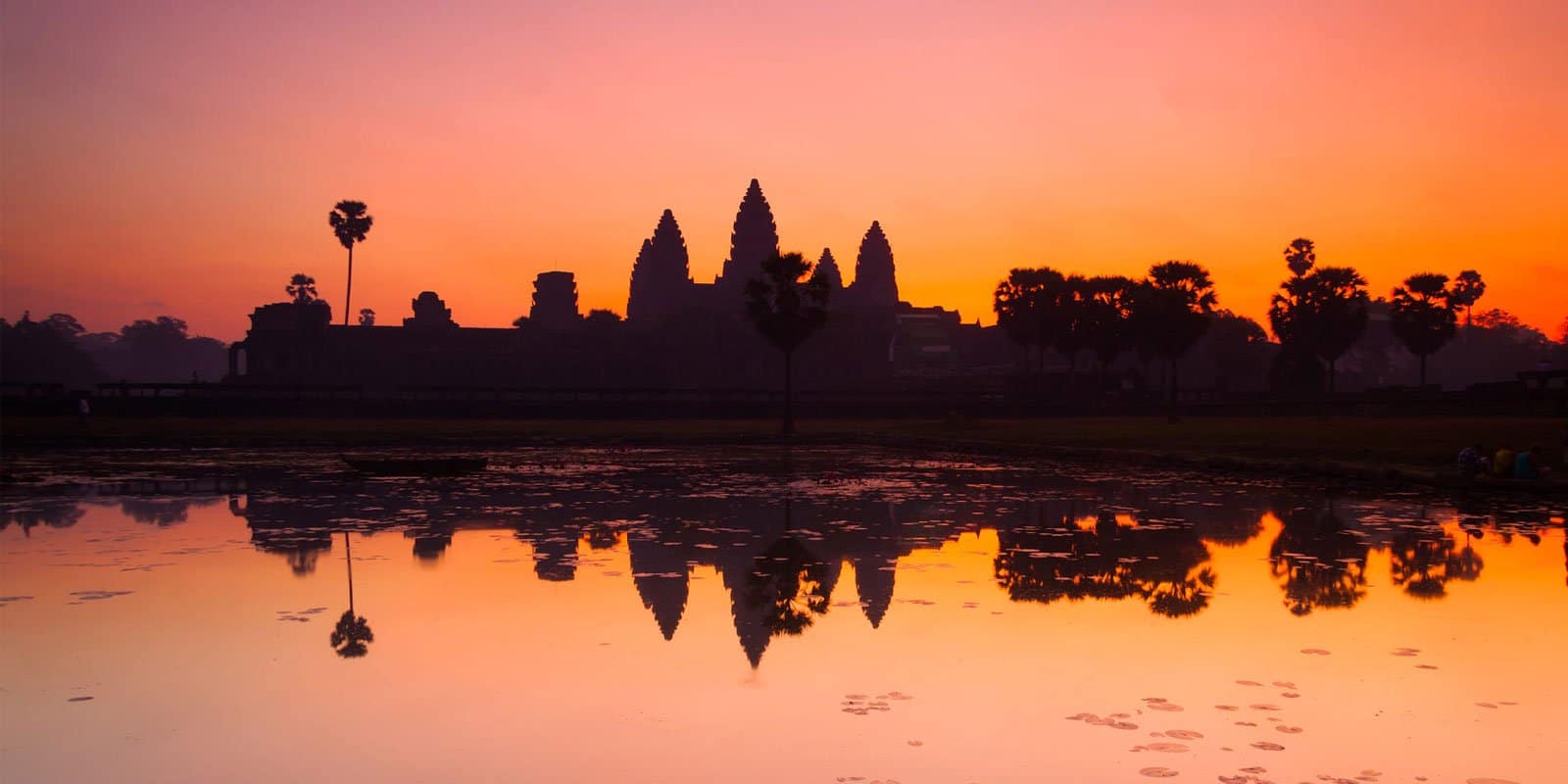
This is Cambodia's knockout category. Angkor Wat is not just a temple — it's the largest religious monument on Earth, a 162.6-hectare complex that was the center of the Khmer Empire. But Angkor is more than Angkor Wat: the broader archaeological park includes Bayon (with its haunting stone faces), Ta Prohm (the "Tomb Raider temple" swallowed by trees), Banteay Srei (intricate pink sandstone carvings), and dozens more. Most travelers spend 3 days exploring the complex, and even that feels rushed. The 1-day pass is $37, the 3-day pass is $62, and the 7-day pass is $72 — remarkable value for what you get.
Cambodia's modern history is equally powerful and deeply painful. The Tuol Sleng Genocide Museum (S-21) in Phnom Penh and the Killing Fields of Choeung Ek document the Khmer Rouge era (1975–1979), one of the darkest chapters in human history. These sites are emotionally devastating but essential for understanding Cambodia. As one Reddit traveler put it: "Cambodia is definitely worth visiting if you care about history. The recent history is obviously very painful, but absolutely worth learning about and seeing first hand."
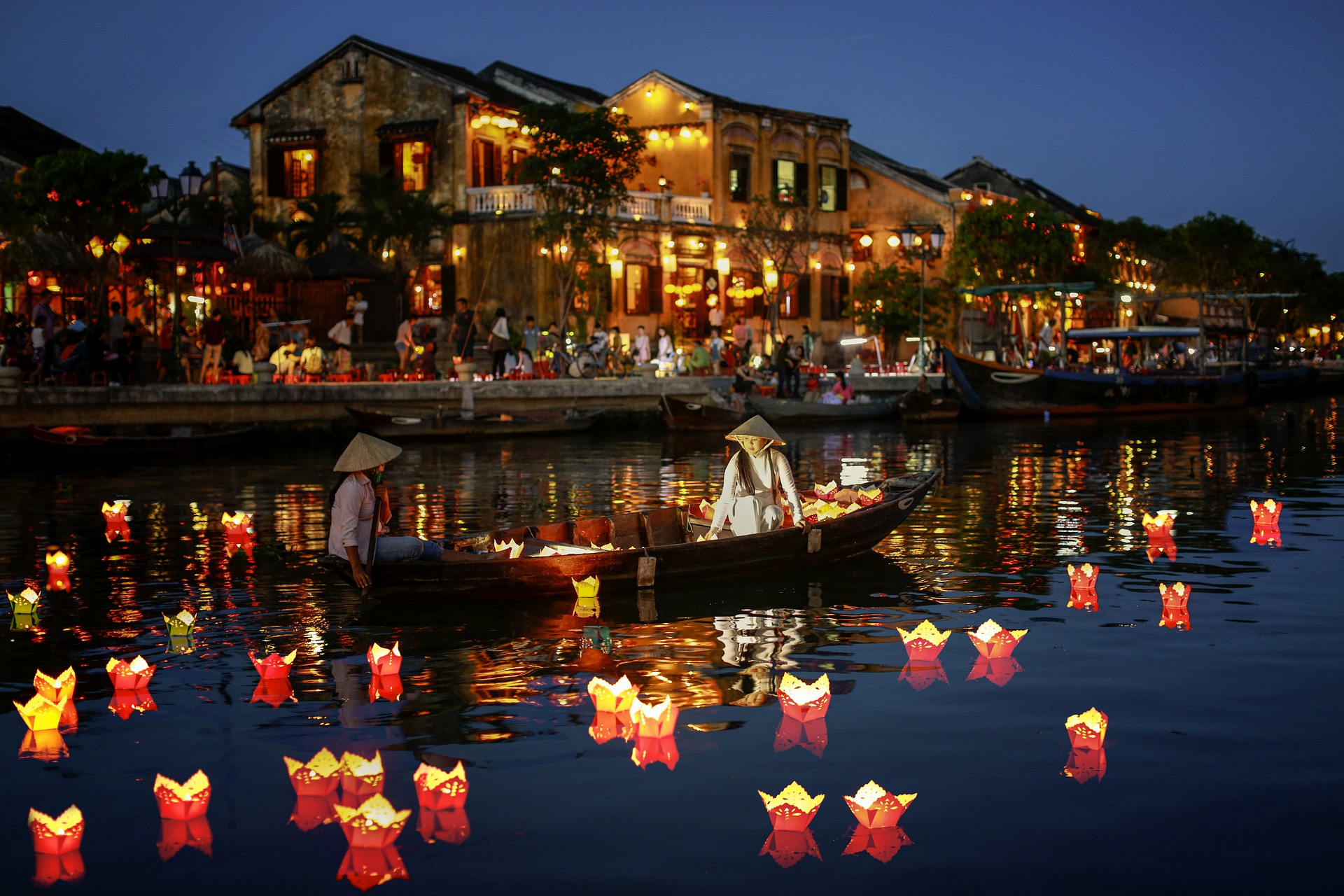
Vietnam's cultural offerings are different but equally compelling. The Imperial Citadel of Huế is a UNESCO World Heritage Site and former seat of the Nguyễn dynasty. Hội An's Ancient Town (also UNESCO-listed) is a perfectly preserved 15th-century trading port with Japanese bridges, Chinese assembly halls, and thousands of silk lanterns. The Cu Chi Tunnels near HCMC reveal the ingenuity of Vietnamese guerrilla warfare. Hanoi's Old Quarter, Ho Chi Minh Mausoleum, and the Temple of Literature round out a rich cultural itinerary.
Winner takeaway
- Winner: Vietnam
- Why: Cambodia wins for sheer archaeological wow factor — Angkor Wat is a once-in-a-lifetime experience. Vietnam offers more cultural breadth across its regions. If ancient temples are your priority, Cambodia is the clear choice.
- Who this matters for: Matters most if you are choosing based on atmosphere, heritage, and what kind of experience feels more memorable.
💰 Cost Comparison
Both countries are extremely affordable by global standards, but Vietnam edges ahead as the cheaper option — especially for daily food and transport. Cambodia's quirk is its dual-currency system: US dollars are used everywhere alongside Cambodian riel (KHR), and tourist-facing prices tend to be in USD, which can feel "rounded up" compared to Vietnam's local-currency pricing.
| Expense | 🇻🇳 Vietnam | 🇰🇭 Cambodia |
|---|---|---|
| Hostel dorm | $5–10/night | $5–12/night |
| Mid-range hotel | $25–60/night | $30–70/night |
| Street food meal | $1–3 | $1.50–4 |
| Restaurant meal | $3–8 | $4–10 |
| Local beer | $0.25–1.00 | $0.50–1.50 |
| Inter-city transport | $8–25 (bus), $30–80 (flight) | $8–15 (bus), $40–90 (flight) |
| In-city transport | $1–3 (Grab motorbike) | $2–5 (tuk-tuk) |
| Major attraction | $2–8 (most museums/sites) | $37 (Angkor 1-day pass) |
| Daily total (mid-range) | $50–80 | $60–90 |
The Angkor tax: Cambodia's biggest cost outlier is the Angkor pass system. The 3-day pass ($62) is the sweet spot — most travelers use all 3 days and feel it's worth every cent. But combined with tuk-tuk hire ($15–20/day to get around the park), your Siem Reap days are significantly more expensive than a typical day elsewhere in Cambodia or Vietnam.
Winner takeaway
- Winner: Depends
- Why: Vietnam is 15–25% cheaper overall, especially on food and local transport. Cambodia's costs spike during Angkor Wat visits but are very reasonable otherwise. Both are incredible value compared to virtually any Western destination.
- Who this matters for: Matters most if nightly rates, meal prices, or transport costs will change how long you can stay.
🛵 Getting Around
Vietnam has significantly better transport infrastructure. The Grab app (Southeast Asia's Uber) works seamlessly in all major Vietnamese cities — motorbike taxis for $1–3 across town, cars for $3–8. Sleeper buses connect cities overnight (Hanoi→Hoi An, HCMC→Da Lat) for $8–20 and are surprisingly comfortable. The Reunification Express train runs the full length of the country (Hanoi→HCMC, ~30 hours), though most people fly between the north and south ($30–80 on VietJet or Bamboo Airways). Domestic flight networks are excellent and cheap.
Cambodia's transport is more limited and can be frustrating. Between cities, you're looking at minivans or shared buses — generally slower and less comfortable than Vietnam's options. Within cities, tuk-tuks are the main option in Siem Reap and Phnom Penh. Grab works in Phnom Penh but is less reliable than in Vietnam. The roads between Phnom Penh and Siem Reap have improved significantly (now 5–6 hours by bus), but rural roads can be rough. There are no passenger trains for tourists. Domestic flights exist but are limited (Cambodia Angkor Air).
Winner takeaway
- Winner: Depends
- Why: Vietnam wins on transport by a wide margin. Grab makes in-city travel effortless, and the sleeper bus + domestic flight network is well-oiled. Cambodia requires more patience and planning, especially outside major tourist routes.
- Who this matters for: Matters most if you care about ease, transfer friction, and how much time you lose moving between sights.
☀️ Best Time to Visit
Cambodia has a simple weather story: dry season (November–April) and wet season (May–October). The sweet spot is November to February — temperatures hover around 25–32°C with low humidity and barely any rain. March and April are brutally hot (regularly 38–42°C). The wet season brings afternoon downpours but isn't necessarily a dealbreaker — crowds thin out dramatically, prices drop, and the landscape turns lush green. Angkor surrounded by moats full of water is arguably more beautiful in the wet season.
Vietnam is much more complex because the country stretches 1,650 km from north to south across multiple climate zones. There is no single "best time" to visit all of Vietnam:
The best all-Vietnam compromise: travel north→south in October–December (autumn in the north, dry season beginning in the south), or south→north in March–May.
Winner takeaway
- Winner: Depends
- Why: Cambodia is easier to plan — just go November to February. Vietnam requires more thought because of its multiple climate zones. If combining both countries, November–December or February–March are the overlapping sweet spots.
- Who this matters for: Matters most if seasonality, rain, heat, or crowd levels could make or break the trip.
🏨 Where to Stay
Vietnam — Key cities & neighborhoods
Hanoi — Old Quarter — The classic base. Chaotic, atmospheric, walkable. Hundreds of hotels, hostels, and street food within arm's reach. Phở Gia Truyền and Bún Chả Hương Liên (Obama's bún chả spot) are minutes away.
Hội An — Ancient Town area — Stay within walking distance of the lantern-lit old town. A pedestrianized UNESCO paradise. Best base for tailoring shops, cooking classes, and Ân Bàng Beach (4km away by bicycle).
Ho Chi Minh City — District 1 — The heart of Saigon. Ben Thanh Market, War Remnants Museum, rooftop bars, and the Bùi Viện backpacker street. Also consider District 3 for a more local vibe with equally good food.
Cambodia — Key cities & neighborhoods
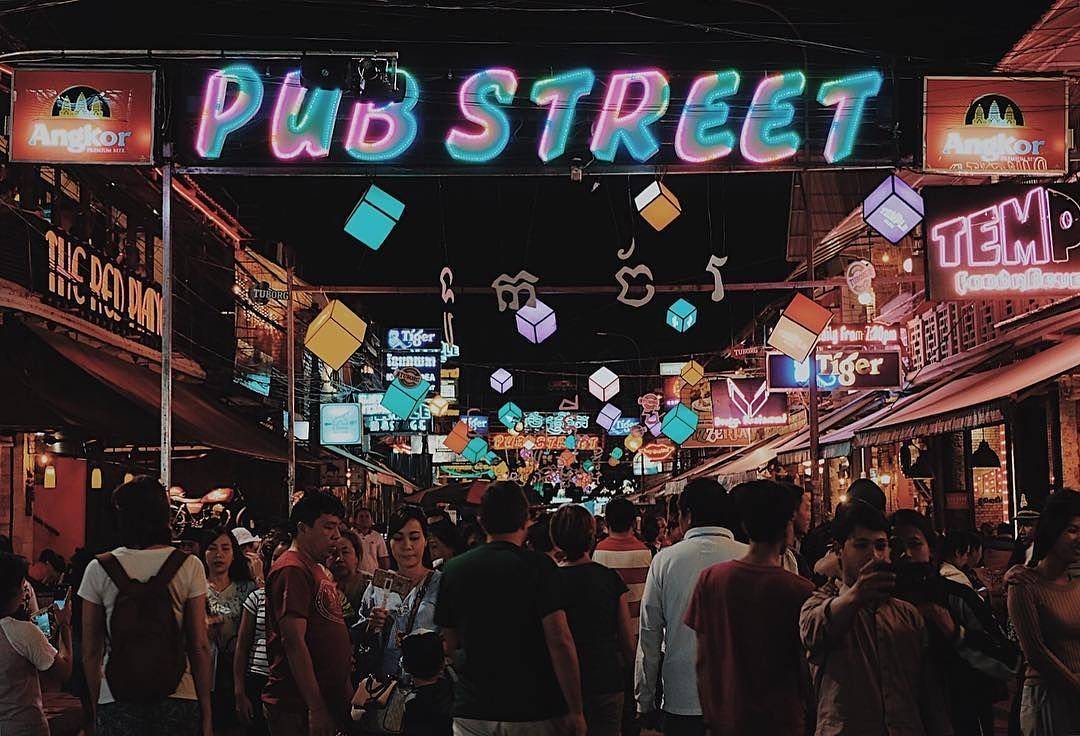
Siem Reap — Old Market / Pub Street area — Walking distance to restaurants, the night market, and tuk-tuk pickup for Angkor. Ranges from $6 hostels to $200+ luxury resorts. The Wat Bo area is quieter and more residential.
Phnom Penh — Riverside / BKK1 — Riverside (Sisowath Quay) has the views and tourist energy. BKK1 (Boeung Keng Kang) is the expat neighborhood with great cafés, restaurants, and a more sophisticated vibe. Russian Market area is good for budget travelers.
Koh Rong Samloem — For beach time, skip Sihanoukville (overdeveloped) and head straight to this quieter island. Saracen Bay has good hostels and bungalows; Lazy Beach is even more remote.
Winner takeaway
- Winner: Depends
- Why: Vietnam has more distinct "base cities" that reward multi-day stays. Cambodia's accommodation is concentrated in Siem Reap and Phnom Penh, both of which offer great value. For either country, book ahead during peak season (Nov–Feb).
- Who this matters for: Matters most if neighborhood choice, hotel value, or day-trip convenience is a big part of the decision.
🎒 Day Trips
Vietnam's geographic diversity means each base city unlocks different experiences. Cambodia's day trips are more concentrated but no less impressive.
From Hanoi, Vietnam
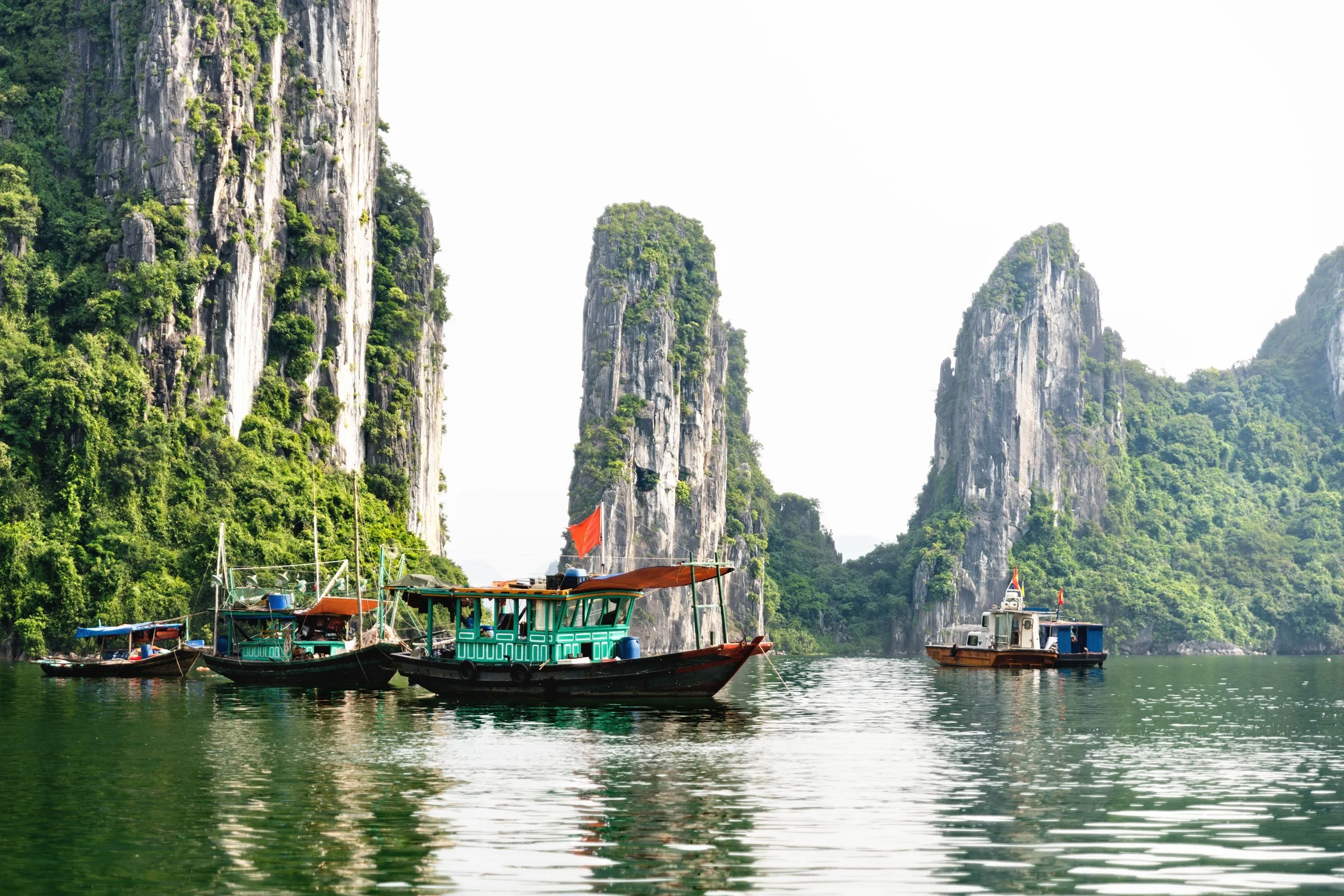
Ha Long Bay (2.5h) — UNESCO World Heritage, 1,600+ limestone islands. Overnight cruises from $80–200. One of Southeast Asia's most iconic sights.
Ninh Bình / Tam Cốc (1.5h) — "Ha Long Bay on land." Rowboat rides through limestone caves and rice paddies. Less crowded, more serene.
Sapa (5h or overnight train) — Terraced rice fields, Hmong villages, mountain trekking. Best September–November.
From Hội An / Đà Nẵng, Vietnam
Mỹ Sơn Sanctuary (1h from Hội An) — Champa Kingdom temple ruins, Vietnam's own "mini Angkor."
Bà Nà Hills / Golden Bridge (45min from Đà Nẵng) — That famous bridge held up by giant stone hands.
Phong Nha-Kẻ Bàng (day trip from Đồng Hới) — The world's largest caves, including Sơn Đoòng. Absolutely spectacular.
From Siem Reap, Cambodia
Angkor Wat complex (15min) — Obviously. Sunrise at Angkor Wat, Bayon faces, Ta Prohm's tree-roots. Plan 2–3 full days.
Tonlé Sap Lake (30min) — Floating villages, one of the world's largest freshwater lakes. Fascinating but tourist-trappy — go with a good guide.
Beng Mealea (1.5h) — An overgrown, jungle-swallowed temple with almost no tourists. Like Ta Prohm without the crowds. Striking.
From Phnom Penh, Cambodia
Killing Fields & S-21 (in-city) — Not a "day trip" in the traditional sense, but a full emotional day. Essential for understanding Cambodia.
Koh Dach (Silk Island) (30min ferry) — Silk weaving villages, quiet cycling, a peaceful escape from the city.
Oudong (1h) — Former Cambodian capital with hilltop temples and panoramic views.
Winner takeaway
- Winner: Vietnam
- Why: Vietnam's day trip variety is unmatched — Ha Long Bay alone is a bucket-list item. Cambodia's day trips are more concentrated around Siem Reap's temple circuit. Beng Mealea is a lesser-known spot that most first-time visitors miss.
- Who this matters for: Matters most if you want one base with strong side trips rather than a single-destination stay.
🔀 Why Not Both?
The most popular multi-country route in Southeast Asia is Vietnam + Cambodia, and for good reason. The two countries share a border, have cheap bus and flight connections, and complement each other perfectly — Vietnam for food, diversity, and immersion; Cambodia for ancient history, reflection, and island beaches.
The classic route (2–3 weeks)
Hanoi (2–3 days) → Ha Long Bay (overnight cruise) → Hội An (2–3 days, fly from Hanoi to Đà Nẵng) → Ho Chi Minh City (2–3 days, fly from Đà Nẵng) → Bus to Phnom Penh (6h, ~$15) → Phnom Penh (2 days) → Bus to Siem Reap (6h, ~$12) → Siem Reap / Angkor (3 days) → Fly home from Siem Reap.
Suggested time splits
2 weeks: 10 days Vietnam + 4 days Cambodia (Siem Reap only)
3 weeks: 14 days Vietnam (Hanoi, Ha Long Bay, Hoi An, HCMC, Mekong Delta) + 7 days Cambodia (Phnom Penh, Siem Reap, Koh Rong Samloem)
4 weeks: Full Vietnam top-to-bottom (17 days) + Full Cambodia circuit (11 days)
Pro tip: Fly into Hanoi and out of Siem Reap (or vice versa) to avoid backtracking. Budget airlines like VietJet, Cambodia Angkor Air, and AirAsia connect all major cities for $30–80 one way. The HCMC → Phnom Penh bus is the easiest border crossing — just make sure you have your Cambodia e-visa sorted beforehand to avoid scams at the border.
Winner takeaway
- Winner: Depends
- Why: If you have 2+ weeks, absolutely do both. Start with Vietnam for the food and diversity, end with Cambodia for the historical weight and temple grandeur. The HCMC→Phnom Penh→Siem Reap route is a well-trodden classic for a reason.
- Who this matters for: Matters most if you are deciding whether this should be a one-destination trip or a broader itinerary.
🎯 The Decision Framework
Choose Vietnam If…
- You desire a wide array of street food, from northern pho to southern banh xeo.
- You plan an extended journey of two weeks or longer to explore multiple regions.
- You seek active adventures like caving in Phong Nha or trekking in Sapa.
- Your ideal daily spending is in the $50-80 range.
- You want to explore historical sites related to the American War extensively.
- You enjoy navigating cities and countryside via affordable motorbike rentals.
- You prefer a destination with a long coastline for beach activities and island tours.
- You want to experience a country with significant regional differences in culture and food.
Choose Cambodia If…
- You are primarily focused on exploring the ancient temples of Angkor.
- You plan a shorter visit, typically 4-7 days concentrated around Siem Reap.
- Your daily budget aligns with the $60-90 range.
- You want to learn about the Khmer Rouge history at sites like S21 and the Killing Fields.
- You prefer a destination where major attractions are relatively close.
- You enjoy boat trips on Tonlé Sap Lake to floating villages.
- You seek a destination with a focus on ancient history and archaeology.
- You appreciate a more relaxed travel pace without extensive inter-city travel.
💰 Daily Cost Breakdown
| Expense | Vietnam | Cambodia |
|---|---|---|
| Hostel dorm | $8-15 | $6-12 |
| Budget hotel | $25-45 | $20-40 |
| Street food meal | $2-5 | $2-4 |
| Restaurant meal | $8-15 | $7-14 |
| Beer/drink | $1-3 | $1-2.5 |
| Local transport (day) | $3-8 | $2-6 |
| Daily budget total | $30-60 | $25-50 |
Approximate daily costs for 2026. Actual prices vary by season and travel style.
🌤️ Monthly Weather Comparison
| Month | Vietnam Temp | Vietnam Rain | Cambodia Temp | Cambodia Rain |
|---|---|---|---|---|
| Jan | 20°C/68°F | 20mm | 31°C/88°F | 10mm |
| Feb | 21°C/70°F | 22mm | 33°C/91°F | 15mm |
| Mar | 23°C/73°F | 30mm | 34°C/93°F | 30mm |
| Apr | 27°C/81°F | 80mm | 35°C/95°F | 80mm |
| May | 31°C/88°F | 188mm | 34°C/93°F | 180mm |
| Jun | 32°C/90°F | 240mm | 32°C/90°F | 220mm |
| Jul | 32°C/90°F | 288mm | 31°C/88°F | 240mm |
| Aug | 31°C/88°F | 320mm | 31°C/88°F | 250mm |
| Sep | 30°C/86°F | 260mm | 30°C/86°F | 270mm |
| Oct | 28°C/82°F | 130mm | 30°C/86°F | 190mm |
| Nov | 25°C/77°F | 40mm | 29°C/84°F | 80mm |
| Dec | 22°C/72°F | 25mm | 30°C/86°F | 30mm |
Average monthly high temperatures and rainfall based on historical climate data.
❓ Frequently Asked Questions
Is Vietnam or Cambodia better for first-time visitors to Southeast Asia?
Vietnam is generally recommended for first-timers. It has better tourist infrastructure, more diverse landscapes (mountains, beaches, cities, caves), a wider food scene, and reliable ride-hailing apps like Grab. Cambodia is rawer and more off-the-beaten-path, which is part of its charm but can be more challenging. That said, if Angkor Wat is your bucket-list dream, Cambodia absolutely delivers.
How much does it cost to travel in Vietnam vs Cambodia per day?
Vietnam is slightly cheaper overall. Budget travelers spend $25–40/day in Vietnam vs $30–50/day in Cambodia. Mid-range travelers spend $50–80/day in Vietnam vs $60–90/day in Cambodia. The main difference is Cambodia's USD-based pricing (feels tourist-inflated) and the $37+ Angkor pass. Vietnam's local currency pricing means street food and local transport are genuinely cheap — phở for $1.60, Grab rides for $1–3.
Can you combine Vietnam and Cambodia in one trip?
Absolutely, and it's one of the most popular multi-country routes in Southeast Asia. The HCMC → Phnom Penh bus takes 6 hours (~$15). For 2 weeks, a common split is 10 days Vietnam + 4–5 days Cambodia focused on Siem Reap and Angkor. Budget airlines connect major cities for $30–80 one way. Get your Cambodia e-visa beforehand to avoid border hassles.
Which country has better food, Vietnam or Cambodia?
Vietnam, by a wide margin — this is one of the few things Reddit almost universally agrees on. Vietnamese cuisine (phở, bánh mì, bún chả, cơm tấm) is among the world's great food cultures. Cambodia's fish amok and lok lak are excellent, but the depth and variety don't compare. Many travelers note that Cambodian tourist restaurants default to generic "backpacker food" — you need to seek out local markets for authentic Khmer cooking.
Is Cambodia safe for tourists in 2026?
Cambodia is generally safe, especially in Siem Reap and Phnom Penh's tourist areas. Standard precautions apply: watch for bag snatching on motorbikes in Phnom Penh, use reputable transport, and avoid flashing valuables. Some travelers report more aggressive touts and scams compared to Vietnam, particularly around Angkor Wat and Pub Street. The countryside is very safe and welcoming.
How long do you need in Vietnam vs Cambodia?
Vietnam rewards extended stays: 2–3 weeks minimum to see the highlights (Hanoi, Ha Long Bay, Hoi An, HCMC, Mekong Delta). Cambodia can be covered in 5–7 days: 3 days Siem Reap/Angkor, 2 days Phnom Penh, plus optional beach time on Koh Rong. If you have 10 days total, Vietnam gives you more variety; Cambodia gives you one of the world's greatest archaeological sites plus a profound history lesson.
Should you choose Vietnam or Cambodia for what's the best time to visit vietnam and cambodia?
Cambodia is simple: November to February (cool, dry, sunny). Avoid April–May (brutally hot, 40°C+). Vietnam is trickier — it spans 1,650 km with multiple climate zones. Best all-Vietnam compromise: October–December or March–April. Northern Vietnam (Hanoi, Ha Long Bay, Sapa) is best September–November. Central (Hoi An, Hue): February–May. Southern (HCMC, Mekong Delta): December–April. For both countries together, November–December or February–March overlap perfectly.
Ready to plan your Southeast Asia trip?
Get a free custom itinerary for Vietnam, Cambodia, or both — built from real traveler insights, not generic templates.
🎟️ Book Tours & Experiences
Hand-picked tours and activities for both destinations — book with free cancellation
Experiences via Viator — free cancellation on most tours