How we built this comparison
This page combines traveler discussion patterns from r/travel, r/solotravel, r/backpacking, r/JordanTravel, and r/Egypt, published price data from Numbeo and recent traveler reports, and official tourism resources from both countries.
- 40+ Reddit threads analyzed (2022–2026), including a detailed 2024 solo female trip report covering both countries
- Cost data from Numbeo, Budget Your Trip, and firsthand Reddit reports
- Jordan Pass and Egypt visa pricing from official sources
- Transit and logistics from JETT bus schedules and Uber availability data
⚡ The TL;DR Verdict
Jordan for most travelers. Egypt for the Pyramids. Jordan wins on ease, safety, natural scenery, and the overall travel experience — it's consistently praised as the Middle East's most traveler-friendly country. Egypt is harder, messier, and more intense — but it has the Pyramids of Giza, the only surviving Wonder of the Ancient World, and no country on earth competes with its historical depth. If you want a smoother, more rewarding trip: Jordan. If seeing the Pyramids is a lifelong dream: Egypt. And if you can swing it — do both.
- Jordan edge: Safety, ease, Petra, Wadi Rum, Dead Sea, less harassment, overall traveler experience
- Egypt edge: The Pyramids (unmatched), Nile cruises, Luxor, Alexandria, cost, historical depth
- Best combo: 6 days Jordan → fly to Cairo → 4 days Cairo/Luxor. One of the greatest itineraries in the region
Choose Jordan if…
You want an incredible, hassle-free Middle East adventure. Petra alone is worth the flight. Add Wadi Rum and the Dead Sea and it's one of the world's top trips.
Choose Egypt if…
Standing in front of the Great Pyramid is on your bucket list. Nothing on earth looks like it. And Luxor's Valley of the Kings makes the trip even more extraordinary.
Do both if…
You have 12+ days. Fly Amman → Cairo in 1.5 hours or take the Aqaba–Sinai ferry. This combo is one of the most historically rich itineraries on the planet.
Quick Comparison
| Category | 🏺 Jordan | 🏛️ Egypt | Winner |
|---|---|---|---|
| Daily budget (mid-range) | $60–100/day | $35–60/day | Egypt |
| Mid-range hotel/night | $50–100 | $35–70 | Egypt |
| Iconic site | Petra (Treasury + 800 monuments) | Great Pyramids of Giza | Tie |
| Natural landscape | Wadi Rum, Dead Sea, Aqaba reefs | Sahara, Nile, Red Sea coast | Jordan |
| Safety for tourists | Excellent — one of safest in region | Generally safe, more harassment | Jordan |
| Solo female travel | Very comfortable | Requires more vigilance | Jordan |
| Historical depth | Petra, Jerash, Madaba, Aqaba | Pyramids, Luxor, Abu Simbel, Alexandria | Egypt |
| Getting around | JETT buses + taxis + tours | Uber (Cairo) + internal flights | Tie |
| Food quality | Excellent mezze, mansaf, falafel | Great street food, koshari, kofta | Tie |
| Best time to visit | Mar–May, Sep–Nov | Oct–Apr | Tie |
| Day trip potential | Jerash, Madaba, King's Highway | Luxor, Alexandria, Saqqara | Egypt |
| Entry visa | Jordan Pass (~$108 incl. visa) | $25 visa on arrival (most nationalities) | Egypt |
🏺 Historic Sites & Iconic Monuments
This is the heart of the Jordan vs Egypt debate — and it's a fight between two of the greatest archaeological sites on earth.
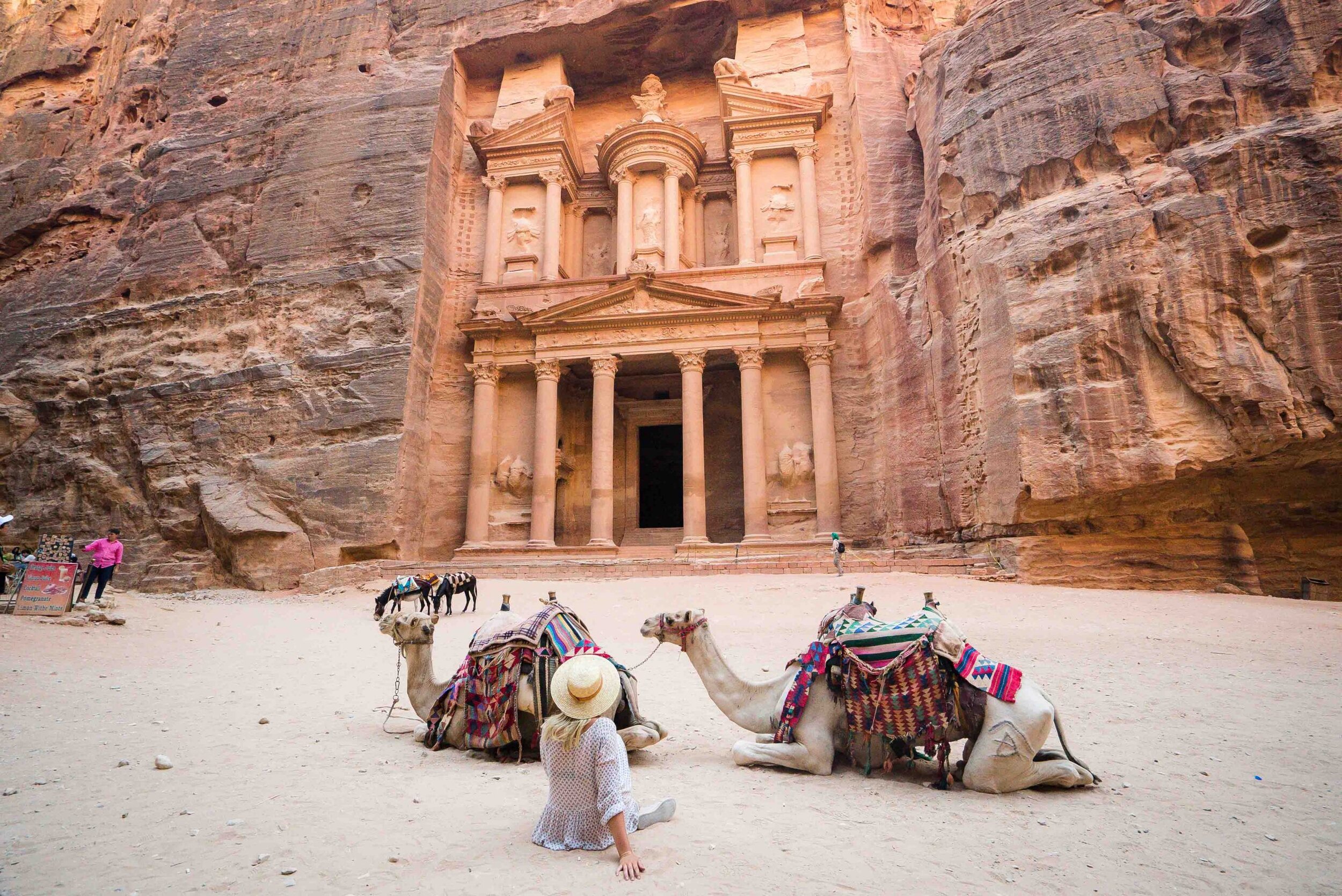
Jordan: Petra. The Rose-Red City carved from sandstone cliffs is routinely ranked among the most extraordinary places on earth. You approach through the Siq — a 1.2km narrow canyon with walls up to 80 meters high — before the iconic Treasury (Al-Khazneh) is revealed in a moment of pure theater. But Petra isn't just the Treasury: there are 800+ monuments spread across 264 square kilometers, including the Street of Facades, the Royal Tombs, the Byzantine Church, and the Monastery (Ad-Deir) — a 3-hour hike up 800 carved steps for an even larger facade with a jaw-dropping view. A full day in Petra barely scratches the surface; two days is strongly recommended.
Beyond Petra: Jerash is one of the best-preserved Roman cities in the world outside Italy — colonnaded streets, hippodrome, temples, and arches that blow most visitors away. Madaba has a 6th-century Byzantine mosaic map of the Holy Land. Ajloun Castle is a 12th-century Arab fortress. Jordan's historical sites are consistently high quality and low on tout pressure.
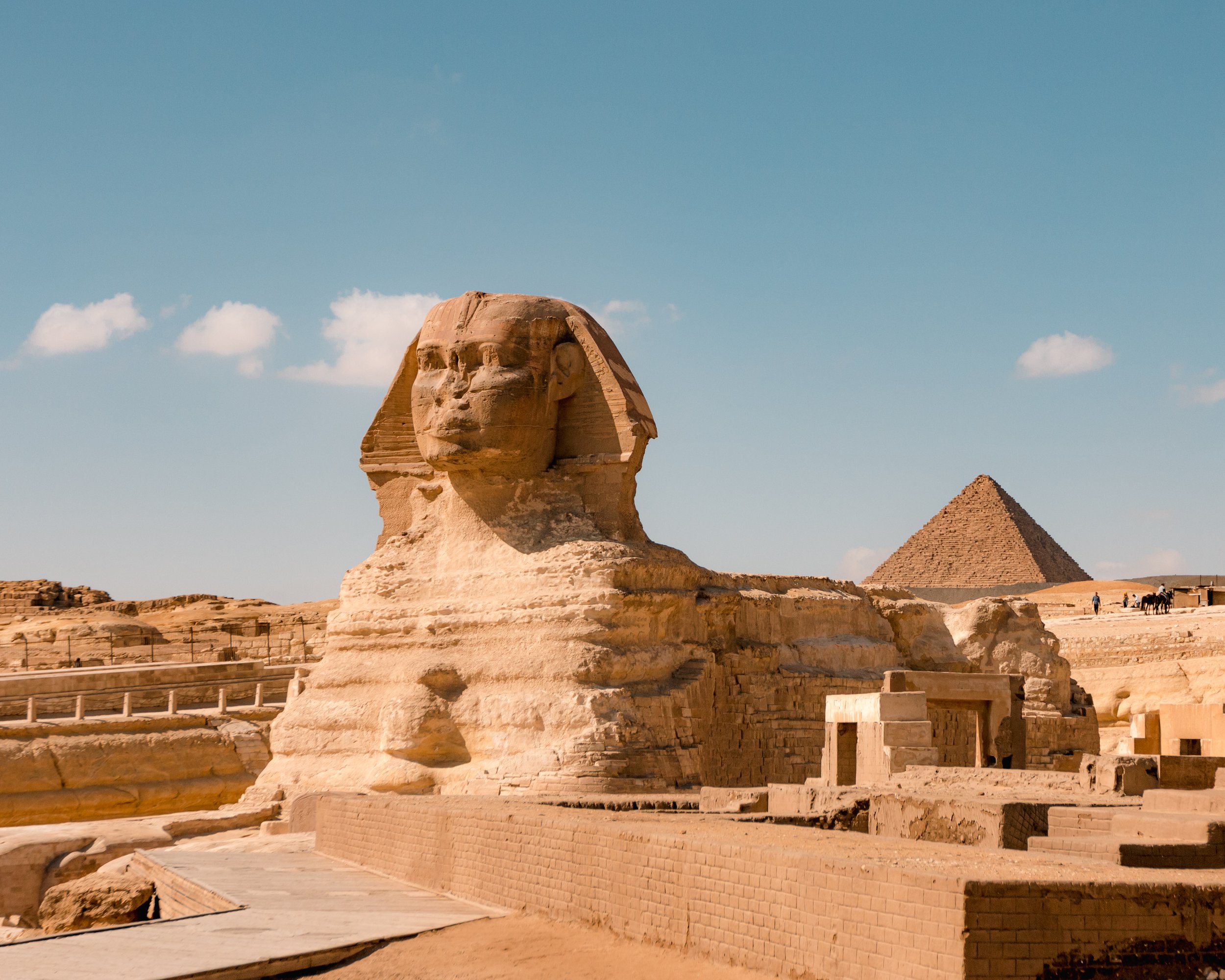
Egypt: The Great Pyramids of Giza. The last surviving Wonder of the Ancient World. Built 4,500 years ago with multi-ton limestone blocks, aligned to celestial precision. The Great Pyramid of Khufu is 146 meters tall and contains 2.3 million stones. The Sphinx sits guard nearby. Nothing — no photo, no documentary — prepares you for the scale. The Grand Egyptian Museum (opened 2023, largest in the world) now displays Tutankhamun's golden mask and 100,000 artifacts. And that's just Cairo. Add Luxor — home to the Valley of the Kings (70+ royal tombs), Karnak Temple complex, and Luxor Temple — and Egypt's archaeological footprint is unmatched on earth.
"Petra is my favorite site I've ever been to. It's a full day of wandering around, with much fewer hassles than the Pyramids. And the scale of the place keeps surprising you — you think you've seen it and then there's another canyon, another tomb." — r/travel
"The Blue Mosque gave me chills — but then I stood in front of the Great Pyramid and literally cried. Petra and the Pyramids are both category-defining experiences. You can't really compare them because they're different in every way." — r/travel
🌄 Nature & Landscape
Both countries offer dramatic natural environments — but Jordan's landscapes are more varied and accessible in a short trip.
Jordan's natural highlights:
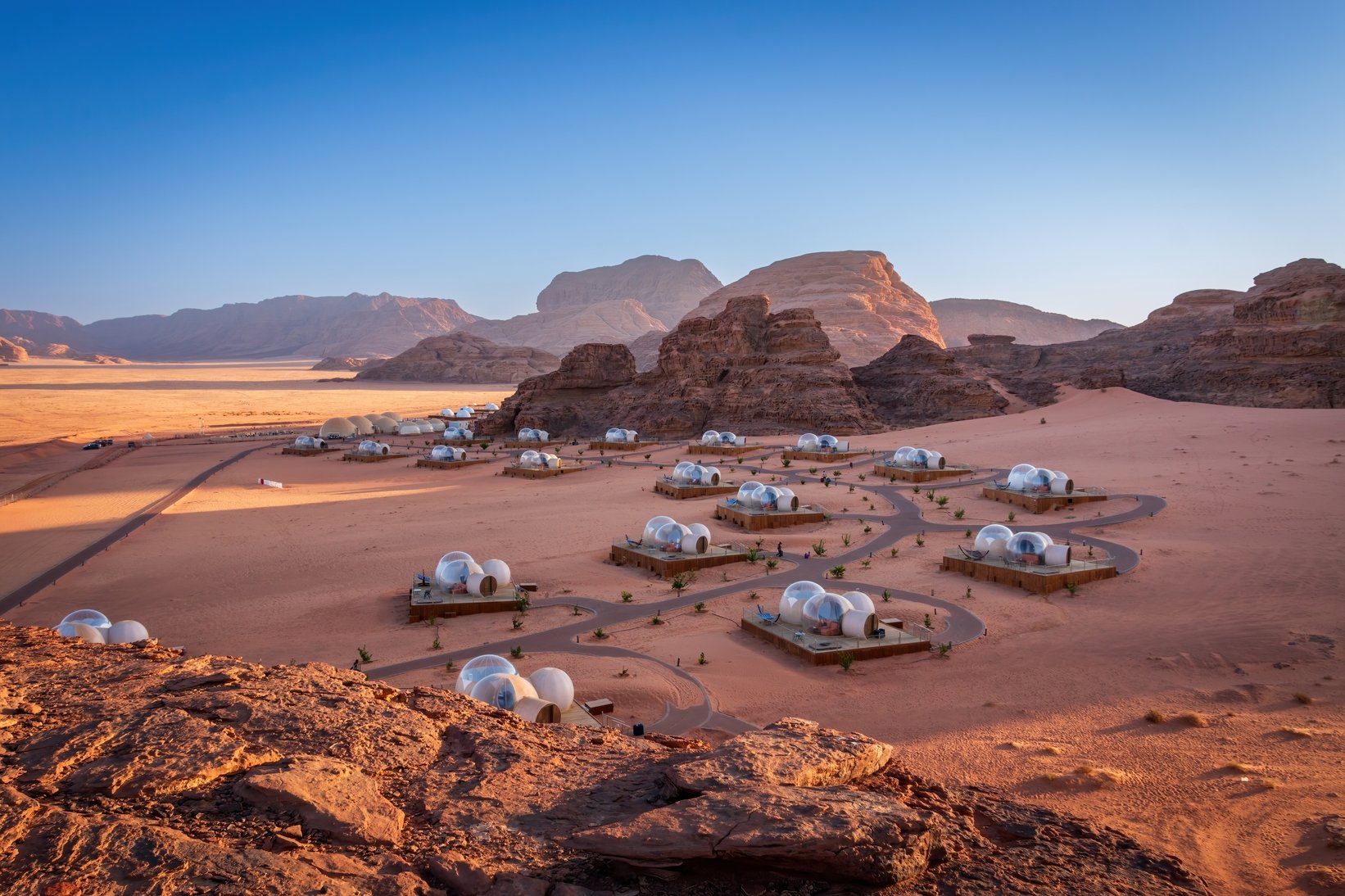
- Wadi Rum — The "Valley of the Moon." Vast red desert of sandstone cliffs, sand dunes, and prehistoric rock carvings. Overnight Bedouin camps ($80–150/person including jeep tour, dinner, and breakfast) put you under a sky blazing with stars. The setting for Lawrence of Arabia and several Mars rover films — the landscape genuinely looks like another planet.
- Dead Sea — The lowest point on earth (430m below sea level). You float effortlessly in 34% salinity water. Entry to the main beaches costs 20 JOD (~$28). The Dead Sea mud is everywhere and people slather it on for photos. Note: the sea is shrinking rapidly — visit soon.
- Aqaba & Red Sea — Jordan's only sea port. Elite-level snorkeling and diving in the Red Sea's northern arm. Visibility 20–30 meters, coral gardens, and virtually no tourists compared to Egypt's Red Sea resorts.
- Dana Biosphere Reserve — Jordan's largest nature reserve: four climate zones, canyon hiking, ibex and sand partridge. Hugely underrated.
Egypt's natural highlights:
- Nile River — Felucca sailboats at sunset in Luxor or Aswan. A 3-day Nile cruise between Luxor and Aswan passes temples at Edfu, Kom Ombo, and Philae. Budget cruise ships from $50/day; luxury options from $200/day.
- Red Sea Riviera (Hurghada, El Gouna, Dahab) — Mass tourism resorts but internationally recognized diving. Hurghada has 30m+ visibility and accessible reef. Dahab is the backpacker alternative with famous dive sites.
- Western Desert — Siwa Oasis, White Desert (chalk formations), Black Desert. Extraordinary off-road adventure for those going beyond Cairo.
- Sinai Peninsula — Mt. Sinai sunrise hike (3-hour night ascent) is a bucket-list experience for many travelers.
"Wadi Rum was the highlight of my Jordan trip — not Petra, which I expected. Waking up at sunrise in the Bedouin camp with the red rocks glowing was something I'll never forget. The guide I had was brilliant. Just go." — r/travel — Solo Female Trip Report (2024)
💰 Cost Comparison
Egypt is the budget winner, but Jordan isn't as expensive as its reputation suggests — especially if you use the Jordan Pass smartly.
Jordan costs: The country's biggest value tool is the Jordan Pass (jordanpass.jo), which bundles your entry visa (~$40–65 for most nationalities) + 2 days at Petra (~$140 value) + 40+ additional sites including Jerash, Ajloun, and Wadi Rum for approximately $108–120 total. If you're coming from a visa-required country and spending 2+ days at Petra, you save $50–100 vs. paying separately. Outside the Jordan Pass, mid-range hotels in Amman and Wadi Musa run $50–90/night. Wadi Rum Bedouin camps: $100–150/person including jeep tour and meals. JETT intercity buses are very affordable ($5–10 per trip). Food is cheap: falafel wraps for $1–2, restaurant meals for $8–15.
One real traveler's Jordan budget (7 days, shared with a friend): 310 JOD total (~$425 each), averaging $40–50/day in-country, excluding flights. Solo travelers typically spend $60–80/day.
Egypt costs: Egypt's weak pound has made it excellent value for foreign travelers. Budget travelers in Cairo spend $25–35/day; mid-range $40–60/day. But the attraction fees hurt: Giza Plateau complex entry ~$16, Great Pyramid interior ~$25, Egyptian Museum ~$16, Grand Egyptian Museum ~$22, Luxor sites $5–15 each. A first day at the Pyramids + museum can easily run $50–70 in entry fees before transport, food, or a guide. Hiring a guide in Egypt is strongly recommended ($30–60/day) and transforms the experience — but adds cost.
| Item | 🏺 Jordan | 🏛️ Egypt |
|---|---|---|
| Budget hostel/night | $15–25 | $8–18 |
| Mid-range hotel/night | $50–100 | $35–70 |
| Street meal | $2–5 | $1–3 |
| Restaurant dinner | $10–20 | $8–15 |
| Main attraction entry | Covered by Jordan Pass | $16–40 per site |
| Inter-city transport | $5–12 (JETT bus) | $3–8 (bus/train) |
| Uber/taxi (5km) | $3–6 | $2–4 |
| Daily budget (mid) | $60–100 | $40–65 |
"For a 7-day solo in Jordan I spent about 310 JOD (~$850 total) including the Jordan Pass, hotels averaging $80/night, and a Wadi Rum Bedouin camp at $150 for the jeep tour plus overnight. Split that with a friend and it's extremely affordable." — r/travel — Jordan costs trip report
🍜 Food & Dining
Jordan's food scene is built around generous mezze spreads, fresh bread, and slow-cooked meats. The national dish is mansaf — a magnificent plate of lamb cooked in fermented dried yogurt (jameed) over fragrant rice, served communally on a huge platter. It's rich, unusual, and absolutely worth seeking out at a local restaurant ($8–15/person). Beyond mansaf: fresh-baked khubz (flatbread) with hummus, baba ganoush, labneh, and olives makes the perfect breakfast. Amman's Rainbow Street and Jabal Amman have a thriving café and restaurant scene that punches well above expectations. Hashem Restaurant in Amman (open since 1952, cash only) serves legendary falafel and ful for almost nothing.
Egypt's food scene is built for cheap, filling, and deeply satisfying. Koshari — Egypt's beloved national dish of rice, lentils, pasta, tomato sauce, fried onions, and a vinegar kick — costs about $1 at street shops and is genuinely excellent. Ta'ameyya (Egyptian falafel made with fava beans instead of chickpeas) is green, herby, and superior to the chickpea version. Ful medames (stewed fava beans) is the morning staple. See our Cairo street food guide and the best spots for downtown Cairo koshari. Cairo also has upscale dining in Zamalek and New Cairo, and the rooftop bar scene is excellent — check Cairo rooftop cafes.
"Food was very affordable in Jordan. I didn't go out of my way to try Jordanian cuisine much, which was a pity in retrospect. Hashem Restaurant in Amman — cheap and delicious. The Wadi Rum camp food (dinner and breakfast included) was legitimately good." — r/travel — Solo Female Trip Report (2024)
"Cairo's koshari for $1 is one of the best value meals in the world. Don't leave without eating at a proper local koshari shop. It sounds like random carbs thrown together but it somehow works brilliantly." — r/travel
🚗 Getting Around
Jordan: The country lacks a comprehensive public transit system, so getting between major sites requires some planning. The good news: there are solid options at every budget level.
- JETT bus — Jordan's intercity bus service. Comfortable, air-conditioned, affordable ($5–12 per route). Runs Amman → Aqaba, Amman → Petra (Wadi Musa). Timing can be inflexible — check the schedule before relying on it.
- Taxis & private transfers — Widely available and negotiated upfront. Amman city taxis use meters (or should). For inter-city, agree on a price first. A taxi Amman → Petra runs ~$70–80 one way vs $12 on JETT — but gives you flexibility to stop at the Dead Sea and Madaba en route.
- Rental car — Increasingly popular for independent travelers. Roads are good, driving is manageable outside Amman (Amman traffic is chaotic). Gives full flexibility for the King's Highway route.
- Tours — Many travelers book day tours from Amman or Aqaba that hit multiple sites efficiently.
Egypt: Cairo is huge (22 million people) and chaotic, but it's manageable with the right tools.
- Uber — Works extremely well in Cairo. Cheap, reliable, no negotiation. This is how most tourists move around the city. Highly recommended over street taxis.
- Cairo Metro — 3 lines, doesn't reach the Pyramids directly, but useful for downtown-to-Maadi or Tahrir Square movement. Very cheap (EGP 10–15 per ride).
- Internal flights — EgyptAir's domestic routes (Cairo → Luxor, Cairo → Aswan) are extremely affordable — often $40–80 round trip booked in advance. Flying is strongly recommended over the overnight train if time is short.
- Nile cruise ships — Self-contained transport between Luxor and Aswan. Budget ships from $50/day; all-inclusive luxury from $200/day.
"Get Uber in Cairo. Full stop. The moment I stopped trying to negotiate street taxis my experience improved dramatically. It's cheap, air-conditioned, and the driver doesn't try to take you to his cousin's perfume shop." — r/travel
🌤️ Weather & Best Time to Visit
Both Jordan and Egypt share a broadly similar climate — hot dry summers, mild winters — with the same optimal travel window: October through April.
Jordan weather by season:
- March–May — Peak season and best weather. Wildflowers bloom in Wadi Rum. Petra is comfortable to hike (18–26°C). Sometimes rainy in the north (Amman, Jerash) but generally excellent.
- June–August — Very hot in the Jordan Valley and Aqaba (35–40°C). Petra can be manageable at altitude but exhausting midday. Dead Sea floating in summer heat is actually pleasant.
- September–October — Second best window. Crowds thin after summer. Wadi Rum stays warm. Good hiking conditions.
- November–February — Petra can be cold and occasionally wet or even snowy (surreal images). Amman gets genuinely cold. Dead Sea and Aqaba remain mild (18–24°C) and are excellent winter escapes.
Egypt weather by season:
- October–February — Sweet spot. Cairo and Luxor: 22–28°C days, cooler evenings. Pyramids in comfortable temperatures. This is peak tourist season — book accommodation early.
- March–April — Still good, warming up. Khamsin sandstorms possible in April (visibility-affecting but not dangerous).
- May–September — Brutal. Cairo hits 35–40°C; Luxor and Aswan reach 42–47°C. Standing at the open-air Pyramids in August is genuinely dangerous. Only go if visiting the Red Sea coast (Hurghada, Dahab) where sea breezes help.
🛡️ Safety
Jordan is one of the safest countries in the Middle East for tourists — full stop. The Jordanian government has made tourism infrastructure a national priority, and the results show. Travelers (including solo female travelers) consistently report feeling safe across the country: in Amman, in Petra, in Wadi Rum, and at the Dead Sea. The people are famously warm and hospitable — the Bedouin culture of hospitality (diyafa) is genuine, not performative. The main issues are minor: occasional overcharging by taxis, persistent but polite offers from vendors in tourist areas. Saying "la, shukran" (no, thank you) firmly and moving on works reliably. Jordan has been politically stable for decades, serving as a refuge for regional conflicts rather than a participant.
Egypt is generally safe in tourist zones but requires more preparation and assertiveness. The major complaint: aggressive touts around major tourist sites, particularly the Pyramids plateau. Camel ride operators, "guides" who attach themselves without being hired, photo fee demands from costumed locals — the pressure can be exhausting on a first visit. Violent crime against tourists is genuinely rare; the issue is low-level friction and scams. Solo female travelers report more unwanted attention and harassment in Egypt than in Jordan — it's not dangerous but it's tiring. The most effective countermeasure: hire a licensed guide through a reputable agency. This eliminates 90% of the pressure, dramatically improves what you learn, and is worth every pound.
"I never once felt unsafe in Jordan. In fact, I fell in love with Jordan mostly because of the Jordanian people, who are so kind and lovely. Yes, people tried to sell me things. But when I said no, they left me alone." — r/travel — Solo Female Trip Report, Oct 2024
"I've been to Jordan and Egypt and I enjoyed Jordan way more. I really hated the harassment in Egypt — in Jordan men were more distant and respectful and it felt more clean. I did enjoy the museums in Cairo though and maybe to fulfill your dream it's worth dealing with a bit of a culture shock." — r/travel
"Cairo is safe but prepare to be approached constantly around the Pyramids. The best strategy is to hire a licensed guide upfront — it eliminates 90% of the tout pressure and you learn so much more. Worth every pound." — r/travel
🏨 Where to Stay
Jordan's best bases:
- Amman — The capital and best base for exploring Jordan. The neighborhoods of Jabal Amman (Rainbow Street, 1st Circle area) and Abdoun have the best restaurants, cafes, and walkable areas. Mid-range hotels $50–90/night. The city is surprisingly cosmopolitan — great for a first and last night before/after the desert.
- Wadi Musa (Petra gateway town) — Where you stay to visit Petra. Small town, minimal charm, but convenient. Hotels from $30–80/night. Book in advance in high season.
- Wadi Rum village / camps — Staying in a Bedouin camp is the experience here. Options range from basic tents ($40/person) to luxury "bubble tent" domes with panoramic desert views ($200+/night). Most include dinner, breakfast, and a jeep tour in the price.
- Aqaba — Jordan's beach town on the Red Sea. Popular in winter when the rest of Jordan is cold. Good for a rest day + diving/snorkeling. $50–100/night.
Egypt's best bases:
- Cairo (Zamalek) — Upscale Nile island neighborhood, leafy and calm. Popular with expats and savvy tourists. $60–120/night. Best restaurants and café scene in the city.
- Cairo (Downtown) — Near the Egyptian Museum and Tahrir Square. Older buildings, noisier, but perfectly central. $30–60/night.
- Giza / near Pyramids — Some hotels have legendary Pyramid views. The Marriott Mena House ($150–250/night) has a pool with direct Pyramid sightlines — a true bucket-list hotel experience.
- Luxor — Base for the Valley of the Kings and temple circuit. Small, tourist-oriented city on the Nile. Mid-range $40–70/night. Highly recommended as a 2–3 night stop vs a day trip from Cairo.
🗺️ Day Trips
From Jordan's main bases:
- Jerash (from Amman, 1h) — One of the best-preserved Roman cities in the world. Colonnaded streets, an intact hippodrome, temples, and triumphal arches. Almost completely hassle-free. Entry $12. Full half-day.
- Dead Sea (from Amman, 1h) — The float experience. Entry $20–28. Mud masks included. Best combined with the King's Highway drive.
- Madaba + Mt. Nebo (from Amman, 45min) — Madaba's 6th-century Byzantine mosaic map of the Holy Land is extraordinary for its age and detail. Mt. Nebo: where Moses reportedly saw the Promised Land. View stretches to Jerusalem on clear days.
- Little Petra (Siq al-Barid) (from Wadi Musa, 15min) — Free mini-Petra with beautiful Nabataean carvings and far fewer people. Worth a half-day alongside your main Petra visit.
From Cairo — among the world's best day trip circuits:
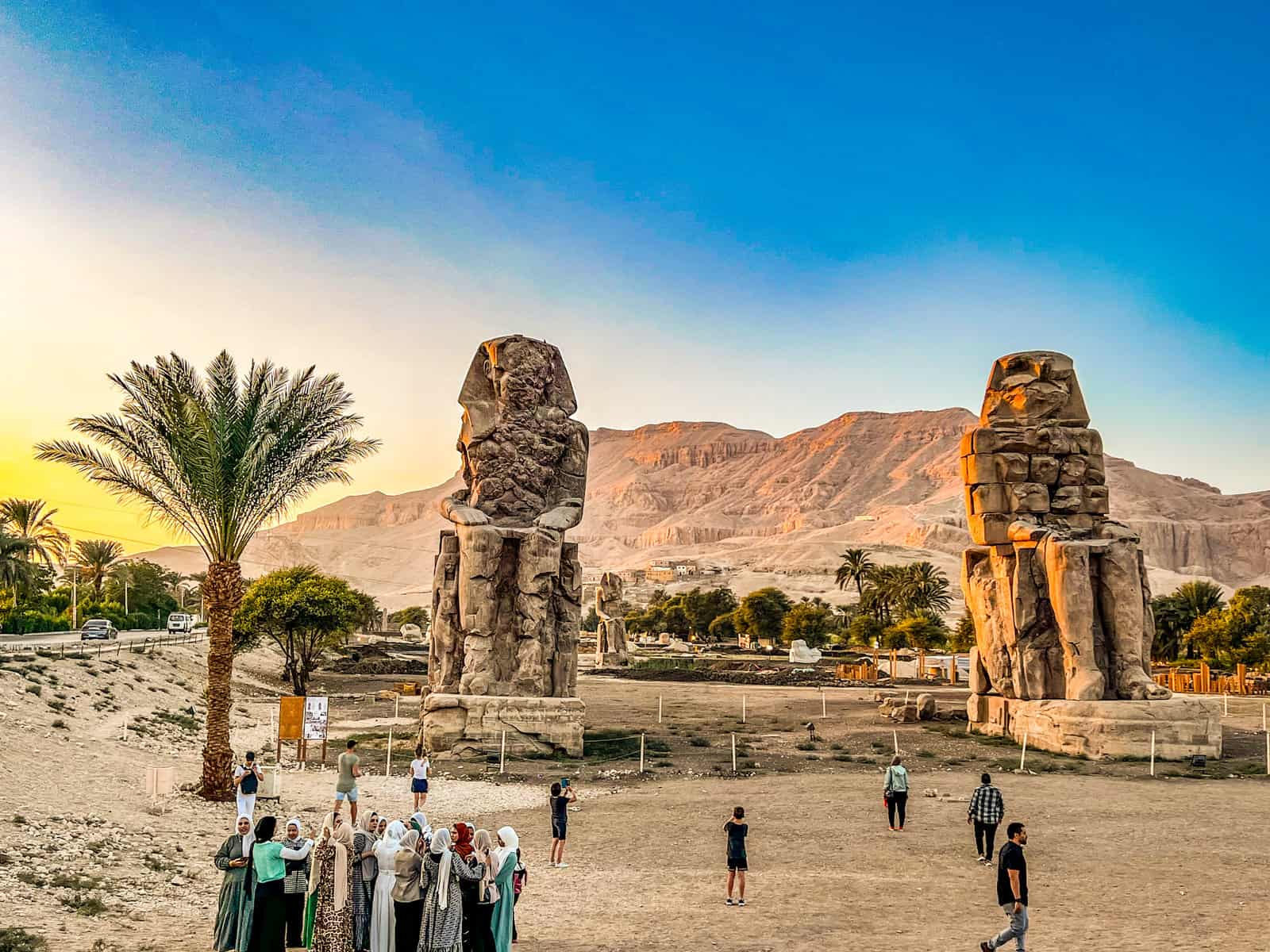
- Luxor (1h flight, $40–80 round trip on EgyptAir) — Valley of the Kings (70+ royal tombs, including Tutankhamun's), Karnak Temple complex, Luxor Temple. One of the greatest concentrations of ancient monuments on earth. Strongly recommended as 2–3 nights rather than a day trip.
- Saqqara & Dahshur (45min drive from Cairo) — Step Pyramid of Djoser (oldest pyramid in Egypt, 2650 BC), Bent Pyramid, Red Pyramid. Far fewer tourists than Giza and arguably more interesting archaeologically. Entry $8 combined. Highly recommended for Pyramids context.
- Alexandria (2.5h by train, $3–5) — Egypt's Mediterranean city. Bibliotheca Alexandrina, Catacombs of Kom el Shoqafa, Stanley Beach. Great afternoon escape from Cairo's chaos. Frequent trains.
- Sinai — Mt. Sinai (overnight from Cairo) — The 3-hour midnight hike up the mountain to reach the summit for sunrise is a bucket-list item. St. Catherine's Monastery at the base is one of the oldest continuously inhabited Christian monasteries on earth.
"If you base yourself in Cairo, Luxor is non-negotiable. It's the archaeological equivalent of visiting Rome, Athens, and Pompeii combined — except the monuments are 3,000 years older. The Valley of the Kings alone is surreal." — r/travel
🔀 Why Not Both?
Jordan and Egypt are a natural pair — separated by just 1.5 hours by air between Amman and Cairo, or a scenic 1-hour ferry from Aqaba across the Gulf of Aqaba to Nuweiba (Egypt). Many travelers combine both into a single 10–14 day trip, and it's one of the best itineraries in the region.
Classic 12-day Jordan + Egypt itinerary:
- Days 1–2: Amman — explore Jabal Amman, Citadel, Roman Theatre, Hashem Restaurant
- Day 3: King's Highway drive: Madaba → Mt. Nebo → Kerak Castle → south
- Days 4–5: Petra — Treasury, Street of Facades, Monastery (2 full days minimum)
- Day 6: Wadi Rum — jeep tour + overnight Bedouin camp
- Day 7: Aqaba → ferry to Nuweiba, Egypt → Sinai or fly to Cairo
- Days 8–9: Cairo — Giza Pyramids, Sphinx, Grand Egyptian Museum, Islamic Cairo
- Day 10: Day trip: Saqqara + Dahshur (lesser-known pyramids)
- Days 11–12: Fly to Luxor — Valley of the Kings, Karnak Temple, Luxor Temple
This itinerary takes you through some of the most historically and naturally extraordinary places on earth — from Nabataean rock cities to Roman ruins to Pharaonic monuments — in a logical geographic flow. Check Morocco vs Jordan if you're considering a third Middle East option, or Istanbul vs Cairo for the northern extension of this route.
🧭 The Decision Framework
Choose Jordan if…
- You want the Middle East without the hassle
- Petra is on your bucket list — it won't disappoint
- You're traveling solo, especially as a woman
- Landscape and adventure (Wadi Rum, Dead Sea) matter as much as history
- You want a relaxed, welcoming country that's easy to navigate
- You're combining with Israel, Lebanon, or the Gulf
- You have 5–7 days and want a tight, rewarding itinerary
- You've already seen Egypt and want something different
Choose Egypt if…
- Standing in front of the Great Pyramid is a lifelong dream
- You're a serious history buff who wants maximum ancient sites
- A Nile cruise is on your list
- Budget is the top priority
- You want the best day trip circuit in the region (Luxor is extraordinary)
- You want to experience a true megacity — raw, chaotic, and memorable
- You're combining with Kenya, Ethiopia, or North Africa
- You're visiting Oct–April (Egypt's golden window)
🎯 The Decision Framework
Choose Jordan If…
- You prefer easy self-driving across a compact country.
- You want to camp in a luxury dome tent under Wadi Rum's stars.
- You prioritize feeling very safe and welcomed by locals.
- You're excited to float in the Dead Sea and explore Petra in one journey.
- You seek accessible outdoor adventures like canyoning in Wadi Mujib.
- You prefer a generally less crowded experience at historic sites.
- You value modern, well-maintained roads and tourist facilities.
- You want to enjoy delicious Mansaf and kunafa from clean eateries.
Choose Egypt If…
- You must see the 4,500-year-old Giza Pyramids and Sphinx.
- You dream of a multi-day cruise down the historic Nile River.
- You want to explore the massive temple complexes of Karnak and Luxor.
- You're seeking a deeply budget-friendly trip, often under $60 per day.
- You want world-renowned scuba diving or snorkeling in the Red Sea.
- You plan to visit the monumental Grand Egyptian Museum in Cairo.
- You enjoy navigating a very large, lively city environment like Cairo.
- You want to try authentic koshary and ful medames from local vendors.
💰 Daily Cost Breakdown
| Expense | Jordan | Egypt |
|---|---|---|
| Hostel dorm | $20-40 | $10-25 |
| Budget hotel | $60-100 | $30-60 |
| Street food meal | $5-10 | $3-7 |
| Restaurant meal | $15-30 | $10-25 |
| Beer/drink | $7-12 | $5-10 |
| Local transport (day) | $5-15 | $3-10 |
| Daily budget total | $80-150 | $50-100 |
Approximate daily costs for 2026. Actual prices vary by season and travel style.
🌤️ Monthly Weather Comparison
| Month | Jordan Temp | Jordan Rain | Egypt Temp | Egypt Rain |
|---|---|---|---|---|
| Jan | 13°C/55°F | 60mm | 19°C/66°F | 5mm |
| Feb | 15°C/59°F | 60mm | 21°C/70°F | 5mm |
| Mar | 18°C/64°F | 30mm | 25°C/77°F | 5mm |
| Apr | 24°C/75°F | 10mm | 29°C/84°F | 0mm |
| May | 29°C/84°F | 0mm | 34°C/93°F | 0mm |
| Jun | 32°C/90°F | 0mm | 35°C/95°F | 0mm |
| Jul | 33°C/91°F | 0mm | 36°C/97°F | 0mm |
| Aug | 33°C/91°F | 0mm | 36°C/97°F | 0mm |
| Sep | 32°C/90°F | 0mm | 34°C/93°F | 0mm |
| Oct | 28°C/82°F | 5mm | 30°C/86°F | 0mm |
| Nov | 21°C/70°F | 30mm | 25°C/77°F | 5mm |
| Dec | 15°C/59°F | 50mm | 21°C/70°F | 5mm |
Average monthly high temperatures and rainfall based on historical climate data.
📅 Sample Itineraries
Weekend in Jordan (3 Days)
💡 Three days gives you a great taste of Jordan. Check out our Jordan guide.
Weekend in Egypt (3 Days)
💡 Three days gives you a great taste of Egypt. Check out our Egypt guide.
Week in Jordan (7 Days)
💡 A full week gives you a great taste of Jordan. Check out our Jordan guide.
Week in Egypt (7 Days)
💡 A full week gives you a great taste of Egypt. Check out our Egypt guide.
❓ Frequently Asked Questions
Is Jordan or Egypt better for first-time visitors to the Middle East?
Jordan is the easier and more comfortable first-time Middle East experience. The country is significantly safer, the people are famously welcoming, and Petra alone justifies the trip. Egypt is more intense — more hassle, more tout pressure — but has the Pyramids, which are a category-defining sight no other country can match. Reddit consensus: Jordan first if you're unsure; Egypt if the Pyramids are a bucket-list must.
Which is cheaper: Jordan or Egypt?
Egypt is cheaper overall — budget travelers spend $25–40/day vs $50–80/day in Jordan. Mid-range hotels in Cairo run $35–70/night; in Amman $50–90/night. However, Jordan's Jordan Pass (~$108) bundles the visa + Petra entry + 40+ sites and saves most travelers $30–50 vs paying separately. Egypt's attraction fees (Pyramids ~$20–40, Egyptian Museum ~$16, Grand Egyptian Museum ~$22) also add up fast. In practice, the per-day gap is smaller than the numbers suggest.
Is Petra or the Pyramids better?
Impossible to pick definitively — both are in the top tier of human heritage sites. Petra is more dramatic and physical: you hike through the narrow Siq canyon for 1.2km before the Treasury appears. The Pyramids are more monumental in scale and age. Reddit travelers who've done both often call Petra the more emotionally affecting experience, but say nothing prepares you for how massive the Great Pyramid actually is in person. If you can only do one: Petra edges it slightly for the overall day-long experience.
Is Jordan safe for solo female travelers?
Yes — Jordan is one of the safest countries in the Middle East for solo female travelers. Reddit reports consistently praise Jordanian men as respectful and non-threatening. One widely shared 2024 trip report notes: "I never once felt unsafe" across 4 days solo in Jordan. Egypt is a different story — solo female travelers report more persistent attention and harassment, particularly around major tourist sites. Hiring a guide in Egypt significantly reduces this.
How many days do you need in Jordan vs Egypt?
Jordan: minimum 5 days to hit the essentials — 1 day Dead Sea, 1 day Wadi Rum, 2 days Petra, 1 day Amman/Jerash. 7–9 days is ideal to add Aqaba or the King's Highway. Egypt: minimum 5 days for Cairo — 2 days at the Pyramids/Egyptian Museum, 1 day Islamic Cairo, 2 days flexible. Add 3–4 days if doing a Nile cruise or Luxor day trip. Both countries reward longer stays.
What is the best time to visit Jordan vs Egypt?
Both countries share the same ideal travel window: October through April. Jordan is best in March–May (wildflowers in Wadi Rum, comfortable hiking temperatures) and September–October. Egypt's sweet spot is November–February — the Pyramids in 22°C weather vs 42°C in August is a completely different experience. Spring (March–April) works well for both simultaneously, making it ideal for a combined trip.
Can you visit Jordan and Egypt on the same trip?
Absolutely — it's one of the great Middle East travel combos. Most travelers fly between Amman (AMM) and Cairo (CAI) on EgyptAir or Royal Jordanian; flights cost $60–120 and take 1.5 hours. There's also a ferry from Aqaba (Jordan) to Nuweiba (Egypt) via the Gulf of Aqaba, taking about 1 hour. A 12–14 day trip doing Amman → Jerash → Dead Sea → Wadi Rum → Petra → Aqaba → Cairo → Luxor is one of the best itineraries in the region.
Is the Jordan Pass worth buying?
Almost certainly yes. The Jordan Pass costs approximately $108 (2-day Petra version) and includes: Jordan entry visa (saves ~$40–65 for most nationalities), 2 days at Petra ($140+ value alone), Jerash, Ajloun Castle, Wadi Rum reserve access, and 40+ other sites. If you're from a visa-required country and spending 2+ days at Petra, you save $50–100 vs buying everything separately. Check jordanpass.jo for current pricing and which nationalities qualify.
Which has better food: Jordan or Egypt?
Both countries have excellent food traditions. Jordan's cuisine stars are mansaf (lamb in fermented yogurt sauce), falafel, and generous mezze spreads. Egypt's koshari ($1 for a mountain of rice, lentils, pasta, and tomato sauce), ta'ameyya (falafel with herbs), and ful medames are outstanding. Cairo's street food scene is especially strong — see our guide to Cairo street food for the best spots. For overall food variety and a thriving café scene, Cairo gives Egypt a slight edge.
Ready to plan your Jordan or Egypt trip?
Get a free custom itinerary for Jordan, Egypt, or both — built from real traveler insights, not generic templates. We'll match you with the right pace, sites, and day trips for your travel style.
Plan My Trip →Also explore: Morocco vs Egypt · Istanbul vs Cairo · Morocco vs Jordan
🎟️ Book Tours & Experiences
Hand-picked tours and activities for both destinations — book with free cancellation
Experiences via Viator — free cancellation on most tours