How we built this comparison
This page combines traveler discussion patterns from Reddit, published price ranges, transit details, and seasonal data to make the Hue vs Hoi An decision easier to navigate.
- Synthesized traveler opinions from r/VietNam, r/travel, r/solotravel, r/backpacking
- Cost data cross-referenced with Numbeo and recent Reddit traveler reports (2024–2026)
- Weather data from Open-Meteo monthly averages for Central Vietnam
- Transit and logistics from official sources and community reports


⚡ The TL;DR Verdict
Hue wins on history, food, and budget. Hoi An wins on atmosphere, tailoring, and the lantern-lit evenings. They’re a Hai Van Pass scenic drive apart — do both.
- Choose Hue: History lovers, food-focused travelers, budget-conscious visitors, those wanting a local Vietnamese city over a tourist village, DMZ and Vietnam War interest.
- Choose Hoi An: First-time Vietnam visitors wanting the iconic stop, tailoring shoppers, couples after a romantic atmosphere, Cao Lau and Banh Mi Phuong pilgrims, My Son day-trippers.
- Do both (the obvious answer): With 4+ days in Central Vietnam, the Easy Rider tour from Hue to Hoi An via Hai Van Pass is one of Vietnam’s great travel experiences. Budget: Hue ₫600k–1M/day ($24–40) vs Hoi An ₫800k–1.5M/day ($32–60).
Choose Hue
History buffs, food adventurers (Bun Bo Hue is exceptional), budget travelers, and those wanting a real Vietnamese city feel. The Imperial Citadel and royal tombs are Vietnam’s most significant pre-modern heritage.
Choose Hoi An
First-timers, tailoring shoppers, couples, and anyone who wants to experience those legendary paper lanterns at night. Cao Lau and Banh Mi Phuong alone are worth the visit.
Quick Comparison
| Category | 🏰 Hue | 🏮 Hoi An | Winner |
|---|---|---|---|
| Daily Budget (mid-range) | ₫600k–1M ($24–40) | ₫800k–1.5M ($32–60) | Hue |
| Budget Hostel | ₫100k–180k/night ($4–7.20) | ₫150k–250k/night ($6–10) | Hue |
| Signature Dish | Bun Bo Hue (spicy beef noodle soup) | Cao Lau + Banh Mi Phuong | Tie |
| UNESCO Heritage | Imperial Citadel + 7 Royal Tombs | Ancient Town (15th–19th c. trading port) | Hue |
| Walkability | Spread out — need motorbike for tombs | Ancient Town fully walkable | Hoi An |
| Evening Atmosphere | Riverside bars, local bia hoi scene | Lanterns, river reflections, magical | Hoi An |
| Tailoring / Shopping | Limited — ao dai, conical hats | Internationally recognized tailors, 400+ shops | Hoi An |
| Nearest Airport | Phu Bai (HUI, 15km) + Da Nang (100km) | Da Nang only (30km) | Hue |
| Day Trip Options | DMZ, Bach Ma NP, Royal Tombs, Phong Nha | My Son Sanctuary, Da Nang, An Bang Beach | Hue |
| Crowding / Tourists | Moderate — local Vietnamese city feel | High — major tourist destination | Hue |
| Flooding Risk (Oct–Nov) | Moderate — modern city drainage | High — Old Town floods annually | Hue |
🍜 Food & Dining
Both Hue and Hoi An are in the top tier of Vietnamese food destinations — but they serve completely different dishes, and both food scenes are exceptional. The comparison almost deserves a coin flip.
Hue is Vietnam's royal cuisine capital. The Nguyen emperors demanded elaborate feasts — a tradition that shaped a food culture of complexity and spice that no other Vietnamese city matches. The city's signature dish is Bun Bo Hue (₫30,000–60,000/$1.20–2.40) — a spicy lemongrass beef noodle soup that locals consistently rank above pho. Other must-eats: Banh Khoai (crispy rice flour pancake stuffed with shrimp, pork, and bean sprouts, ₫30,000–50,000/$1.20–2), Com Hen (baby clam rice, a breakfast staple, ₫20,000–40,000/$0.80–1.60), and Bun Thit Nuong (grilled pork over cold vermicelli).
Hoi An has three dishes you literally cannot eat anywhere else in authentic form: Cao Lau (thick noodles made with ash water from a specific local well, char siu pork, greens, and crispy croutons, ₫40,000–60,000), White Rose dumplings (Banh Bao Vac, sheer rice paper parcels with shrimp, ₫30,000–50,000), and Banh Mi Phuong — Anthony Bourdain's "best banh mi in the world" at ₫25,000–35,000 ($1–1.40). See our Hoi An banh mi guide and Cao Lau spots.
“Personally I like Hue more than Hoi An. I prefer Bun Bo Hue > Cao Lau... Best street food, an ancient city with vintage vibe.”— u/VietNam_travel, r/VietNam
“The best thing to do in Hue is eat. The food there is amazing.”— r/VietNam, Hoi An vs Hue 6 Days thread
⛩️ History & Cultural Sights
This is where the comparison gets decisive: Hue has more historical weight. The Imperial Citadel (Kinh Thanh) and the Forbidden Purple City within it were Vietnam's seat of power for 143 years under the Nguyen dynasty (1802–1945). The scale is enormous — the outer citadel walls alone stretch 10km. Entry: ₫200,000 ($8). Beyond the citadel, seven royal tombs are scattered within 10km of the city; Tu Duc's tomb (₫150,000/$6) is the most elaborate, Minh Mang's the most symmetrically beautiful.
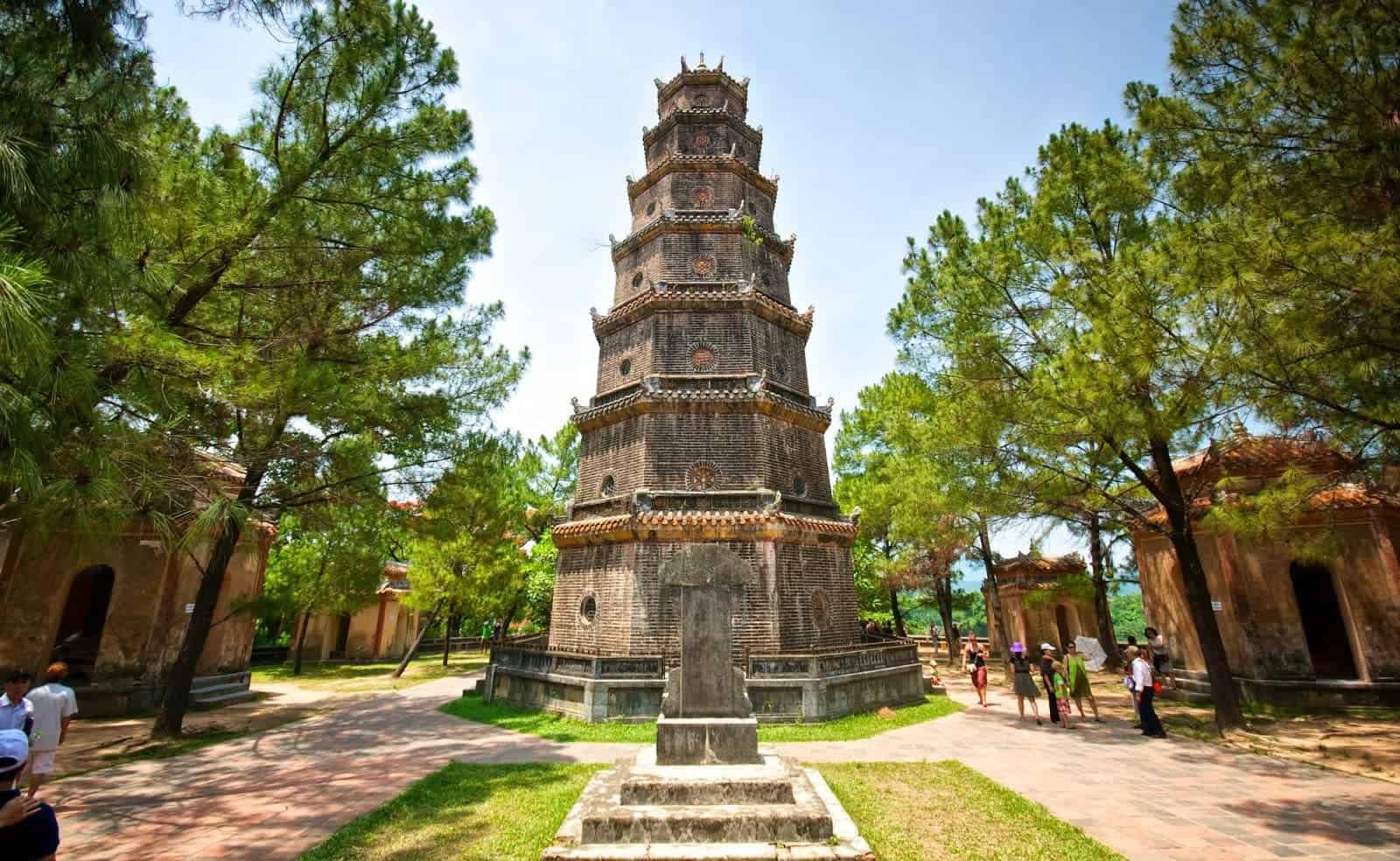
Thien Mu Pagoda, perched on a hill above the Perfume River, is Hue's most iconic image — a seven-story octagonal tower that appears on every Vietnam travel photo list. Reached by boat from the city (Perfume River boat tours: ₫150,000–200,000/$6–8) or by motorbike. Free entry.
Hoi An's UNESCO Ancient Town is a 15th–19th century trading port where Japanese, Chinese, and Vietnamese merchant quarters coexist in extraordinary preservation. The iconic Japanese Covered Bridge (Cau Nhat Ban) dates to the 1590s. A single cultural pass (₫120,000/$4.80) covers 5 heritage houses, assembly halls, and the Japanese Bridge. The atmosphere — yellow plaster walls, red lanterns, tiled rooftops, riverside markets — is unlike anywhere else in Vietnam.
“Hue has lots more to see and do compared to Hoi An. Also, Hoi An has become a tourist trap with hundreds of shops trying to sell you tailored silk suits.”— r/VietNam, r/VietNam Hue or Hoi An thread
💰 Cost Comparison
Hue is consistently cheaper than Hoi An — one of the budget-friendliest cities in Central Vietnam. The premium Hoi An charges is partly justified by its fame; partly it's tourist trap pricing in the Old Town core.
Accommodation:
- Budget hostel dorm: Hue ₫100k–180k/night ($4–7.20) vs Hoi An ₫150k–250k ($6–10)
- Private room (budget): Hue ₫250k–500k ($10–20) vs Hoi An ₫400k–700k ($16–28)
- Mid-range hotel: Hue ₫400k–900k ($16–36) vs Hoi An ₫600k–1.5M ($24–60)
- Boutique villa: Hue ₫1M–3M ($40–120) vs Hoi An riverside villa ₫1.5M–5M ($60–200)
Food & sightseeing:
- Street meal (bun bo hue / cao lau): ₫25k–60k ($1–2.40) in both
- Entry to Hue Citadel: ₫200k ($8) — Hoi An cultural pass: ₫120k ($4.80)
- Royal tomb entry (Hue): ₫100k–150k ($4–6) per tomb
- Hue Perfume River boat tour: ₫150k–200k ($6–8)
Transport: Grab between Hue and Hoi An/Da Nang ₫600k–900k ($24–36). The Hai Van Pass scenic drive tour costs ₫400k–600k ($16–24) per person by Easy Rider motorbike.
🚌 Getting There & Getting Around
Neither Hue nor Hoi An has its own airport — both are served by Da Nang Airport (DAD), the main hub for Central Vietnam. From Da Nang: Hoi An is 30km south (~35 min, ₫200k–300k/$8–12 Grab); Hue is 100km north (~1.5 hours by car, ₫400k–600k/$16–24 Grab).
Hue also has Phu Bai Airport (HUI) with domestic flights from Hanoi and Ho Chi Minh City — useful if you're flying in directly rather than landing at Da Nang. A Grab from Phu Bai to Hue city center is ₫100k–150k ($4–6).
Train between Hue and Da Nang is one of Vietnam's great rail journeys — the Reunification Express hugs the coast over the Hai Van Pass with views of the East Sea. Journey time: 2.5–3 hours. Tickets: ₫70k–200k ($2.80–8) depending on class. Book via vé tàu apps or the station.
Within Hue: Grab works well. Motorbike rental is popular (₫100k–150k/day, $4–6) — the city is flat and the roads between tombs and pagodas are easy to navigate. Cyclo (pedicab) tours of the citadel are charming and cheap for short distances.
Within Hoi An: The Ancient Town is entirely walkable. Bicycle rental (₫50k–80k/day, $2–3) is the classic Hoi An transport — perfect for getting to An Bang Beach (5km) or the outskirts.
“The train from Hue to Da Nang via Hai Van Pass is one of the most scenic train journeys I've ever done — absolutely sharp coastline.”— r/VietNam, Hue to Hoi An travel options thread
🌤️ Best Time to Visit
Best months for both: February–April. The dry season in Central Vietnam brings clear skies, temperatures of 24–30°C (75–86°F), and low humidity. March is peak quality for both cities. April starts to warm up but remains pleasant.
May–August is hot — particularly brutal in Hue (32–38°C/90–100°F) due to the Lao wind (gió Lào) that drives heat inland off the mountains. Hoi An is hot too but coastal breezes help. June–August is high season for Vietnamese domestic tourism at both destinations.
Avoid October–November. This is typhoon season for Central Vietnam and it is serious. Hoi An's Ancient Town sits on a flood plain and regularly sees knee-to-waist-deep flooding in the Old Town during October and November. Hue also floods but its modern city center handles it better. If you're visiting in these months, have backup plans and travel insurance.
December–January is cooler (18–24°C/64–75°F), can be overcast with light rain, but generally pleasant — the off-season sweet spot for avoiding both heat and typhoons. The Hoi An Lantern Festival happens on the 14th of every lunar month (full moon night) and is magical year-round.
“I'd go to Hue first and then Hoi An. Do a day or two in Hue — the imperial citadel and tombs are incredible. Then head to Hoi An for the lanterns and food.”— r/VietNam, r/VietNam Hue vs Hoi An thread
🏨 Where to Stay
Hue neighborhoods:
- City Center (south of citadel) — Most hotels cluster here. Walking distance to Dong Ba Market, riverside restaurants, and the Truong Tien Bridge. Convenient for Grab to all sights.
- Pham Ngu Lao / backpacker strip — Budget guesthouses and hostels, cheap pho and bun bo hue, easy booking of day trips and Easy Rider tours.
- Perfume River / boutique zone — A string of boutique hotels and homestays along the south bank of the river. Atmospheric, quieter, slightly pricier.
- Near the Citadel (north bank) — Quieter, local feel, fewer tourists. Good for immersion; requires motorbike to reach restaurants and sights easily.
Hoi An neighborhoods:
- Ancient Town / Old Town core — Most atmospheric. Walking distance to everything. Premium pricing and can be noisy with day-tripper crowds until evening.
- An Bang Beach area — 5km from Old Town. Best of both worlds: beach access + easy bike ride to Ancient Town. Popular with long-stay travelers and expats.
- An Hoi Island / Thu Bon riverfront — Across the footbridge from Old Town. Quieter, cheaper, still walkable to the main sights.
“I visited both last year. Hue is worth 2–3 nights — the citadel and tombs take at least 2 full days. In Hoi An, 1 night is honestly enough if you're tight on time, but 2 lets you do My Son and still see the evening lanterns.”— r/VietNam, 1 Week in Hoi An or split with Hue
🧳 Day Trips
Both cities sit at the heart of Central Vietnam's greatest attractions and serve as excellent day-trip bases.
From Hue:
- Royal Tombs circuit — 5–10km from city. Tu Duc, Minh Mang, Khai Dinh, Dong Khanh. Half-day by motorbike or Grab (₫100k–150k/$4–6 each)
- DMZ Tour — Vinh Moc tunnels, Hamburger Hill, Ben Hai River (full day, ₫400k–700k/$16–28 with guide)
- Bach Ma National Park — Cloud forest, waterfalls, jungle trails (40km from city, full day)
- Phong Nha Caves — Best cave system in Southeast Asia (150km north, 3h drive — better as an overnight)
- Hoi An — 130km south via Hai Van Pass (make it an Easy Rider scenic drive, not just a transfer)
From Hoi An:
- My Son Sanctuary — Vietnam's Angkor equivalent, Cham temple ruins (40km, 1h, ₫150k/$6 entry; guided tours from ₫300k–500k/$12–20)
- Da Nang — Dragon Bridge, Marble Mountains, Ba Na Hills (30km, 35 min). See our Da Nang vs Hoi An comparison.
- Hue — 130km north via the scenic Hai Van Pass drive (full day or overnight)
- An Bang Beach — 5km, 15-minute bike ride from Old Town — the local beach escape
Both cities are on the classic Hanoi → Hue → Da Nang / Hoi An → Nha Trang → HCMC backpacker route. See our Vietnam vs Thailand comparison if you're deciding between countries.
“Hue for more of the cultural experience and food. Da Nang for beach life (drinking and hanging out). Hoi An is actually great for a day trip or two, especially if you'd like some tailor-made clothes.”— r/VietNam, Hoi An vs Hue 6 Days
🧵 Tailoring & Shopping
This one isn't close: Hoi An is Vietnam's tailoring capital. Over 400 tailor shops operate in and around the Ancient Town. Custom-made suits, dresses, ao dai (Vietnamese traditional dress), and leather goods are Hoi An's most famous draw beyond food and sights. Quality varies enormously — the general Reddit consensus is to budget at least 48–72 hours for fittings and allow time for alterations. Prices: custom suit from ₫1.5M–5M ($60–200+) depending on fabric; ao dai ₫500k–1.5M ($20–60). Recommended shops: Hoi An Tailors (for mid-range quality), Yaly Couture (higher-end).
Hue has a smaller tailoring scene but still produces beautiful traditional ao dai. The city is more famous for its conical hats (non la) and lacquerware. The Dong Ba Market is Hue's best general market for local goods, spices, and traditional fabrics.
“Hoi An is suuuuper touristy but also quite quaint and beautiful. If you want tailoring done, that's the place.”— r/VietNam, r/VietNam Hue or Hoi An
🎉 Nightlife & Evening Atmosphere
Nightlife in Hue and Hoi An operates at a different frequency than Bangkok or Ho Chi Minh City — both are relatively early towns — but each has a distinct evening personality.
Hue has a growing bar and live music scene concentrated along Pham Ngu Lao and the riverside. The DMZ Bar is a Hue institution (open late, cheap beers, backpacker crowd). Rooftop bars overlooking the Citadel and Perfume River offer some of the most atmospheric sunset drinks in Vietnam. The city has a local, unhurried energy in the evenings — Bia Hoi (fresh draught beer, ₫10,000–15,000/$0.40–0.60) stalls fill up from 5 PM.
Hoi An's evening atmosphere is its strongest selling point. The paper lanterns lit at dusk transform the Ancient Town into one of Southeast Asia's most magical night scenes — lanterns strung across every alley, reflected in the Thu Bon River, creating an atmosphere that photographs can't fully capture. The town winds down earlier than Hue — most restaurants and bars close by 10–11 PM. The Dive Bar and Before & Now Bar are long-standing expat favorites for late drinks.
“Hoi An is buzzing in the evenings. The Old Town at night with the lanterns is something you have to experience at least once.”— r/VietNam, r/VietNam Hue vs Hoi An
🔄 Why Not Both? (The Hai Van Pass Route)

Hue and Hoi An are not an either/or decision — they're a natural pairing. The 130km route connecting them via Hai Van Pass (Hải Vân Quan) is one of Vietnam's great travel experiences, passing through some of the most dramatic coastal scenery in Southeast Asia: mountain switchbacks above the East Sea, the old Cham pas between Hue and Da Nang, and the coastal plain dropping into Hoi An's Ancient Town.
The classic Central Vietnam itinerary:
- Fly into Hanoi → train south to Hue (12h overnight, ₫300k–700k/$12–28)
- 2–3 nights Hue: Citadel, two royal tombs, Thien Mu, Perfume River
- Easy Rider tour from Hue to Hoi An via Hai Van Pass (₫400k–700k/$16–28 per person, ~5 hours)
- 2 nights Hoi An: Ancient Town evening lanterns, My Son day trip, Cao Lau lunch
- Train to Nha Trang or fly from Da Nang south
Total: 5–6 days in Central Vietnam — genuinely the best introduction to this part of the country. For 7+ days, add a night in Da Nang for My Khe Beach and Ba Na Hills. See our Da Nang vs Hoi An page for the third city in the trio.
“I would split them 50/50. We just spent two days in Hue, for me personally, one day to explore the imperial city was enough, and the other day was spent on a trip to the nearby Bach Ma national park, which I can just highly recommend. Currently in Hoi An, but not overly impressed to be honest, preferred Hue so far.”— r/VietNam, r/VietNam Hue vs Hoi An
🎯 The Decision Framework
Choose Hue If…
- You want to explore the imperial Citadel and Forbidden Purple City.
- You prioritize visiting elaborate royal tombs like Minh Mang's.
- You seek authentic Banh Beo or Bun Bo Hue street food for 25,000 VND.
- Your daily travel budget for food and activities is under $25.
- You prefer a city with fewer Western tourists and more local interaction.
- You enjoy cultural boat trips on the Perfume River to Thien Mu Pagoda.
- You're interested in day trips to the Demilitarized Zone (DMZ).
- You want to experience a major historical capital without resort pricing.
- You appreciate a broader range of local markets and eateries.
Choose Hoi An If…
- You desire to wander a well-preserved ancient town, free of motorbikes.
- You want custom-tailored suits or dresses made in 1-2 days.
- You enjoy dining riverside with hundreds of silk lanterns illuminating the night.
- You're looking for romantic boat rides releasing paper lanterns on the river.
- You want easy bicycle access to An Bang or Cua Dai beaches.
- You enjoy hands-on cooking classes focusing on regional specialties.
- You prefer a town where pedestrian zones dominate in the evenings.
- You seek a lively night market for souvenir shopping and street food.
- You want to capture iconic photos of the Japanese Covered Bridge at dusk.
❓ Frequently Asked Questions
Is Hue or Hoi An better for first-time Vietnam visitors?
For first-timers, Hoi An edges it — the UNESCO Ancient Town is one of Southeast Asia's most Instagram-friendly and culturally accessible destinations. But serious history lovers should prioritize Hue: the Imperial Citadel and royal tombs are Vietnam's most important pre-modern heritage sites. Ideally, do both — they're 130km apart and easily combined on a Central Vietnam itinerary.
How far is Hue from Hoi An?
Hue and Hoi An are about 130km apart — roughly 3 hours by direct car or taxi. The scenic route via Hai Van Pass (Hải Vân) takes 4–5 hours by motorbike or car and is considered one of Vietnam's great coastal drives. By train, the journey is about 2.5–3 hours. A Grab car between the cities costs around ₫600,000–900,000 ($24–36).
What is Hue famous for food-wise?
Hue has one of Vietnam's most distinctive regional cuisines. Its signature dish is Bun Bo Hue — a spicy lemongrass beef noodle soup (₫30,000–60,000/$1.20–2.40) that locals rank above pho. Other Hue specialties include Banh Khoai (crispy stuffed pancake, ₫30,000–50,000), Bun Thit Nuong (grilled pork noodles), and Com Hen (clam rice, ₫20,000–40,000). Hue's royal cuisine tradition also produces intricate multi-dish feasts worth seeking out.
What is Hoi An famous for food-wise?
Hoi An has three dishes that exist nowhere else in their authentic form: Cao Lau (thick smoky noodles with char siu pork and greens, ₫40,000–60,000/$1.60–2.40), White Rose dumplings (Banh Bao Vac, ₫30,000–50,000/$1.20–2), and Banh Mi Phuong — the banh mi Anthony Bourdain declared the best in the world (₫25,000–35,000/$1–1.40). These three dishes alone justify a visit.
Which is better for history and culture — Hue or Hoi An?
Both are UNESCO World Heritage Sites but for different reasons. Hue's Imperial Citadel and royal tombs represent Vietnam's last feudal dynasty (Nguyen, 1802–1945) — a scale and historic weight that Hoi An can't match. Hoi An's Ancient Town is a beautifully preserved 15th–19th century trading port with Japanese, Chinese, and Vietnamese architectural layers. For sheer historical significance, Hue wins. For atmospheric walkability, Hoi An wins.
Is Hoi An too touristy in 2026?
Hoi An is undeniably touristy, especially the Ancient Town core on weekends and during high season. Reddit is split — many travelers find the vendor pressure and tour groups exhausting, while others find the atmosphere genuinely magical, especially in the evening with the lanterns. Tips: visit early morning (7–9 AM) or after 8 PM when day-trip crowds leave, eat one block off the main tourist strip, and stay at least one night to experience the lantern-lit evenings properly.
How many days do you need in Hue vs Hoi An?
Reddit consensus: 2–3 days in Hue (Citadel + 1–2 royal tombs + Thien Mu Pagoda + Perfume River boat = full day; DMZ or Bach Ma National Park day trip if interested). 2 days in Hoi An (Ancient Town, My Son Sanctuary day trip, evening lanterns, tailoring appointment). Both cities together: 4–5 days is the sweet spot. More than 3 nights in Hue or more than 3 nights in Hoi An starts to feel stretched for most travelers.
Which city is cheaper — Hue or Hoi An?
Hue is generally 15–25% cheaper than Hoi An. Budget hostel dorm: Hue ₫100,000–180,000/night ($4–7.20) vs Hoi An ₫150,000–250,000 ($6–10). Mid-range hotel: Hue ₫400,000–900,000 ($16–36) vs Hoi An ₫600,000–1,500,000 ($24–60). Street food is equally cheap in both; the gap opens up in accommodation and Old Town restaurant pricing.
What is the best time to visit Hue and Hoi An?
February through April is optimal for both — the dry season in Central Vietnam with clear skies and temperatures of 24–30°C (75–86°F). Avoid October–November: typhoon season brings heavy rainfall and Hoi An's Ancient Town floods regularly to knee height. Hue's city center handles flooding better but still gets hit. June–August is very hot (32–38°C/90–100°F) but popular for domestic Vietnamese tourism.
Ready to plan your Central Vietnam trip?
Get a free custom itinerary for Hue, Hoi An, or both — built from real traveler insights, not generic templates.
🎟️ Book Tours & Experiences
Hand-picked tours and activities for both destinations — book with free cancellation
Experiences via Viator — free cancellation on most tours