📋 Our Methodology
This comparison is built from real sources, not AI guesswork:
- 20+ Reddit threads from r/koreatravel, r/korea, r/travel, r/solotravel synthesized
- Cost data from recent Reddit trip reports (2025-2026), cross-checked with local sources
- Transit info from Korean intercity bus and train operators
- Historical context from Korea Tourism Organization and UNESCO documentation
⚡ The TL;DR Verdict
Gyeongju wins on sheer volume of historic sights, ease of access, and versatility. Andong wins on authentic cultural immersion, food, and the unique experience of Hahoe Folk Village. For most travelers with limited time: go Gyeongju. For those who've already done the main cities and want something deeper: go Andong — or better yet, do both.
- Go to Gyeongju if you're a first-time Korea visitor, interested in the Silla Dynasty (Buddhism, royal tombs, ancient Korea), or traveling by public transit from Busan or Seoul.
- Go to Andong if you're deeper into Korean culture, want Joseon-era Confucianism, traditional soju, jimdak, and a UNESCO folk village that still has actual residents — not a tourist re-enactment.
- Budget: Gyeongju ~₩60,000-100,000/day ($45-75 USD); Andong ~₩50,000-80,000/day ($37-60 USD) — both are affordable. Andong is slightly cheaper.
- Time needed: Gyeongju 2 days minimum; Andong 1-2 days. You can combine them in a 4-night itinerary.
Choose Gyeongju
Opt for Gyeongju if you're a first-time visitor to Korea or have limited time, seeking a comprehensive historical experience. Explore ancient Silla Dynasty tombs, Bulguksa Temple, and Cheomseongdae Observatory with remarkable ease. It's best for those who want a versatile, accessible dive into Korea's past without sacrificing convenience.
Choose Andong
Select Andong for a truly authentic cultural immersion beyond typical tourist routes, especially if you've already explored major cities. Spend a day at the UNESCO-listed Hahoe Folk Village, experience traditional Confucian culture, and savor local specialty foods like jjimdak. This destination is best for adventurous travelers seeking a deeper, more intimate glimpse into Korean heritage and cuisine.
Quick Comparison
| Category | 🏛️ Gyeongju | 🏘️ Andong | Winner |
|---|---|---|---|
| Historical Era | Silla Kingdom (57 BCE–935 CE) | Joseon Dynasty (1392–1897) | Different |
| Number of Major Sights | 10+ (temples, tombs, observatory, palaces) | 3-5 (Hahoe Village, Mask Museum, Dosan Seodang) | Gyeongju |
| Transit from Seoul | KTX to Singyeongju (2h), then bus | Express bus from Dong Seoul (2.5h) | Gyeongju |
| Transit from Busan | KTX or bus, 45-60 min | Bus via Daegu, 2.5-3h | Gyeongju |
| Daily Budget | ~₩60,000-100,000 ($45-75) | ~₩50,000-80,000 ($37-60) | Andong |
| Signature Food | Hwangnam-ppang, ssambap, beopju | Jimdak, Andong soju, mackerel | Andong |
| UNESCO Site | Bulguksa Temple & Seokguram Grotto | Hahoe & Yangdong Villages | Both |
| Crowd Levels | Moderate — popular but manageable | Low — genuinely off the beaten path | Andong |
| Bike-Friendly | ✅ Excellent — flat, bike rental everywhere | ⚠️ Partial — city is walkable, village needs bus | Gyeongju |
| Autumn Scenery | Beautiful — ginkgo-lined roads, temple foliage | Impressive — Hahoe village surrounded by fall color | Tie |
| Solo Travel | ✅ Very easy | ⚠️ Fine but logistics harder | Gyeongju |
| Best For | Ancient Korea, first-timers, easy base | Deep culture, Confucian heritage, food lovers | Different |
🏛️ Historical Sites & Attractions
This is the core of the comparison — and the two cities couldn't be more different. Gyeongju was the capital of the Silla Kingdom for nearly 1,000 years (57 BCE–935 CE), and the ancient ruins are literally everywhere you walk. Andong is the spiritual home of Joseon-era Confucianism, quieter and more concentrated but profoundly atmospheric.
Gyeongju's major sights:
- Tumuli Park (Daereungwon) — The unmistakable royal burial mounds of Silla kings, including the famous Cheonmachong (horse tomb) where you can enter and see the excavated burial chamber. 3,000 won entry. The grassy mounds rising from the city are worth the trip.
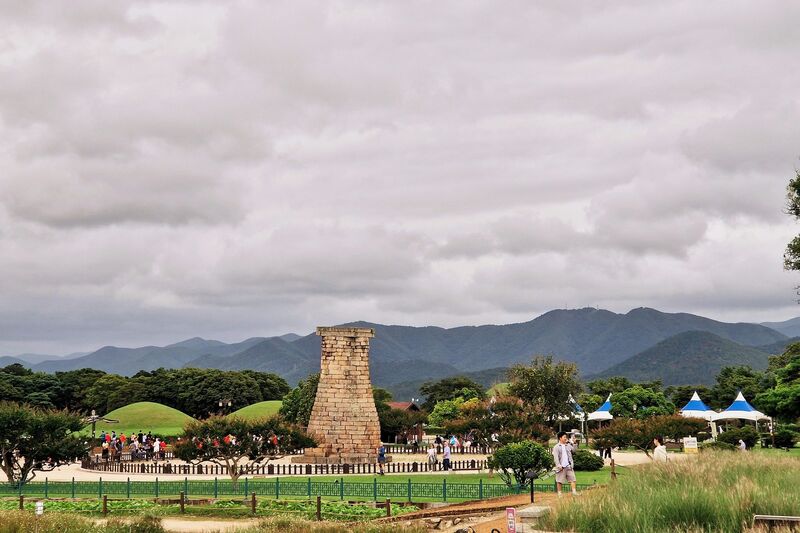
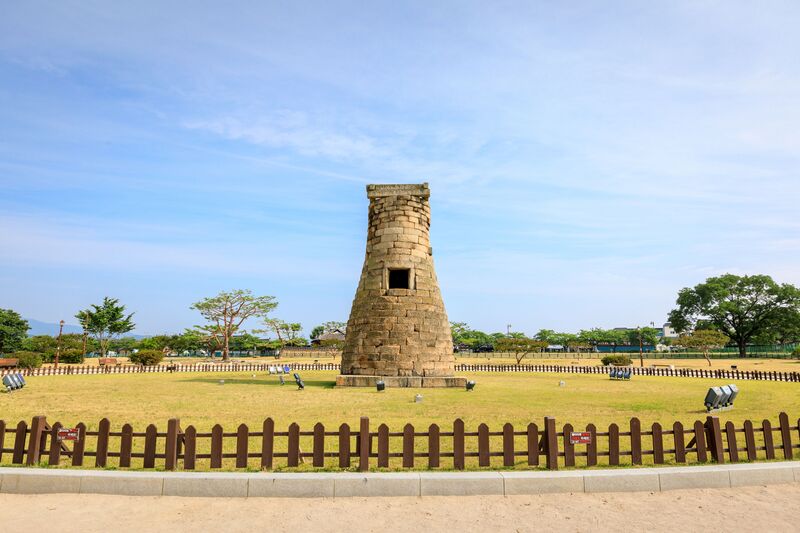
- Cheomseongdae Observatory — Built in 632 CE under Queen Seondeok, this is the oldest surviving astronomical observatory in Asia. Free to walk around. The cylindrical stone structure looks surprisingly modern for something 1,400 years old.
- Bulguksa Temple — One of Korea's most important Buddhist temples, 16km east of the city. Multiple national treasures including Dabotap and Seokgatap pagodas. Combined ticket with Seokguram: 5,000 won. Get there early or late to beat tour groups.
- Seokguram Grotto — A striking 8th-century granite Buddha enshrined in a hillside cave above Bulguksa. Widely considered the pinnacle of Silla Buddhist art. The serene atmosphere justifies the uphill walk.
- Donggung Palace & Anapji Pond — The pleasure garden of Silla royalty, striking at night when lit reflections play across the water. Entry: 3,000 won. Budget 1-2 hours.
- Namsan Mountain — An open-air Buddhist sculpture museum in the hills south of the city, with hundreds of rock-carved Buddhas, pagodas, and temple sites scattered along hiking trails. Half-day to full-day depending on your depth.
Andong's major sights:
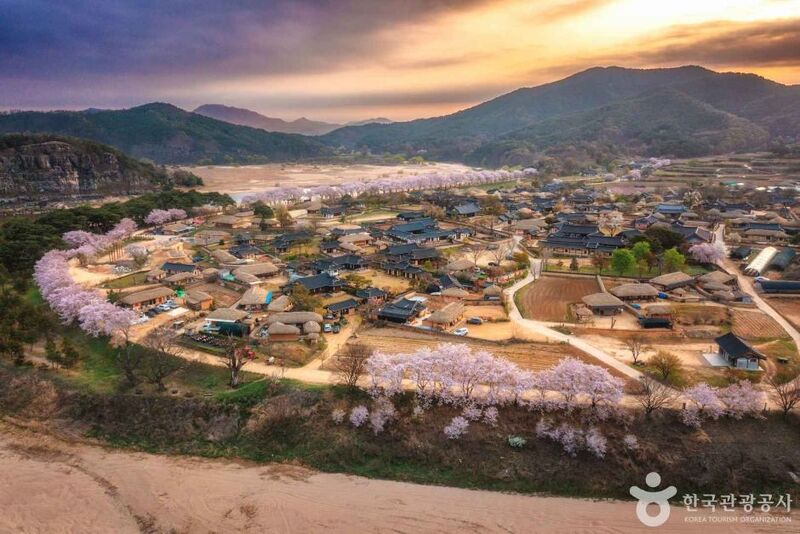
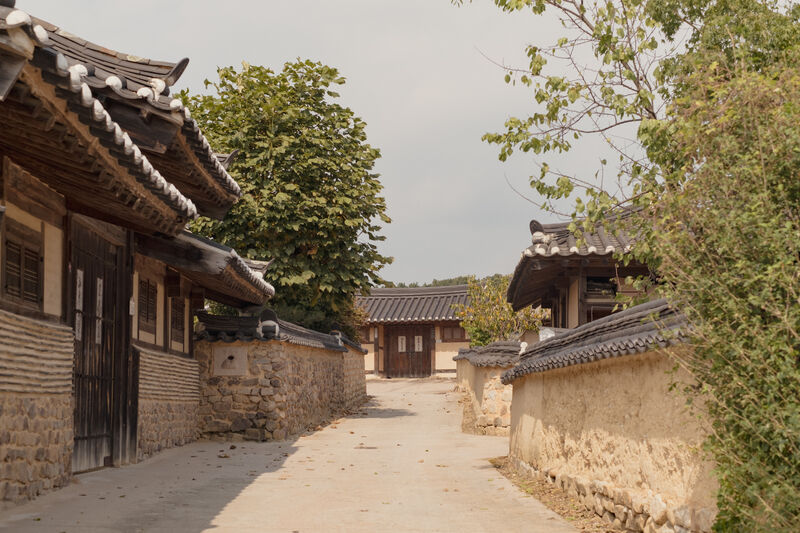
- Hahoe Folk Village — A UNESCO World Heritage living village where members of the Ryu clan have resided for 600+ years. Thatched-roof houses, traditional gardens, and the Nakdong River forming a natural moat. Not a re-enactment — people live here. Entry: 5,000 won + 1,000 won bus. One hour by Bus 46 from Andong station.
- Andong Folk Museum & Mask Dance Theater — The Hahoe Byeolsingut Talnori mask drama is performed at the village on Saturdays at 2pm (seasonal). The museum explains Confucian rituals, ancestral rites, and folk traditions.
- Dosan Seodang & Dosan Seowon — The private academy and later official seowon of Yi Hwang (Toegye), Korea's most revered Confucian scholar. The man on the 1,000-won note. The seowon overlooks a river valley — genuinely peaceful.
- Bongjeong-sa Temple — A remote 9th-century Buddhist temple in the mountains northeast of Andong, featuring what may be Korea's oldest wooden building. Requires a car or taxi.
"Gyeongju has fascinating historical stuff related to the Silla Dynasty. I visited years ago and really enjoyed it — excavations are ongoing and they keep discovering new things. Andong's Hahoe was amazing — a completely different vibe, much more peaceful." — r/koreatravel
"Andong is a lot smaller and a bit harder to get to. The sights are nowhere near as varied as Gyeongju. But the traditional village is something else entirely." — r/koreatravel
🍜 Food & Dining
Both cities have signature dishes you won't find quite the same way anywhere else in Korea. But Andong's food culture is more destination-worthy — traveling specifically to eat jimdak and drink traditional soju is entirely reasonable.
Gyeongju food highlights:
- Hwangnam-ppang (황남빵) — Gyeongju's most iconic snack: flaky pastry filled with sweet red bean paste. Bakeries around Hwangnam-dong sell them fresh and warm. About 1,000 won each. Buy a box to take home.
- Ssambap — Rice wrapped in various leaves (perilla, lettuce, cabbage) with multiple banchan. The traditional ssambap restaurants near Bulguksa are excellent and very local in feel.
- Beopju — A milky, slightly sweet traditional Korean rice wine (makgeolli-style) brewed at Gyeongju breweries. Pairs well with pancakes (pajeon).
- Gyeongju-style sikhye — Sweet rice punch, a traditional Korean dessert drink. Local versions in Gyeongju have a reputation for being richer than elsewhere.
Andong food highlights:
- Andong Jimdak (안동찜닭) — The dish that put Andong on Korea's food map. Braised whole chicken pieces with glass noodles, vegetables, soy sauce, and gochugaru — simultaneously savory, sweet, and spicy. Jimdak Alley (찜닭골목) in the city center has 20+ restaurants all competing on their recipe. Budget ₩20,000-25,000 for a small portion (serves 2).
- Andong Soju — Real traditional soju, made with grain and nuruk (traditional Korean starter culture), not the industrial diluted ethanol most Koreans drink. 45% ABV. The Andong Soju Museum offers tastings and history. This is what soju was before the 1970s industry changed it.
- Ganjang Gejang — Raw blue crab marinated in soy sauce, a Joseon-era dish Andong is famous for. Intensely flavored, eaten over rice. Not for everyone but a must-try for adventurous eaters.
- Heotjesabap — A Joseon-era ceremonial meal of rice, soup, and 24 banchan, derived from ancestral rite food. Andong restaurants serve simplified versions — a genuine window into historical Korean cuisine.
"When you go to Andong, YOU MUST eat jimdak. It's the real thing — not the franchise versions you get in Seoul." — r/koreatravel
"Andong soju is incredible compared to the Jinro you get everywhere. The museum does tastings and explains the whole history. Completely different product." — r/koreatravel
🚌 Getting There
Transit access is one of the biggest practical differences between these cities — and Gyeongju wins clearly.
Getting to Gyeongju:
- From Seoul: KTX to Singyeongju Station (2 hours, ~₩42,000-58,000 one-way depending on class and availability). From Singyeongju, take city bus 700 or 60 into central Gyeongju (20 min, ₩1,400). Alternatively, express bus from Seoul Express Bus Terminal (4 hours, ~₩22,000).
- From Busan: KTX to Singyeongju (25 min, ~₩12,000) or local train to Gyeongju station (45-60 min, ~₩3,000-4,000). Also direct buses from Busan Nopo terminal (1 hour, ~₩5,000). The train is easiest.
- From Daegu: Bus or local train, about 1 hour.
Getting to Andong:
- From Seoul: Express bus from Dong Seoul Terminal or Seoul Express Bus Terminal (2.5-3 hours, ~₩17,000-22,000). No direct KTX — the nearest KTX station (Gyeongju or Daegu) requires an additional bus.
- From Gyeongju: No direct connection. Go via Daegu — bus from Gyeongju to Daegu (1h), then bus Daegu to Andong (1.5h). Total ~₩15,000, 2.5-3 hours.
- From Busan: Bus via Daegu, about 3 hours total.
- By car: Far easier for Andong specifically. Hahoe Village is 30 min drive from Andong city; other sights are scattered. A rental car from Gyeongju makes the two-city loop much more efficient.
"Andong unfortunately does not have a train station, which makes it less easy to get to than Gyeongju or Jeonju. Build in extra time and check bus schedules." — r/koreatravel
"We rented a car for Gyeongju and Andong and I'd do it again. Having a car makes Andong's scattered sights much more manageable." — r/koreatravel
🚲 Getting Around
Once you're there, the two cities have very different internal transportation experiences.
Getting around Gyeongju:
Gyeongju is one of the most bike-friendly cities in Korea. The city center is relatively flat, the historic sites are spread across a manageable area, and bike rentals are cheap (₩3,000-5,000/hour, ₩10,000-15,000/day) from multiple shops near the train station and Tumuli Park. A bicycle is the perfect way to hop between Tumuli Park, Cheomseongdae, Donggung Palace, and the central sites. For Bulguksa and Seokguram, take city bus 10 or 11 (₩1,400, 30 min from downtown). Local buses are frequent and cheap. Taxis are available for convenience.
Getting around Andong:
Andong city center is walkable — the main market, Jimdak Alley, and the Folk Museum are within walking distance of each other. However, the city's main attractions are spread out: Hahoe Folk Village is 1 hour by Bus 46 (departing roughly every 30-60 min from Andong Terminal, ₩1,400 one-way). Dosan Seowon is 28km from the city — taxi (₩25,000 one-way) or infrequent bus. Bongjeong-sa Temple is even further and essentially requires a car or taxi. Without a car, you'll need to plan around bus schedules carefully.
"Gyeongju is great by bike. We rented for the day and hit Tumuli Park, Cheomseongdae, Anapji Pond and the market all in one loop. The city just works for cycling." — r/koreatravel
💰 Cost Comparison
Both Gyeongju and Andong are budget-friendly by Korean standards — significantly cheaper than Seoul or Jeju. Neither should strain your wallet.
Gyeongju costs (per person per day):
- Accommodation: Budget guesthouses ₩25,000-40,000 ($18-30); mid-range hanok stays ₩60,000-100,000 ($45-75); hotels ₩80,000-150,000 ($60-112)
- Entry fees: Tumuli Park ₩3,000 ($2.25); Bulguksa + Seokguram combined ₩5,000 ($3.75); Donggung Palace ₩3,000 ($2.25); Cheomseongdae free
- Food: Street food and lunch ₩6,000-12,000 ($4.50-9); dinner at a local restaurant ₩10,000-20,000 ($7.50-15)
- Transport: City bus ₩1,400/trip; bike rental ₩10,000-15,000/day; taxi to Bulguksa ₩12,000-15,000
- Typical daily spend: ₩60,000-100,000 ($45-75 USD) all-in for a comfortable day
Andong costs (per person per day):
- Accommodation: Guesthouses ₩20,000-35,000 ($15-26); mid-range hotels ₩50,000-90,000 ($37-67); hanok stays at Hahoe village ₩70,000-120,000 ($52-90)
- Hahoe Folk Village entry: ₩5,000 ($3.75) + bus ₩1,400 each way
- Jimdak (Jimdak Alley): Small portion ₩20,000-25,000 serves 2 people ($15-18.50)
- Typical daily spend: ₩50,000-80,000 ($37-60 USD) all-in
"Both cities are refreshingly cheap after Seoul. My Gyeongju day including bike rental, three temple entries, a jimdak-style lunch, and a hanok guesthouse came to about ₩80,000 total." — r/koreatravel
🌸 Best Time to Visit
Both cities are in North Gyeongsang Province and share similar seasonal weather. Timing your visit smartly can make a significant difference.
Spring (March–May): ✅ Excellent for both
Cherry blossoms arrive in late March to mid-April. Gyeongju's temple grounds and the road to Bulguksa are spectacular in bloom. Andong's Hahoe Village with spring flowers along the Nakdong River bend is deeply beautiful. Temperatures 10-20°C (50-68°F). Weekends get crowded — visit midweek if possible.
Summer (June–August): ⚠️ Hot and humid but fine
July–August are the rainy season months — expect humidity and occasional downpours. Gyeongju's outdoor sites can feel oppressive in midsummer heat. Andong's shaded forest paths are slightly more comfortable. Both are manageable with early starts and afternoon breaks.
Autumn (September–November): ✅✅ Best season overall
This is when both destinations truly shine. Gyeongju's ginkgo-lined roads turn gold, and the temple grounds burst with red and orange maples — particularly gorgeous at Bulguksa and along Namsan Mountain trails. Andong's Hahoe Village surrounded by fall-colored mountains is one of Korea's most photogenic scenes. October also hosts the Andong Mask Dance Festival (usually first two weeks of October) — if you can time your visit, don't miss it.
Winter (December–February): ⚠️ Cold but uncrowded
Gyeongju in winter has its own austere beauty — the burial mounds and stone monuments against bare trees. Entry fees are the same but crowds disappear. Andong in winter can be raw (temperatures drop below 0°C/32°F), but Hahoe Village with light snow is remarkably atmospheric. Budget travelers appreciate the near-empty temples and guesthouses.
"Fall is the best time for both cities without question. Gyeongju in November with the ginkgo trees and autumn leaves at Bulguksa is worth flying to Korea for. And the Andong Mask Dance Festival in October is something else." — r/koreatravel
🏨 Where to Stay
Both cities have good accommodation options, with Gyeongju offering more choices and Andong offering a more unique experience if you stay at Hahoe Village itself.
Gyeongju neighborhoods:
- Central Gyeongju (around Tumuli Park): The most convenient base — walking distance from Tumuli Park, Cheomseongdae, and central restaurants. Most guesthouses and budget hotels are here. Stay in this area for your first visit.
- Hwangnam-dong (Hanok Village area): Traditional neighborhood near Tumuli Park with some converted hanok guesthouses. Atmospheric, good for travelers who want a traditional feel.
- Near Bulguksa: More upscale hotels in the hills east of the city. Good option if Bulguksa and Seokguram are your primary focus, but less convenient for city-center sights.
Andong accommodation options:
- Andong city center: Most budget guesthouses and motels are near the bus terminal or central market. Convenient for Jimdak Alley and the city's own sights.
- Hahoe Folk Village: Some village families rent rooms in traditional hanok houses (approximately ₩70,000-120,000 per room). Staying here is a completely different experience — you wake up in a 400-year-old thatched-roof village before the day-trippers arrive. Book ahead, especially in autumn.
"We stayed in a hanok in Hahoe village and it was one of the most memorable nights of our whole Korea trip. Getting up at 6am and walking around the village before any tourists arrived was special." — r/koreatravel
⛩️ Culture & Unique Experiences
Both cities offer cultural experiences you simply can't find in Seoul or Busan — but the flavor of each culture is completely different.
Gyeongju cultural experiences:
- Temple stay: Overnight temple experience at Bulguksa or nearby temples, including meditation, chanting, and 3am wake-up calls for morning prayers. Book through templestay.com. A genuinely transformative experience for the spiritually curious.
- Gyeongju National Museum: One of Korea's top museums, housing Silla gold crowns, ornaments, the massive Emille Bell, and thousands of artifacts from burial mound excavations. Free entry, excellent English signage. Budget 2-3 hours.
- Horseback riding at Cheonmachong: Seasonal horseback experiences near the Tumuli Park area reconnect visitors to the cavalry culture of the Silla era.
- Nighttime Donggung Palace: The palace and pond are lit from dusk — completely different atmosphere from daytime. Go at golden hour and stay for the reflections.
Andong cultural experiences:
- Hahoe Byeolsingut Talnori Mask Dance: UNESCO-listed intangible cultural heritage performance held at Hahoe Village (Saturdays 2pm, May-November). The shamanic folk drama satirizes yangban aristocrats through masked characters. Free with village entry. One of Korea's most authentic living cultural performances.
- Traditional mask carving class: Some artisans in Andong and Hahoe offer hands-on mask carving workshops — making your own Hahoe mask is a memorable souvenir activity.
- Andong Soju Museum: Learn the 500-year history of traditional grain soju, see the brewing process, and taste the real thing. The contrast with mass-market soju is eye-opening.
- Confucian Ritual Tour: Dosan Seowon holds periodic Confucian ancestral rite ceremonies — check the schedule. Witnessing a jesa ceremony performed in full traditional dress is a rare glimpse into Korea's Confucian heritage.
"The mask dance at Hahoe was one of the highlights of my Korea trip. I'd seen Korean traditional performances before in Seoul but this was completely different — the village setting and the audience participation made it feel real." — r/koreatravel
🗺️ Day Trips & Why Not Both?
Both cities make good bases for regional exploration — and they work especially well together as a two-destination loop.
Day trips from Gyeongju:
- Busan: Only 45-60 minutes by KTX or bus. A half-day in Busan (Gamcheon Village, Jagalchi Market, or Haeundae Beach) makes a great add-on. See our Busan vs Jeju comparison for more on Busan.
- Yangdong Folk Village: Another UNESCO Heritage folk village, 15km north of Gyeongju — quieter than Andong's Hahoe and less visited by foreigners. Good half-day trip by car or taxi.
- Daegu: 1 hour by bus or train. Korea's fourth-largest city, known for its markets (Seomun Market), food (makchang, flat chicken galbi), and interesting textile district.
Day trips from Andong:
- Gyeongju: Via Daegu, about 2.5-3 hours each way — possible as a long day trip but tiring. Better to stay overnight in Gyeongju separately.
- Uiseong: Small town between Andong and Daegu with a notable dolmen field and traditional village — good for very off-the-beaten-path exploration by car.
- Cheongsong: Scenic mountain village (한옥마을) about 1.5 hours from Andong by car, known for apple orchards and autumn color.
Why not both?
Gyeongju + Andong is actually one of the best historical Korea itineraries you can do. Recommended routing: arrive in Gyeongju from Seoul or Busan, spend 2 nights (covering the main city sites one day, Bulguksa + Seokguram the other), then take a bus via Daegu to Andong for 1-2 nights before returning to Seoul by express bus. Total: 4-5 days, two distinct historical eras, and one of the most authentically Korean trip segments you can design.
"Just left Andong two weeks ago and really loved it after being in Gyeongju beforehand — a perfect 1+ to this! The pace of Andong was quite relaxed given it's a smaller city and the food is very good obviously." — r/koreatravel
🎯 The Decision Framework
Choose Gyeongju if…
- It's your first time in Korea and you want maximum historic impact
- You're traveling by public transit without a car
- You're coming from Busan or Seoul on a limited schedule
- You want to explore by bicycle through 1,500-year-old landscapes
- You're interested in Silla Buddhism, royal tombs, and UNESCO temple complexes
- You want a day trip option that still works if time is short
- You plan to do a temple stay experience
- You want more varied sights spread across a full 2-3 day visit
Choose Andong if…
- You've already seen Korea's main cities and want something deeper
- Food is a priority — jimdak and traditional soju are genuinely destination-worthy
- You're interested in Joseon Confucian culture, not just ancient Buddhism
- You can visit in October for the Mask Dance Festival
- You want a UNESCO World Heritage Site that's still a living community
- You're willing to navigate less convenient transit for a more authentic experience
- You have a car, making the scattered sights much more accessible
- You want to stay overnight in a 400-year-old thatched hanok village
🎯 The Decision Framework
Choose Gyeongju If…
- You want to see many Silla Dynasty tombs, temples, and palaces in one compact area.
- You prefer a city with well-developed tourist infrastructure and clear signage.
- You have limited time (e.g., 2-3 days) and want to maximize historical sightseeing.
- You enjoy renting a bike to explore ancient sites like Tumuli Park and Anapji Pond.
- You seek a destination easily reachable by KTX + local bus/taxi from Seoul (approx. 2.5-3 hours total).
- You appreciate a good balance of ancient history and modern amenities.
- You're looking for a destination often included on standard South Korea itineraries.
- You want to visit Bulguksa Temple and Seokguram Grotto, both UNESCO sites.
Choose Andong If…
- You prioritize experiencing traditional Korean village life at Hahoe Folk Village.
- You want to try local specialties like Andong Jjimdak (braised chicken) and salted mackerel.
- You are interested in attending traditional mask dance performances.
- You prefer a destination less frequented by first-time international tourists.
- You've already explored Seoul and Busan and seek a different cultural depth.
- You enjoy slower-paced travel and delving into specific traditions.
- You want to see a designated UNESCO World Heritage site that's a living village.
- You are looking for a place to learn about Confucian culture and history.
❓ Frequently Asked Questions
Is Gyeongju or Andong better for first-time visitors to Korea?
Gyeongju is better for first-timers. It has more sights, easier public transit from Busan or Seoul, and is consistently recommended as a 'worth prioritizing' for anyone interested in Korean history. Andong is smaller, harder to reach (no direct KTX), and best appreciated as a secondary destination once you've seen the main attractions elsewhere.
How long do you need in Gyeongju and Andong?
Gyeongju deserves 2 full days minimum — one for the city sites (Tumuli Park, Cheomseongdae, Donggung Palace) and one for the outskirts (Bulguksa Temple, Seokguram Grotto, Namsan Mountain). Andong can be done in 1 day if you focus on Hahoe Folk Village, or 2 days if you also want to explore Andong city, the Mask Dance Museum, and Dosan Seodang Confucian academy. Many travelers combine them: 2 nights Gyeongju, 1 night Andong.
How do you get from Gyeongju to Andong?
There's no direct train between Gyeongju and Andong. The most common route is bus via Daegu (about 2.5-3 hours total) or a direct intercity bus if available. Both cities can be connected via Daegu as a hub. Renting a car makes the journey much easier and lets you stop at rural sites along the way.
What is Gyeongju famous for?
Gyeongju was the capital of the Silla Kingdom for nearly 1,000 years (57 BCE–935 CE). It's famous for its royal burial mounds at Tumuli Park, the ancient astronomical observatory Cheomseongdae (the oldest in Asia), the UNESCO-listed Bulguksa Temple and Seokguram Grotto, Anapji Pond (Donggung Palace), and Namsan Mountain dotted with Buddhist rock carvings. The city is often called 'the museum without walls.'
What is Andong famous for?
Andong is the spiritual home of Korean Confucian culture. It's famous for Hahoe Folk Village (UNESCO World Heritage Site), one of the few living traditional villages where descendants of the Ryu clan still reside. It's also known for the Andong Mask Dance Festival (October), jimdak (braised spicy chicken), the world's oldest soju tradition, and Dosan Seodang — the academy of Confucian scholar Yi Hwang (Toegye), whose face appears on the 1,000-won banknote.
Is Andong worth visiting without a car?
Yes, but it's harder. Hahoe Folk Village is about 1 hour by bus from Andong city center (Bus 46, departing roughly hourly). The city itself is walkable. However, Andong has no KTX station — you must take an intercity bus from Seoul (about 2.5 hours) or Daegu. If you're relying entirely on public transit, build in extra time and check bus schedules carefully.
Which has better food — Gyeongju or Andong?
Both have signature dishes worth trying, but Andong edges it for food culture. Andong jimdak (soy-braised chicken with glass noodles and vegetables) is iconic — Jimdak Alley in the city center has dozens of restaurants competing for the best version. Andong soju (made with nuruk starter, not diluted industrial ethanol) is the real traditional Korean spirit. Gyeongju has ssambap, beopju, and Gyeongju bread (hwangnam-ppang) — all excellent, but less of a destination food scene.
Can you do both Gyeongju and Andong in one trip?
Yes, and it's highly recommended. A common itinerary: arrive in Gyeongju from Busan or Seoul, spend 2 nights, then take a bus to Andong for 1 night before heading to Seoul. The two cities complement each other perfectly — Gyeongju (Silla Kingdom, 7th-10th century Buddhism) and Andong (Joseon era, 14th-19th century Confucianism) together give you a sweeping overview of Korean history that neither city alone provides.
Ready to Plan Your Korea Heritage Journey?
tabiji builds personalized Korea itineraries that combine Gyeongju and Andong with realistic pacing, the right seasonal timing, and recommendations from actual travelers — not generic AI filler.
🎟️ Book Tours & Experiences
Hand-picked tours and activities for both destinations — book with free cancellation
Experiences via Viator — free cancellation on most tours