How we built this comparison
This page synthesizes hundreds of Reddit discussions from r/travel, r/digitalnomad, r/SouthEastAsia_Travel, and r/solotravel, combined with published cost data, seasonal weather patterns, and transit information to help you choose between Bali and Vietnam.
- Reddit threads analyzed: 15+
- Cost data: 2025–2026 traveler reports and Numbeo
- Last updated: March 2026

⚡ The TL;DR Verdict
Vietnam wins on food, value, and variety. Bali wins on concentrated chill, surf culture, and ease. Budget: Bali $50–90/day, Vietnam $30–60/day.
- Choose Bali: Surf, wellness, rice terraces, a compact island base, and the best digital nomad scene in Asia.
- Choose Vietnam: Internationally recognized street food, diverse landscapes from Hanoi to Ha Long Bay to Phu Quoc, better value for money.
- Budget snapshot: Vietnam $30–60/day (mid-range); Bali $50–90/day depending on area.
Choose Bali
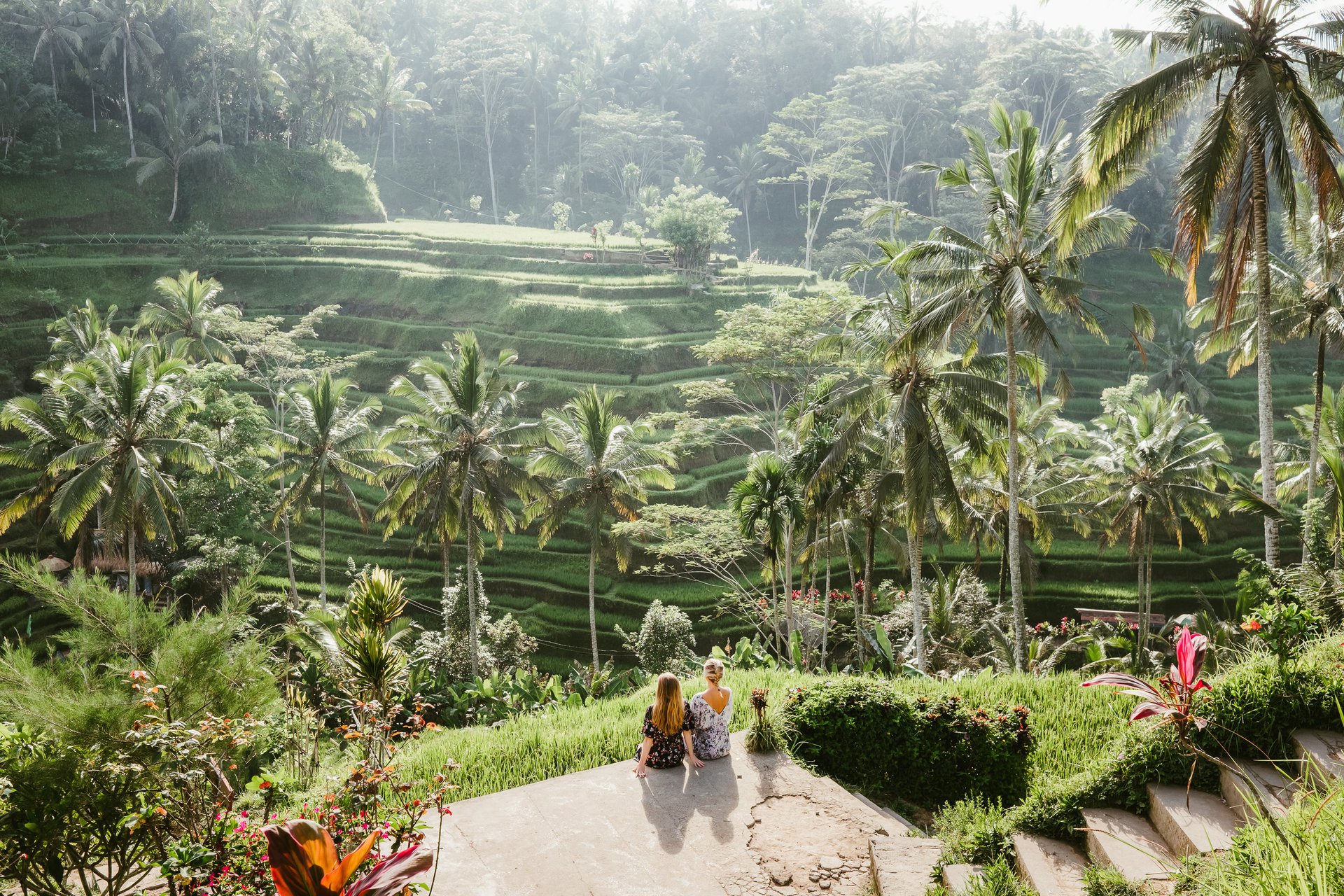
Hindu temples, Canggu surf breaks, private pool villas under $100/night, Ubud rice terraces, and a thriving expat and wellness community that's hard to replicate anywhere in Southeast Asia.
Choose Vietnam
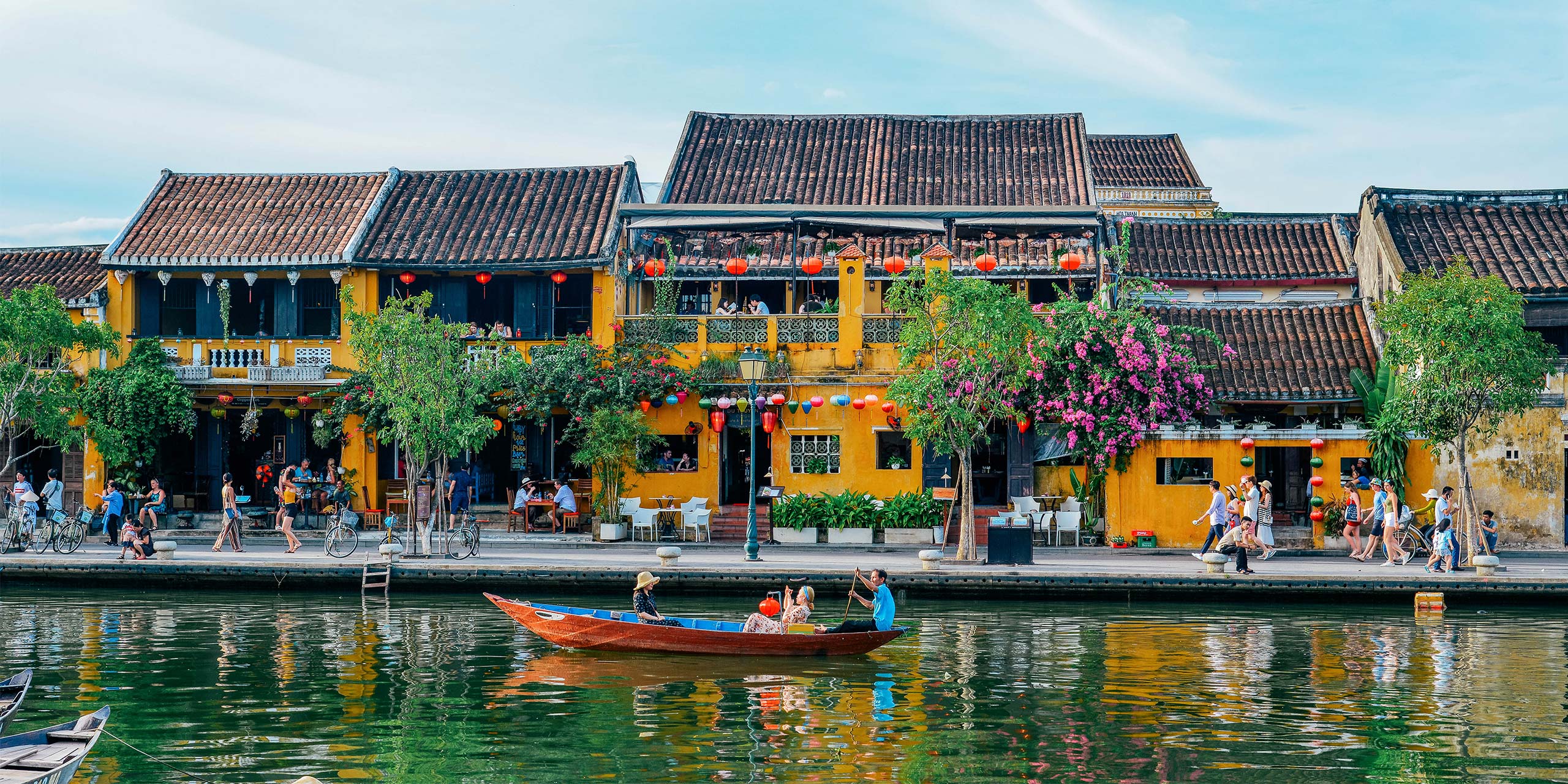
Pho for $1.50, Hoi An lanterns, Ha Long Bay cruises, motorbike highways through mountain passes, and a coastline that stretches 3,000km. Vietnam rewards curiosity in a way few countries can match.
Quick Comparison
| Category | 🌴 Bali | 🇻🇳 Vietnam | Winner |
|---|---|---|---|
| Daily Budget (mid-range) | $50–90 per person | $30–60 per person | Vietnam |
| Street Food | Good warungs, great cafes | Among the best (pho, banh mi, bun bo hue) | Vietnam |
| Beaches | World-famous surf spots, Nusa Islands | Long coastline, Phu Quoc, Con Dao | Bali |
| Cultural Depth | Hindu temples, ceremonies, rice terraces | Ancient towns, imperial ruins, war history | Tie |
| Getting Around | Scooter/Grab on one island | Domestic flights, trains, buses across country | Bali |
| Nightlife | Beach clubs, sunset bars | Beer streets, rooftop bars, live music | Bali |
| Digital Nomad Scene | Massive, world-famous (Canggu) | Growing fast (Da Nang, HCMC) | Bali |
| Accommodation Value | Private pool villas $60–120/night | Guesthouses $15–35, resorts $50–100 | Bali |
| Nature & Scenery | Volcanos, rice terraces, jungle | Limestone karsts, rice paddies, mountains | Tie |
| Ease for First-Timers | Very easy, compact, tourist-friendly | Moderate — large country, more logistics | Bali |
| Ideal Trip Length | 7–14 days | 14–21+ days | Vietnam |
🍜 Food & Dining
Vietnam is one of the great food destinations on earth — full stop. From a steaming bowl of pho in Hanoi (VND 40,000–80,000 / $1.60–$3.20) to banh mi from a cart in Hoi An ($0.80), the food is complex, fresh, and astonishingly cheap. Each region has its own identity: Hanoi is broth and noodles, Hue is spicy and royal, Hoi An is white rose dumplings and cao lau, Saigon is everything at once. Bun bo Hue, com tam, banh xeo — you could eat differently every meal for three weeks and not repeat.
Bali's food scene is excellent but different. Local warungs serve nasi goreng, mie goreng, and babi guling (suckling pig) for IDR 25,000–50,000 ($1.50–$3). The expat and digital nomad community has also spawned a internationally recognized café scene in Canggu — artisan coffee, smoothie bowls, plant-based everything. You can eat brilliantly on any budget. The catch: restaurant bills in tourist areas carry a 10–15% tax and service charge that catches many visitors off guard.
- Winner: Vietnam
- Why: Vietnamese cuisine offers extraordinary regional diversity at rock-bottom prices — from Hanoi pho at $1.60 to Hoi An's famous white rose dumplings. Bali's café scene is internationally recognized, but the local food doesn't have Vietnam's depth.
- Who this matters for: Anyone for whom food is a primary reason to travel. Vietnam should be at the top of your list.
💰 Cost Comparison
Vietnam is substantially cheaper than Bali — by about 30–40% for comparable experiences. In Vietnam, a comfortable guesthouse in Hoi An runs $15–25/night, a restaurant meal $2–8, a craft beer $1.50, and a Grab taxi across town $1–3. Budget backpackers can live well on $25–35/day. Mid-range travelers spending $50–70/day will live very well.
Bali has become noticeably pricier, especially in Canggu and Seminyak. A decent villa with a private pool runs $60–120/night. Instagram-worthy café breakfasts in Canggu regularly hit $10–15. However, if you venture outside the tourist bubble — eat at local warungs, rent a scooter instead of a Grab — Bali can still be done on $40–50/day. Kuta, Sanur, and Lovina are significantly cheaper than Canggu/Seminyak.
- Winner: Vietnam
- Why: Vietnam is one of the cheapest countries in Southeast Asia. Bali's popularity and expat community have pushed prices up, especially in Canggu and Seminyak.
- Who this matters for: Budget travelers, long-term nomads, and anyone planning a trip of more than 2 weeks will feel the difference significantly.
🏖️ Beaches & Islands
Bali's reputation is beach-forward, but it's primarily a surfing destination. Kuta, Canggu, and Uluwatu have world-famous breaks but can be rough for casual swimming due to currents. For turquoise water and white sand, head to the Nusa Islands (30-min fast boat from Sanur) or the Gili Islands (2h from Padang Bai). These are genuinely impressive and worth the trip. Nusa Penida's Kelingking Beach is one of the most photographed in Asia.
Vietnam's coastline stretches over 3,000km with options for every taste. Da Nang has a long, clean city beach. Hoi An is 20 minutes from An Bang and Cua Dai beaches. Nha Trang is Vietnam's beach resort hub ($3 chairs, warm water, lively nightlife). Phu Quoc in the south has Bali-quality resorts and crystal-clear water. Con Dao is Vietnam's untouched gem — fewer tourists, pristine reefs, sea turtles.
- Winner: Bali (for surf and island vibes)
- Why: Bali's beach identity is more concentrated and iconic. But Vietnam's Phu Quoc and Con Dao are rising fast — by 2026 this gap is closing.
- Who this matters for: Surfers go to Bali. Beach-and-snorkel travelers should research Vietnam's southern islands too.
🛵 Getting Around
Bali is a compact island — roughly 95km wide. Renting a scooter (IDR 60,000–100,000 / $3.60–$6/day) gives complete freedom and is how most travelers explore. If you're not comfortable on two wheels, Gojek and Grab are reliable and cheap. Traffic in South Bali (Kuta, Seminyak, Canggu) can be brutal during peak hours — factor in an extra 30–60 minutes for any afternoon journey. The north and east of the island are far less congested and reward the effort of getting there.
Vietnam requires more planning. It's a long, thin country stretching nearly 1,800km from Hanoi to Ho Chi Minh City. Between major regions, domestic flights are the practical choice (Hanoi–Da Nang is $25–50 on VietJet, VietAir, or Bamboo). The Reunification Express train is beautiful but slow (Hanoi to Hue: 12–14h, $15–30). Within cities, Grab is excellent. The Ha Giang Loop in the north — a 3–4 day motorbike circuit through mountain passes — is one of the most spectacular rides in Asia.
- Winner: Bali (for simplicity)
- Why: Bali's compact size means you can reach any part of the island in a few hours. Vietnam's sheer scale requires more planning, though domestic flights are cheap at $25–50.
- Who this matters for: Travelers with less than 10 days will find Bali significantly easier to navigate. Vietnam rewards longer itineraries.
⛩️ Cultural Attractions
Bali's culture is unique in Southeast Asia — the island is 87% Hindu in a predominantly Muslim country, and the result is a visual and spiritual feast. Temples are everywhere: Tanah Lot (sea temple on a rock at sunset), Tirta Empul (holy spring temple with ritual bathing), Uluwatu (clifftop above the Indian Ocean). Ubud hosts the most accessible cultural center with daily Kecak fire dances, the Monkey Forest, and artist workshops. Elaborate cremation ceremonies happen year-round across villages — if you witness one, it's memorable.
Vietnam's cultural appeal is broader and more varied. Hoi An's Ancient Town (UNESCO) is one of Asia's most beautiful preserved trading ports, with Chinese merchant houses, Japanese covered bridges, and tailor shops on every corner. Hue was Vietnam's imperial capital — the citadel, royal tombs, and imperial cuisine make it essential. In the north, Hanoi's Old Quarter is chaotic and wonderful, and Ha Long Bay's limestone karsts are one of the world's natural wonders. The War Museum in Ho Chi Minh City is one of the most affecting museums anywhere.

- Winner: Tie
- Why: Bali's Hindu ceremonies and temples are unlike anywhere else in Asia. Vietnam's UNESCO towns, imperial ruins, and war history offer a different but equally compelling cultural experience.
- Who this matters for: History buffs lean Vietnam; spiritual/religious culture seekers lean Bali.
🏨 Where to Stay
Bali's accommodation is one of its great strengths. Private pool villas that would cost $400+/night in Thailand or Maldives run $60–120/night in Ubud or Seminyak. Canggu is the hub for mid-range boutique hotels ($50–100), while Kuta and Legian offer budget guesthouses from $20–35. For a complete digital nomad base, Canggu is unbeatable: co-working spaces, cafes, surf rentals, and a huge expat community all within walking distance.
Vietnam's accommodation is excellent value. In Hanoi's Old Quarter, clean guesthouses run $15–25/night; mid-range hotels $35–60. Hoi An boutique hotels with pools: $50–100/night. Ho Chi Minh City has a wide range from $18 hostels to $200+ luxury hotels. Phu Quoc's beach resorts have upgraded significantly — you can find genuine luxury for $80–120/night that would cost $300+ in Bali Seminyak. Check Da Nang vs Hoi An for more on Vietnam's beach options.
- Winner: Bali
- Why: Private pool villas at $60–120/night are a genuine Bali advantage. Nowhere else in Southeast Asia offers this combination of quality and price at scale.
- Who this matters for: Couples and travelers who want a luxury experience on a moderate budget will find Bali's villa scene hard to beat.
🌸 Best Time to Visit
Bali has two seasons: dry (April–October) and wet (November–March). The dry season — especially July and August — is peak tourist season with highest prices and crowds. April–June and September–October offer the best balance of weather and availability. During wet season, afternoon rain is common but rarely ruins a full day; mornings are often clear. The east and north of Bali are drier than the south and west.
Vietnam's weather is more complex because the country spans so many latitudes. North Vietnam (Hanoi, Ha Long Bay): best October–April, avoiding the June–August heat. Central Vietnam (Da Nang, Hoi An, Hue): best February–May; October–November is typhoon season with serious flooding risk. South Vietnam (Ho Chi Minh City, Mekong, Phu Quoc): dry season November–April is best. The key insight: you can always find good weather somewhere in Vietnam, but you need to plan by region.
- Winner: Bali (for planning simplicity)
- Why: Bali's dry season (April–October) is straightforward to plan around. Vietnam's complex multi-region weather requires more research but offers more flexibility for year-round travel.
- Who this matters for: Travelers booking months in advance will find Bali simpler to plan. Flexible travelers can optimize Vietnam by region and month.
💻 Digital Nomad Scene
Canggu, Bali is arguably the world's most famous digital nomad hub. It has an enormous established community, 30+ co-working spaces (Dojo, Outpost, Tribal, etc.), cafes built around laptop workers, and a social calendar that makes it easy to network and meet other remote workers. Bali's nomad infrastructure is genuinely best-in-class. The downside some Reddit users flag: it can become an expat bubble that feels disconnected from actual Bali culture.
Vietnam's digital nomad scene is younger but growing rapidly, particularly in Da Nang, Hoi An, and Ho Chi Minh City. Da Nang offers beach, city, and mountains within 30 minutes of each other, with a cost of living significantly below Bali. Toong and Cogo are popular co-working spaces. The community is smaller but the prices are better — a monthly co-working pass in Da Nang costs $60–100 vs $150–250 in Canggu. See our Bangkok vs Ho Chi Minh City comparison for more on Vietnam's city scene.
- Winner: Bali
- Why: Canggu's established co-working ecosystem, social scene, and nomad community infrastructure is unmatched in Asia. Vietnam is rising but isn't there yet.
- Who this matters for: Digital nomads on a 1–3 month stint. Budget nomads who can sacrifice community for cost savings should consider Vietnam.
🛡️ Safety
Both destinations are generally safe for travelers. Bali has a strong, well-developed tourist infrastructure with reliable emergency services. The main risks are traffic accidents (scooter crashes are the #1 cause of tourist injuries), petty theft in crowded areas, and occasional scams involving motorbike rentals or tour operators. Keep valuables secured, don't ride drunk, and you'll almost certainly be fine. Bali's water is not safe to drink — bottled water is essential.
Vietnam is also safe by regional standards, but petty theft is more prevalent — particularly bag-snatching from motorbikes in Ho Chi Minh City. Solo female travelers report feeling generally safe, though standard precautions apply at night. Traffic is intense in Hanoi and HCMC — crossing streets requires patience and confidence. Scams targeting tourists (xe om motorbike taxi overcharges, fake tour operators) are common enough to warrant research before you go. Use Grab for transport; it eliminates pricing disputes entirely.
- Winner: Bali (slight edge)
- Why: Bali's compact size and robust tourist infrastructure mean fewer logistical surprises. Vietnam's major cities carry higher petty theft risk, particularly in HCMC.
- Who this matters for: First-time solo travelers and female travelers may find Bali more comfortable as a first Southeast Asia destination.
🔀 Why Not Both?
Bali and Vietnam are both served by Vietnam's budget carriers (VietJet, Bamboo) and regional airlines. A one-way flight from Hanoi or Ho Chi Minh City to Bali (Denpasar) typically runs $60–120 on budget airlines. If you have 3+ weeks and want the ultimate Southeast Asia trip, the combination is deeply satisfying: Vietnam's north-to-south adventure followed by a Bali week of decompression is one of the great travel itineraries.
A popular routing: fly into Hanoi → explore north Vietnam (Hanoi, Ha Long Bay, Sa Pa, Ha Giang) → train or fly south to Da Nang/Hoi An → continue to Ho Chi Minh City → fly to Bali for the last week. This gives you the cultural intensity of Vietnam and the relaxed chill of Bali as a finale. Check our itineraries for pre-built routes or Bali vs Thailand if you're considering Thailand instead.
- Winner: You, for doing both
- Why: The contrast between Vietnam's intense, history-rich adventure and Bali's spiritual island calm is precisely what makes them work so well together.
- Who this matters for: Anyone with 3+ weeks and a taste for variety. This is the Southeast Asia trip.
🎯 The Decision Framework
Choose Bali If…
- You prioritize easy access to surf breaks and established surf schools.
- You want a destination focused on relaxation, wellness, and concentrated chill.
- You appreciate simple scooter rentals and ride-hailing apps for getting around.
- You're looking for a strong digital nomad community with many coworking spaces.
- You prefer a wide selection of private villas and boutique hotels for accommodation.
- You seek a destination with a clearly defined dry season, simplifying trip planning.
- You value a place where English is widely spoken in tourist areas, making interactions simple.
- You prefer a destination with a slight edge in overall perceived safety and a friendly local population.
- You enjoy the convenience of concentrated attractions within smaller geographical areas.
Choose Vietnam If…
- You want to maximize your budget, aiming for daily costs between $30 and $60.
- You're eager to explore incredibly diverse street food and regional cuisines at low prices.
- You seek a country offering a wide range of landscapes, from mountains to deltas and coastlines.
- You prioritize experiencing a destination known for its exceptional and varied culinary scene.
- You enjoy exploring ancient temples, imperial cities, and historical war sites.
- You're looking for a place where a delicious, authentic meal can cost just a few dollars.
- You appreciate the adventure of navigating a country with extensive public transport options.
- You want to discover a destination with distinct regional differences in food and culture.
- You are keen to experience a country where your money goes further on activities and accommodation.
Frequently Asked Questions
Is Bali or Vietnam cheaper?
Vietnam is significantly cheaper — by roughly 30–40%. Mid-range travelers in Vietnam can live very well on $30–50/day: guesthouses $15–25/night, restaurant meals $2–5, Grab rides $1–3. Bali's tourist hubs (Canggu, Seminyak) have become expensive — expect $50–90/day for comparable comfort. Budget travelers can reduce costs in both by eating local and avoiding tourist-facing businesses.
Which is better for first-time visitors to Southeast Asia?
Bali is generally easier for first-timers. It's compact (you can cover the island in a week), tourism infrastructure is excellent, English is widely spoken, and the scooter/Grab transport system is intuitive. Vietnam is larger and requires more planning — especially navigating between regions — but the reward is a richer, more varied experience. Both are among the most visited destinations in Southeast Asia for good reason.
How long do you need for Bali vs Vietnam?
Bali can be done in 7–10 days and feels satisfying — you can cover Canggu, Ubud, and Uluwatu comfortably. Vietnam needs at least 2 weeks to experience either the north or the south; 3+ weeks to travel the full length. If you have 10 days, Bali wins on logistics alone. If you have 3 weeks or more, Vietnam's variety becomes a major advantage.
Is Bali or Vietnam better for solo female travelers?
Both are popular and well-worn solo female travel destinations. Reddit consensus gives Bali a slight edge for first-timers: smaller scale, more developed tourist infrastructure, and a large community of other solo travelers makes it feel safer and more socially connective. Vietnam is also very safe, but big cities like HCMC require more street awareness. In both, the main risk is traffic — use Grab rather than local motorbike taxis.
What are the visa requirements for Bali and Vietnam?
As of early 2026: Indonesia (Bali) offers visa-on-arrival for most nationalities, valid 30 days, extendable once for 30 more days (fee: ~$35). Vietnam offers an e-visa valid 90 days (single-entry, $25) and visa exemptions for many European nationalities for 45 days. US citizens can apply for an e-visa. Check each country's official immigration website before booking, as policies change frequently.
Which is better for a beach vacation, Bali or Vietnam?
Bali wins for surf beaches and concentrated beach-and-island culture (the Gili Islands and Nusa Penida are excellent). Vietnam wins on total coastline variety — Da Nang has a great city beach, Nha Trang is a full beach resort town, and Phu Quoc in the south is genuinely elite-level for turquoise water and white sand. For pure surf, go Bali. For variety and value, Vietnam's beaches compete.
Can I do both Bali and Vietnam in one trip?
Yes — and it's a great combo. Budget airlines like VietJet and AirAsia connect Ho Chi Minh City to Bali (Denpasar) for $60–120. The classic route: fly into Hanoi, travel Vietnam south (Ha Long Bay → Hue → Hoi An → Da Nang → HCMC), then fly to Bali for a relaxing finale. Total budget for 3 weeks mid-range: $2,000–3,500 including flights.
Which has better digital nomad infrastructure, Bali or Vietnam?
Bali (Canggu specifically) has the edge on established nomad infrastructure — more co-working spaces, a bigger community, more networking events. Monthly co-working passes cost $150–250 in Canggu. Vietnam's Da Nang and Ho Chi Minh City are growing fast with passes at $60–100/month, a much lower cost of living, and less of the "Instagram expat bubble" feel. For community, Bali. For value and authenticity, Vietnam.
Ready to plan your Southeast Asia adventure?
Get a free custom itinerary for Bali, Vietnam, or both — built from real traveler insights, not generic templates.
Also compare: Bali vs Thailand · Vietnam vs Thailand · Bangkok vs Ho Chi Minh City
🎟️ Book Tours & Experiences
Hand-picked tours and activities for both destinations — book with free cancellation
Experiences via Viator — free cancellation on most tours