How we built this comparison
This page combines traveler discussion patterns, published price ranges, transit details, and seasonal data to make the Bali vs Thailand decision easier to resolve.
- Reviewed Reddit discussions from r/bali, r/ThailandTourism, r/travel, r/digitalnomad, and r/backpacking.
- Cross-checked cost claims against Numbeo 2026 data and recent Reddit trip reports.
- Verified weather patterns against Open-Meteo monthly archive data.
Best read as a decision guide, not a universal truth: the right pick depends on your budget, pace, and what kind of trip you actually want.
⚡ The TL;DR Verdict
Thailand wins for food, diversity, and infrastructure. Bali wins for cultural depth, private villas, and surf. Budget: Bali $45–80/day, Thailand $45–90/day.
- Choose Bali: Hindu culture, surfing, private pool villas, digital nomads, focused 7–14 day trip.
- Choose Thailand: Diverse regions, top-tier food, beaches, cities, mountains, 2+ weeks of variety.
- Budget snapshot: Bali $45–80/day (mid-range); Thailand $45–90/day depending on destination.
Choose Bali
Hindu temples, Canggu surf vibes, private pool villas on a budget, and the most culturally cohesive island in SEA.
Choose Thailand
Among the best Thai food, Bangkok city energy, Chiang Mai mountains, multiple excellent beach coasts, and more to explore.
Quick Comparison
| Category | 🌴 Bali | 🌏 Thailand | Winner |
|---|---|---|---|
| Daily Budget (mid-range) | $45–80 per person | $45–90 per person | Bali |
| Beaches | Dramatic cliffs, surf breaks, volcanic sand | White sand, calm water, multiple coasts | Thailand |
| Food Scene | International cafés, warungs, vegan scene | Elite-level Thai street food, Michelin stars | Thailand |
| Culture & Temples | Hindu temples, rice terraces, ceremonies | Buddhist temples, hill tribes, Grand Palace | Bali |
| Nightlife | Beach clubs (Potato Head, Finns), Canggu bars | Bangkok clubs, Full Moon Party, rooftop bars | Thailand |
| Getting Around | Scooters, Grab, chaotic traffic, no public transit | MRT, trains, cheap flights, ferries | Thailand |
| Accommodation Value | Private pool villas from $40–80/night | Good hotels from $25–60/night in cities | Bali |
| Diving & Snorkeling | Nusa Penida mantas, Tulamben wreck | Ko Tao certification, Similan Islands | Tie |
| Digital Nomad Life | Canggu (best café scene) | Chiang Mai (cheapest), Bangkok (city) | Tie |
| Destination Variety | One island (4–6 distinct areas) | Multiple cities, coasts, mountain regions | Thailand |
| Best For | Culture, surf, villas, focused stays | Food, variety, families, long trips | — |
🍜 Food & Dining
Thai food is widely regarded as one of the world's great cuisines — and Thailand lets you experience it across every register. In Bangkok, street stalls serve pad thai, boat noodles, and mango sticky rice for THB 50–100 ($1.40–$2.80). Chiang Mai's Sunday Walking Street overflows with northern specialties: khao soi (coconut curry noodles), sai ua (herb sausage), and crispy fried insects for the adventurous. Michelin-starred restaurants exist in Bangkok for under $30. The sheer variety — from 2am noodle carts to river-view fine dining — is staggering.
Bali's food scene is excellent but different. Local warungs (family eateries) serve nasi goreng, mie goreng, and babi guling (suckling pig) for IDR 25,000–50,000 ($1.50–$3). But Bali is also powered by a global expat and digital nomad community that has spawned incredible diversity: Japanese ramen, Italian pasta, vegan smoothie bowls, and artisan coffee roasters in Canggu and Seminyak. You can eat brilliantly on $5/day or blow $50 at a clifftop restaurant — both will be memorable. The catch: Bali adds 10% tax + 5–10% service charge to restaurant bills.
Cost of eating
Street meal: Bali $1.50–$3 (warung) vs Thailand $1.40–$2.80 (street stall). Mid-range restaurant: Bali $5–$15 vs Thailand $5–$15. Upscale dinner: Bali $30–$60 vs Thailand $20–$80 (Bangkok Michelin stars are remarkably affordable). Beer: Bali $2.50–$4 (Bintang, highly taxed) vs Thailand $1.50–$3 (Chang/Leo at 7-Eleven). Thailand wins for beer value hands down due to lower alcohol taxes.
Winner takeaway
- Winner: Thailand
- Why: Thai food is elite-level at every price point, and the diversity across regions (Bangkok vs Chiang Mai vs coastal) makes it hard to beat. Bali excels at international café culture and has good local food, but it doesn't match Thailand's culinary depth.
- Who this matters for: Matters most if food is a primary reason for travel — Thailand should be higher on your list if you eat to travel.
🏖️ Beaches & Islands
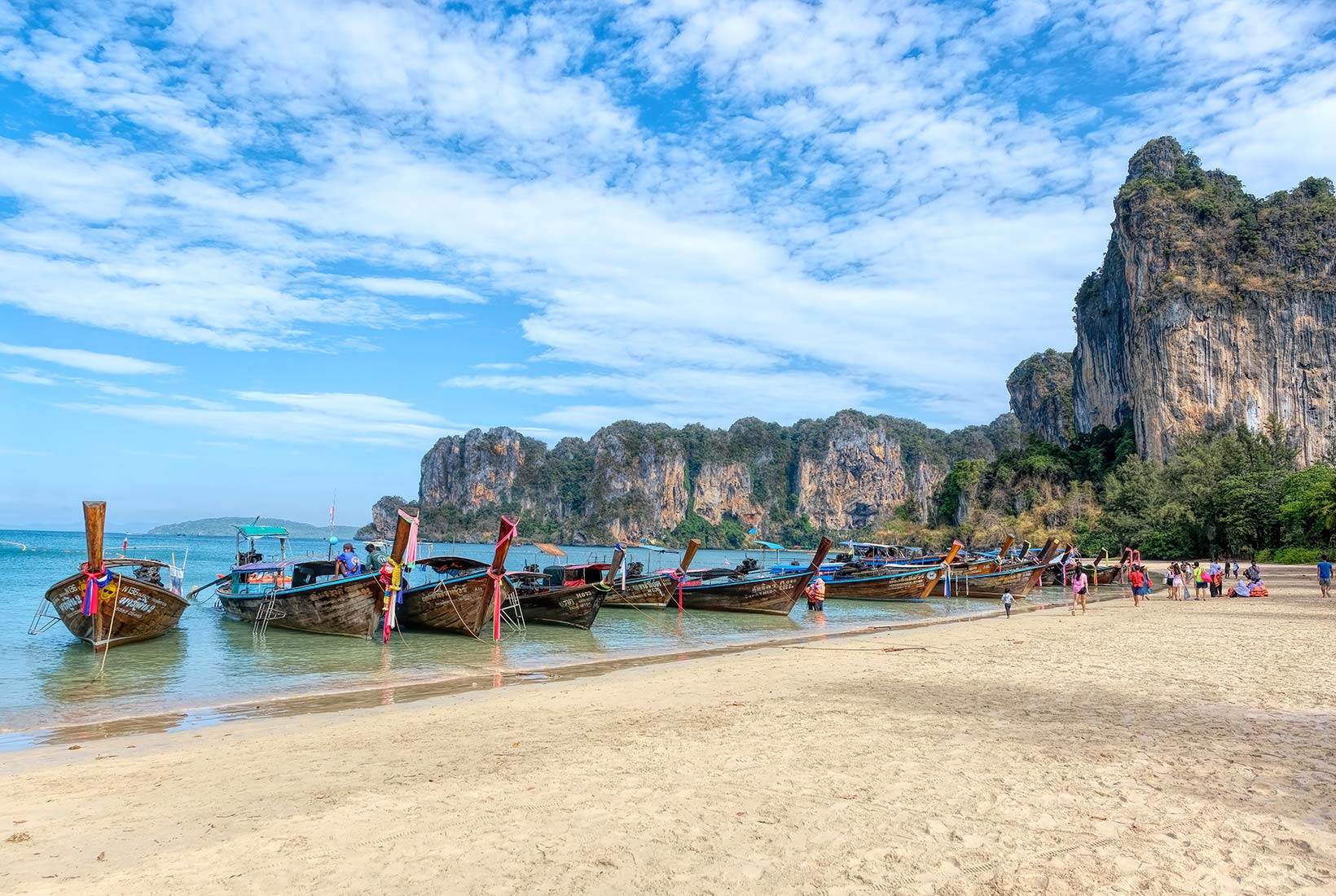
Thailand's beaches are extraordinary in variety and quality. Railay Beach (Krabi) is only accessible by boat and backed by 300-meter limestone cliffs — it looks like a movie set. Ko Lipe and the Similan Islands (open November–April) have neon-blue water and pristine coral. Ko Tao is one of the world's cheapest places to get PADI-certified diving. The Andaman coast (Phuket, Krabi, Ko Lanta) and Gulf coast (Ko Samui, Ko Phangan, Ko Tao) give you two very different beach experiences, and most are connected by cheap domestic flights or overnight ferries.
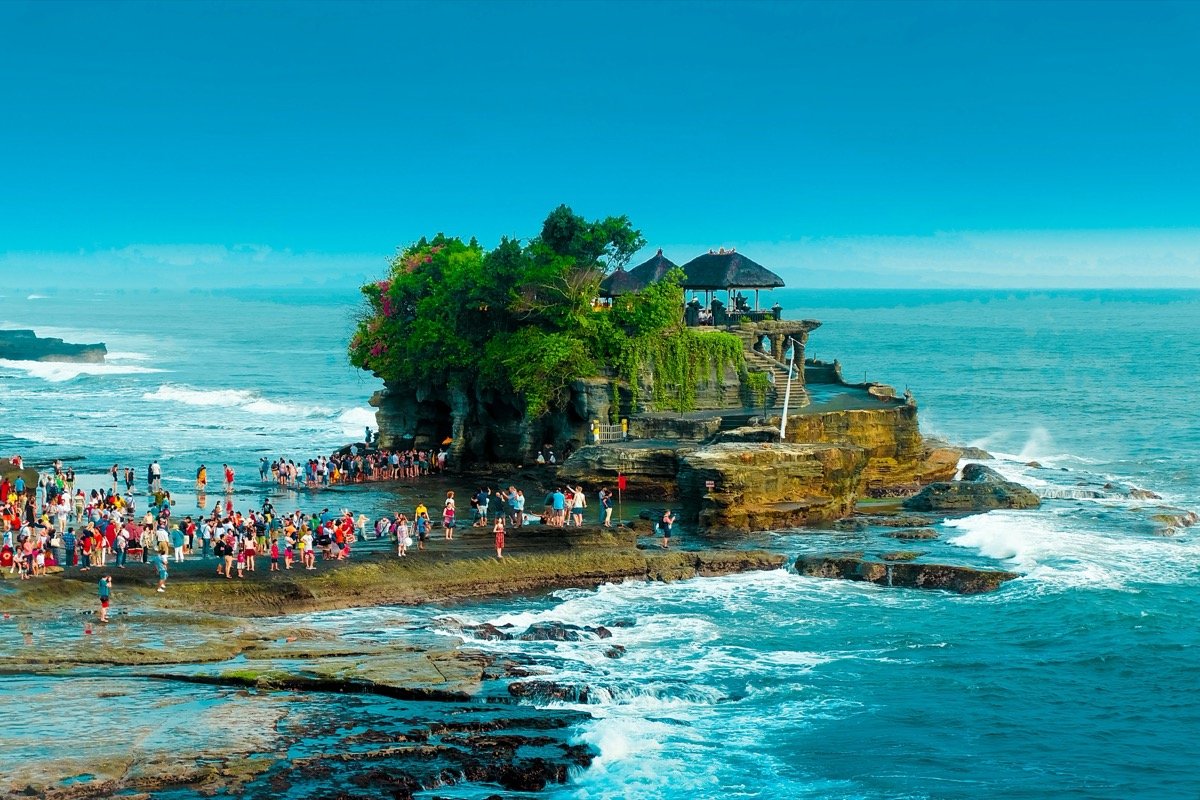
Bali's beaches are a different category. The south coast is defined by internationally recognized surf breaks: Uluwatu, Padang Padang, Canggu, and Medewi draw surfers globally. The iconic Uluwatu cliffs offer some of Southeast Asia's most dramatic ocean views. For calm swimming, Bali redirects you to Nusa Dua (shallow reef, calm), Sanur (gentle slope), or the Gili Islands (45-minute boat ride, turquoise water, sea turtles). Nusa Penida — 45 minutes by fast boat — has Kelingking's jaw-dropping T-Rex cliff and manta ray snorkeling at Crystal Bay.
Diving & snorkeling
Both destinations are exceptional for diving but famous for different spots. Ko Tao (Thailand) is the world's most popular budget dive destination — 3-day PADI Open Water courses run $300–400 and conditions are ideal most of the year. The Similan Islands (Thailand) are among Southeast Asia's best but only accessible November–April. Nusa Penida (Bali) is famous for manta rays at Crystal Bay and the Mola Mola sunfish (July–September). Tulamben's USAT Liberty shipwreck is one of the world's most accessible wreck dives, reachable from shore.
Winner takeaway
- Winner: Thailand
- Why: Thailand wins for beach variety and swimming conditions across multiple coasts. Bali wins for dramatic cliff scenery and surf. For diving, it's a genuine tie — different strengths at different times of year. If beach relaxation is your priority, Thailand is clearer. If surfing or dramatic coastal landscapes matter, Bali wins.
- Who this matters for: Matters most if beaches are the primary reason for your trip — Thailand's variety across Andaman and Gulf coasts is hard to match on a single island.
🛕 Culture & Temples
Bali is called the "Island of the Gods" — and it earns the name. The only Hindu-majority island in Muslim-majority Indonesia, Bali's spirituality is woven into daily life: canang sari offerings on every doorstep, elaborate cremation ceremonies, Kecak fire dances at Uluwatu temple, and a calendar of colorful Hindu festivals. The island has over 20,000 temples. Ubud's art galleries, traditional craft villages (Mas for woodcarving, Celuk for silver), and the Tegallalang rice terraces offer a cultural density that's genuinely rare in Southeast Asia. Tirta Empul's holy spring purification ritual is one of the most moving travel experiences in the region.
Thailand's cultural offerings are broader and more diverse. Bangkok has 400+ temples — Wat Pho's giant reclining Buddha, Wat Arun's riverside towers, and the Grand Palace complex are visually overwhelming. Chiang Mai's 300 temples include the mountaintop Doi Suthep, a 35-minute drive from the city. Northern Thailand preserves hill tribe cultures (Karen, Akha, Hmong) that offer experiences entirely different from Bali's Hindu traditions. Ayutthaya and Sukhothai (historical park day trips from Bangkok) are UNESCO World Heritage sites with incredible scale.
Spiritual experiences
Bali's spirituality is participatory — you can join purification rituals at Tirta Empul, watch ceremonies at village temples, and attend Kecak performances against a sunset ocean backdrop. Thailand's Buddhist traditions are also living and accessible — temple meditation retreats, monk chats at Chiang Mai temples, and full-moon parties at Ko Phangan (a different kind of spiritual experience). If you want to go deeper into one distinct religious tradition, Bali's Hindu culture is uniquely immersive. Thailand's Buddhist temple circuit is broader but more touristy at the big sites.
Winner takeaway
- Winner: Bali
- Why: Bali's Hindu culture is uniquely immersive and alive in ways you won't find elsewhere. Thailand has more temples and greater diversity of cultural experiences across regions, but Bali's single-island cultural cohesion is unmatched. Both are culturally rich — Bali is deeper, Thailand is wider.
- Who this matters for: Matters most if you want to experience a single distinct living culture in depth rather than sampling across many sites.
💰 Cost Comparison
Bali and Thailand are closely matched on cost overall, but where you spend matters enormously in both places. The biggest variable: your accommodation choice in Bali (villa vs guesthouse) and your city in Thailand (Bangkok vs island resort) will swing daily budgets dramatically.
| Expense | 🌴 Bali | 🌏 Thailand |
|---|---|---|
| Hostel dorm | $8–15/night | $7–15/night |
| Guesthouse/budget hotel | $20–50/night | $20–50/night |
| Private pool villa | $40–80/night (Bali's biggest edge) | $100–250/night |
| Street meal | $1.50–$3 (warung) | $1.40–$2.80 (street stall) |
| Mid-range restaurant | $5–$15 | $5–$15 |
| Beer (local) | $2.50–$4 (Bintang, high tax) | $1.50–$3 (Chang/Leo) |
| Scooter rental | $4–6/day | $5–9/day |
| City transport | Grab only ($1.50–$4) | MRT/BTS $0.50–$1.50 (Bangkok) |
| Surf/activity lesson | $15–25 (surf 2hr) | $300–400 (PADI course Ko Tao) |
| Daily total (mid-range) | $45–80 | $45–90 |
The Bali villa effect: Bali's biggest cost advantage is the private villa market — nowhere else on Earth gives you a pool villa for $50–80/night. If you're traveling with a partner or small group, splitting a villa in Canggu or Ubud makes Bali dramatically cheaper than equivalent Thailand resort prices. However, Bali's trendy café and beach club scene can inflate costs fast — Potato Head beach club entry + drinks easily runs $60+.
Winner takeaway
- Winner: Bali
- Why: Bali wins on accommodation value (private villas) and overall daily costs for mid-range travelers. Thailand wins on beer, city transport, and food value. For budget backpackers, Thailand may actually be cheaper. For couples wanting private villa luxury on a budget, Bali is unbeatable.
- Who this matters for: Matters most if nightly accommodation, how long you want to stay, or whether villa-living vs city-hopping fits your travel style.
🛵 Getting Around
Thailand: Southeast Asia's best-connected country for internal travel. Bangkok has the MRT/BTS Skytrain (clean, air-conditioned, $0.50–$1.50), the Chao Phraya river boats, and ubiquitous Grab taxis. Domestic flights between Bangkok, Chiang Mai, Phuket, and Ko Samui cost $25–80 one way (AirAsia, Nok Air) and are frequent. Overnight trains from Bangkok to Chiang Mai run 13 hours (sleeper from $20) and are a classic Thailand experience. Ferries between islands are reliable and cheap. The infrastructure for traveling around Thailand is genuinely excellent, and you're rarely stuck.
Bali: Getting around is one of the island's biggest frustrations. There is no public transport on Bali. Everything is Grab (banned in some areas by local taxi mafias), rented scooter ($4–6/day, not for the faint-hearted in traffic), or private driver ($30–50/day — surprisingly great value and widely recommended). Traffic between Kuta, Seminyak, Canggu, and Ubud is legendarily bad — Google Maps says 45 minutes, reality says 2 hours on a bad day. Moving between the island's distinct areas (south Bali → Ubud → north coast) requires planning.
Winner takeaway
- Winner: Thailand
- Why: Thailand wins by a wide margin. It has trains, flights, ferries, a metro, and Grab — all cheap and reliable. Bali has no public transport, terrible traffic, and requires more planning to move around. If mobility between multiple destinations is important, Thailand is far more practical.
- Who this matters for: Matters most if you plan to visit multiple areas or if you hate planning transport logistics around traffic conditions.
☀️ Best Time to Visit
Both destinations are tropical, but they have distinct monsoon patterns. The good news: they complement each other — you can almost always find good weather in one of them.
Data: Open-Meteo archive + regional climate averages. BKK = Bangkok, CM = Chiang Mai. Thailand has two coasts with different monsoon seasons.
Key insight: Thailand's two coasts
Thailand's Andaman coast (Phuket, Krabi, Ko Lanta) is best November–April. Avoid May–October (heavy monsoon, rough seas, some resorts close).
Thailand's Gulf coast (Ko Samui, Ko Phangan, Ko Tao) is best February–September. October–December brings the Gulf monsoon.
Bali's dry season is June–September — the best weather, lowest humidity, best surfing. Wet season is November–March with daily afternoon rains.
Best combo strategy: Visit Bali in July–August (peak dry season), then Thailand's Gulf islands in September. Or visit Thailand's Andaman coast in February, then Bali in April–May (shoulder season, fewer crowds).
Winner takeaway
- Winner: Depends
- Why: Thailand's two-coast structure means you can find good beach weather almost year-round by picking the right region. Bali has a clearer single dry season (June–September). If you have flexible dates, Thailand has more year-round options. Bali in peak season (July–August) is exceptional but crowded and pricier.
- Who this matters for: Matters most if you have fixed travel dates or are planning around specific weather conditions.
🏨 Where to Stay
Bali neighborhoods
Ubud — Cultural heart of Bali. Rice terraces, monkey forest, Tirta Empul temple, traditional dance performances, jungle spas, and Bali's best cafés. No beach but the most "Bali" experience. Ideal for first-timers who want culture over party.
Canggu — Digital nomad HQ. Surf breaks, coworking spaces (Dojo, Outpost), the best brunch spots (Revolver, Satu Satu), beach bars (Old Man's, The Lawn), and a young international crowd. Traffic is bad but vibes are unmatched. Best for remote workers, surfers, 20–35 crowd.
Uluwatu — Clifftop paradise. Internationally recognized surfing, Single Fin bar at sunset, gorgeous Uluwatu temple, secluded beaches below the cliffs. Less crowded, more photogenic. Best for surfers and Instagram travelers.
Nusa Penida — Raw and dramatic. Kelingking cliff, Angel's Billabong, manta rays. Stay 2 nights to avoid day-tripper crowds. Rougher roads, fewer facilities — but worth it.
Thailand areas
Bangkok — The obligatory gateway. Sukhumvit for nightlife and international food, Silom/Sathorn for business, riverside for Chao Phraya views. 3–5 days minimum. Among the best street food, temples, shopping. Surprisingly affordable for a global megacity.
Chiang Mai — Northern gem. 300 temples, night markets, cooking classes, elephant sanctuaries, mountain trekking. Best for culture lovers and digital nomads. 3–5 days or longer for the nomad community.
Railay Beach / Krabi — Boat-access paradise. Limestone cliffs, rock climbing, sea kayaking. 3–4 days. The most dramatically beautiful beach area in Thailand.
Ko Tao — Dive budget paradise. Get PADI certified for $300–400. Great snorkeling. Young backpacker crowd. Less polished than Koh Samui but far better value for divers.
Winner takeaway
- Winner: Depends
- Why: Base yourself in Ubud for Bali culture, Canggu for surf/nomad life, or Uluwatu for dramatic scenery. In Thailand, Bangkok + Chiang Mai + one beach area is the classic combo. Thailand rewards more movement; Bali rewards deeper stays in fewer areas.
- Who this matters for: Matters most if your travel style (slow vs fast, one base vs many stops) should drive your destination choice.
💻 Digital Nomad & Remote Work
Both Bali and Thailand are top global destinations for digital nomads — but they attract different types.
Canggu, Bali is the Instagram-famous nomad hub. Among the best coworking spaces (Dojo Canggu, BWork, Outpost), arguably the best coffee shop density on Earth for working (Revolver, Satu Satu, Shelter), a huge international community, and that Bali vibe — surf at 7am, work 9–5, pool villa sundowners. Monthly costs with a villa room: $1,200–$2,500. Fiber internet is generally reliable at coworking spaces (50–100 Mbps); villa WiFi can be inconsistent. The downside: it's expensive relative to other SEA nomad hubs, and Canggu has gotten very touristy.
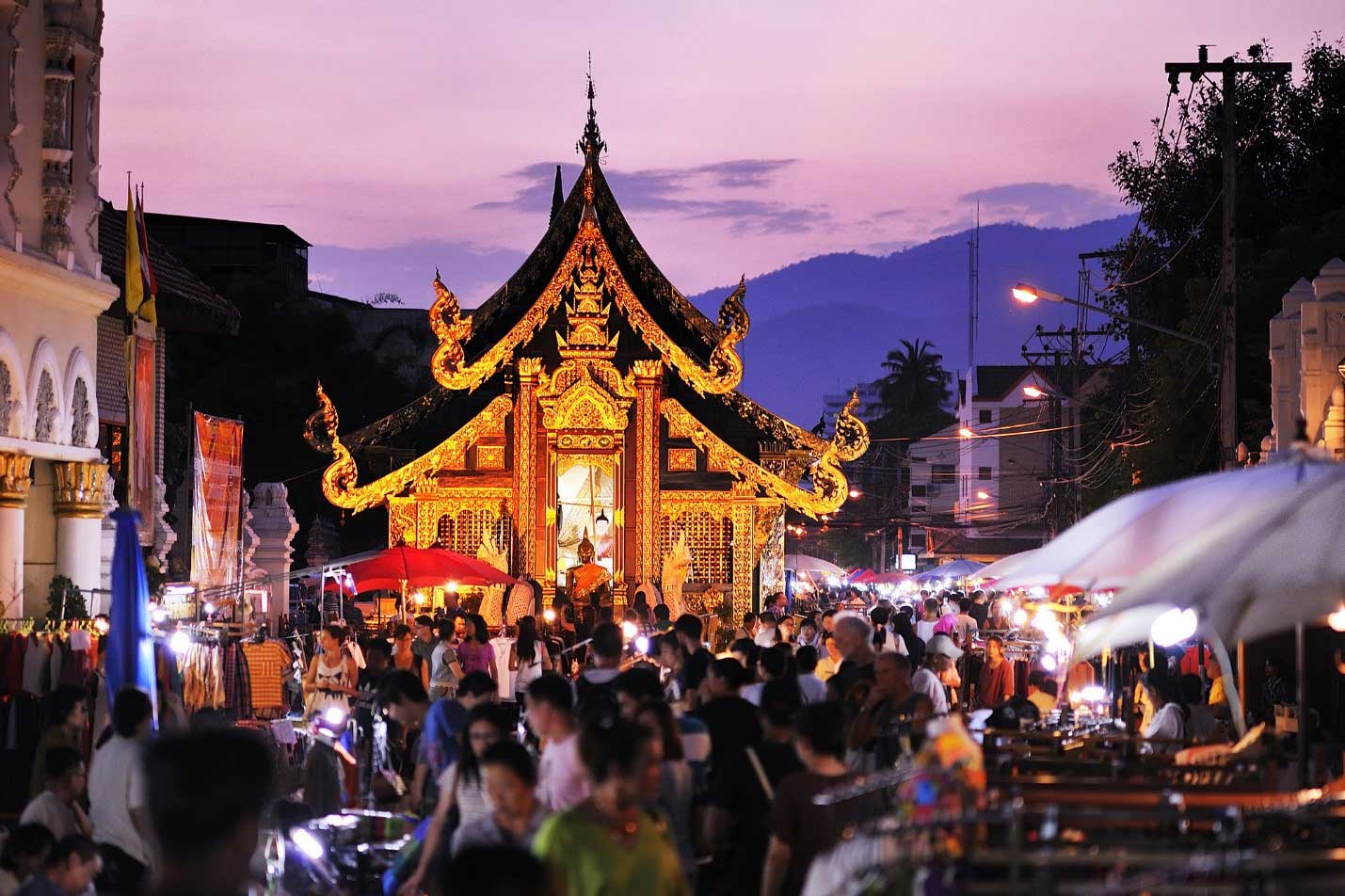
Chiang Mai, Thailand is the budget nomad king. Rent for a private room with AC: $200–400/month. Coworking (CAMP, MANA, Punspace): $50–150/month. Excellent food ($1–3/meal). A monthly all-in budget of $600–900 is genuinely achievable. It's also been a nomad hub for over a decade, so the community infrastructure is deep — meetups, masterminds, long-term expat networks. The downside: it's landlocked (no beach), gets smoky March–April (burning season), and the scene is more mature/older than Canggu's.
Visa situation
Thailand has a Digital Nomad Visa (Destination Thailand Visa / LTR) — 5-year, requires proof of income ($80k/year). Standard tourist visa is 30 days (60 days with extension) and often extended via border runs, though this is increasingly scrutinized. Bali/Indonesia launched a Remote Work Visa in 2023 (E33G), offering 6-month stays with no work tax — but it requires company sponsorship or self-employment proof. Most nomads in Bali use social/cultural visas (60-day + 4× extensions = up to 180 days).
Winner takeaway
- Winner: Tie
- Why: Tie between Canggu (Bali) for lifestyle and community vibe, and Chiang Mai (Thailand) for cost and infrastructure. Your budget makes the decision: under $1,500/month → Chiang Mai. $2,000+ and you want beach vibes → Canggu. Bangkok is a sleeper pick for nomads who want city life with excellent transit.
- Who this matters for: Matters most if you're planning a stay of 1+ month and remote work will define your daily schedule.
🎉 Nightlife & Entertainment
Thailand has the edge for nightlife breadth and variety. Bangkok is a 24-hour city: Khao San Road for backpackers, Sukhumvit Soi 11 for upscale clubs, rooftop bars like Vertigo at Banyan Tree (sky-high cocktails for sky-high prices), and hidden speakeasies. The city also has top-tier music venues, Muay Thai stadiums (Lumpinee, Rajadamnern), and a thriving live music scene. Chiang Mai's Nimman Road area has craft beer bars, live music cafés, and a relaxed but lively scene. Ko Phangan's Full Moon Party (monthly, 20,000–30,000 people on the beach) is one of the world's most famous parties.
Bali's nightlife is excellent but more concentrated. Seminyak's beach clubs — Potato Head, Ku De Ta, Finns — are genuinely among the best: gorgeous ocean views, celebrity DJs, beautiful crowd. Canggu has a hipper bar scene: Old Man's on the beach, The Lawn sunsets, Deus Ex Machina café/bike shop/music venue. Kuta remains the backpacker party strip — loud, cheap, chaotic. Bali's beach club scene is generally more Instagram-beautiful; Thailand's is more diverse and wilder at its extremes.
Winner takeaway
- Winner: Thailand
- Why: Thailand wins on nightlife variety and scale — Bangkok alone offers more options than all of Bali. Bali wins on beach club luxury and aesthetic. If party culture is your priority, Thailand's Full Moon Party, Bangkok's club scene, and Chiang Mai's rooftop bars collectively outclass Bali. But Bali's sunset beach clubs are hard to match for atmosphere.
- Who this matters for: Matters most if nightlife options and frequency of going out will significantly shape your trip experience.
🎯 The Decision Framework
Choose Bali If…
- You seek deep spiritual experiences and Balinese ceremonies.
- You want a private villa with an infinity pool for under $100/night.
- You're keen on learning to surf or catching consistent waves.
- Your daily travel budget is closer to $45-$80.
- You prefer a more tranquil, focused island atmosphere.
- You want easy access to yoga retreats and wellness centers.
- You enjoy exploring small art villages and local craft markets.
- You plan to spend time amidst lush rice paddies and volcanic landscapes.
Choose Thailand If…
- You crave diverse street food, like $3 pad thai, available late.
- You prioritize efficient public transport, including trains and ferries.
- You want to explore both large cities and varied island landscapes.
- You're looking for active nightlife, from rooftop bars to beach parties.
- Your itinerary includes island hopping to different beach types.
- You appreciate a wide range of accommodation, from budget hostels to luxury resorts.
- You need reliable internet and co-working spaces in major hubs.
- You plan on visiting ancient temples and historical sites across multiple regions.
- You expect clear signage and services in English in tourist areas.
💰 Daily Cost Breakdown
| Expense | Bali | Thailand |
|---|---|---|
| Hostel dorm | $10-25 | $8-20 |
| Budget hotel | $30-70 | $25-60 |
| Street food meal | $2-5 | $1.50-4 |
| Restaurant meal | $7-15 | $6-12 |
| Beer/drink | $3-6 | $2.50-5 |
| Local transport (day) | $10-20 | $8-15 |
| Daily budget total | $40-80 | $35-70 |
Approximate daily costs for 2026. Actual prices vary by season and travel style.
🌤️ Monthly Weather Comparison
| Month | Bali Temp | Bali Rain | Thailand Temp | Thailand Rain |
|---|---|---|---|---|
| Jan | 31°C/88°F | 280mm | 32°C/90°F | 10mm |
| Feb | 31°C/88°F | 240mm | 33°C/91°F | 20mm |
| Mar | 31°C/88°F | 190mm | 34°C/93°F | 40mm |
| Apr | 32°C/90°F | 100mm | 35°C/95°F | 80mm |
| May | 31°C/88°F | 80mm | 34°C/93°F | 220mm |
| Jun | 30°C/86°F | 70mm | 33°C/91°F | 150mm |
| Jul | 30°C/86°F | 50mm | 33°C/91°F | 160mm |
| Aug | 30°C/86°F | 40mm | 33°C/91°F | 200mm |
| Sep | 31°C/88°F | 70mm | 32°C/90°F | 250mm |
| Oct | 32°C/90°F | 120mm | 32°C/90°F | 210mm |
| Nov | 32°C/90°F | 180mm | 31°C/88°F | 50mm |
| Dec | 31°C/88°F | 250mm | 31°C/88°F | 10mm |
Average monthly high temperatures and rainfall based on historical climate data.
📅 Sample Itineraries
Weekend in Bali (3 Days)
💡 Three days gives you a great taste of Bali. Check out our Bali Art Galleries guide.
Weekend in Thailand (3 Days)
💡 Three days gives you a great taste of Thailand.
Week in Bali (7 Days)
💡 A full week gives you a great taste of Bali. Check out our Bali Art Galleries guide.
Week in Thailand (7 Days)
💡 A full week gives you a great taste of Thailand.
❓ Frequently Asked Questions
Is Bali or Thailand better for first-time visitors to Southeast Asia?
Both are excellent first stops. Thailand offers more variety — Bangkok for city buzz, Chiang Mai for mountains and culture, Phuket and Krabi for beaches — making it easier to get a range of experiences in one trip. Bali delivers a single-island deep dive with Hindu temples, rice terraces, surfing, and a among the best café scene. Reddit consensus: if you have 2 weeks or more, Thailand's diversity wins; if you have 7–10 focused days, Bali is hard to beat.
Which is cheaper, Bali or Thailand?
Bali and Thailand are comparable in price overall, but with important nuances. Bali's accommodation is cheaper — private pool villas run $40–80/night vs $60–150 in Thailand beach resorts. Thailand's food is cheaper — street meals cost THB 50–100 ($1.40–$2.80) vs IDR 25,000–50,000 ($1.50–$3) in Bali warungs. Thailand's city transport (Bangkok MRT, Chiang Mai songthaews) is cheaper. Reddit consensus: Canggu/Seminyak Bali can actually be more expensive than Bangkok or Chiang Mai due to the villa-and-brunch culture.
Which has better food, Bali or Thailand?
Thailand wins convincingly on food. Thai cuisine is consistently ranked among the world's best — pad thai, som tum, massaman curry, boat noodles, mango sticky rice — and it's available everywhere from $1.50 street stalls to Michelin-starred restaurants. Bangkok alone has 17 Michelin-starred venues. Bali has excellent food diversity (warungs, international cafés, vegan spots) and is particularly strong for digital nomad café culture, but it doesn't match Thailand's depth of local cuisine.
Which has better beaches, Bali or Thailand?
Thailand has better beaches for calm swimming and classic tropical vibes — Railay Beach, Ko Lipe, Koh Tao, and the Similan Islands have white sand and crystal-clear water. Bali's beaches are more dramatic (especially Uluwatu and Padang Padang cliffs) and among the best for surfing, but many have volcanic sand and rough currents. For underwater adventures, Bali's Nusa Penida manta rays and Tulamben wreck are elite-level. For sunbathing and swimming, Thailand wins.
How many days do you need in Bali vs Thailand?
Bali: 7–10 days minimum to cover Ubud, Canggu/Seminyak, Uluwatu, and at least one island day trip (Nusa Penida). 14 days lets you go deeper without rushing. Thailand: 10–14 days for a solid trip covering Bangkok plus Chiang Mai plus one beach destination. You could spend 3+ weeks and barely scratch the surface given how many regions there are.
Is Bali or Thailand better for digital nomads?
Both are top digital nomad destinations, with different vibes. Canggu (Bali) is the classic nomad hub — coworking spaces, among the best cafés, fast WiFi, villa pools, and a strong community. Chiang Mai (Thailand) is the other top contender — extremely cheap ($600–1000/month all-in), excellent coworking spaces, strong expat community, and easy visa situation. Bangkok works well for nomads who want a city. Reddit consensus: Canggu for vibe and lifestyle, Chiang Mai for affordability.
Can you visit both Bali and Thailand in one trip?
Yes, and it's a popular combination. Flights typically connect through Singapore or Kuala Lumpur — Bangkok to Bali is 3–5 hours and costs $80–200 one way. A 21-day itinerary splits well: 7 days Bangkok plus 3 days Chiang Mai then fly to 4 days Ubud plus 4 days Canggu plus 3 days Nusa Penida. Or do the reverse. Avoid tight connections through KL during the monsoon season.
Which is safer, Bali or Thailand?
Both are generally safe for tourists. Bali's biggest risk is motorbike accidents — traffic is chaotic and tourist injuries on scooters are common. Thailand has more diverse safety considerations: Bangkok is very safe, Thai beaches are safe, but scams (gem shops, tuk-tuk detours, jet ski deposit fraud) are more prevalent. Both countries have petty theft in crowded tourist areas. Thailand feels more organized; Bali feels more chaotic. Neither is dangerous in the conventional sense.
Ready to plan your Southeast Asia adventure?
Get a free custom itinerary for Bali, Thailand, or both — built from real traveler insights, not generic templates.
🎟️ Book Tours & Experiences
Hand-picked tours and activities for both destinations — book with free cancellation
Experiences via Viator — free cancellation on most tours